EDITORIAL · OPINION
Fiberglass Insulation Has Been in American Homes Since 1950. It Was Always a Compromise.
A wartime manufacturing accident became the default American building material — and has stayed there ever since. The reasons are institutional, not technical. And the window to finally change it is right now.
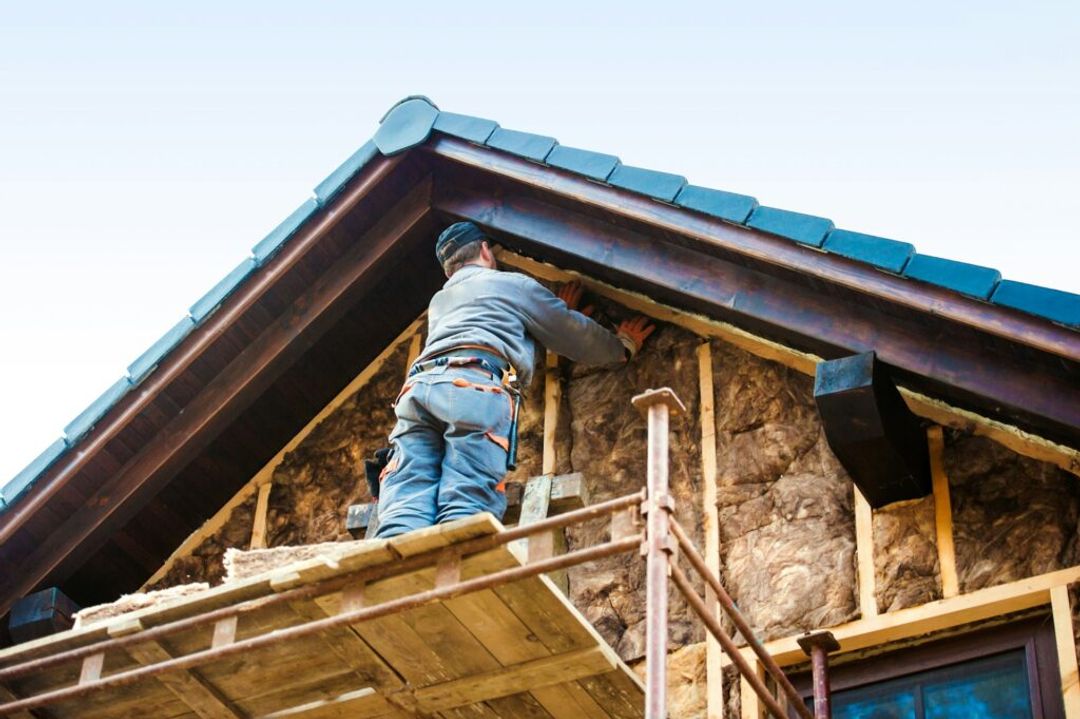
In 1938, a researcher at Owens-Illinois accidentally directed a high-pressure jet of steam at a stream of molten glass. The result was glass wool — lightweight, fibrous, and surprisingly effective at trapping still air. Within two decades, it had been worked into pink batts, rolled into every new home being built across a postwar America that needed cheap, fast construction, and quietly promoted to the status of default insulation material. That status has never been formally challenged. It has just been inherited, wall by wall, home by home, for seventy years.
The problem isn't that fiberglass doesn't work. It does work, in the same sense that a screen door blocks wind: partially, conditionally, not at the margins where energy is actually being lost. The problem is that it was never the best answer — only the most available and most affordable one at the moment American housing construction went to scale. And now, seventy years later, better answers exist at prices that have brought them within reach of ordinary homeowners doing ordinary weekend jobs.
Most American homes are still insulated exactly as they were in 1955. Not because fiberglass won on merit. Because nobody stopped to ask whether it had.
| 75% | of pre-1990 U.S. homes have inadequate air sealing — DOE estimate |
| $600 | average annual heating and cooling loss from air infiltration in older homes |
| 1938 | the year a manufacturing accident became American building code |
I. What fiberglass actually does, and what it doesn't
Fiberglass insulation works by trapping still air between glass fibers. Air is a terrible conductor of heat, so a thick layer of fiber-trapped air slows thermal transfer through a wall or floor. Rated correctly, at R-3.14 per inch, fiberglass does this reasonably well — as long as the air inside it is actually still.
This is the condition fiberglass cannot guarantee. The material is air-permeable. Wind and pressure differentials push air through the fibers constantly, carrying heat with them. A fiberglass batt rated at R-15 installed in a rim joist bay without an air barrier on the exterior side can perform at effective R-values as low as R-5 under typical winter wind conditions. The lab rating and the installed performance are not the same number.
There's also the compression problem. Fiberglass requires loft to perform — the R-value comes from the air space, not the fiber itself. Batts installed in tight spaces, cut to fit, or compressed by a vapor barrier stapled over them perform below their rated value from the day they're installed. And they don't improve over time. They settle, compress further, and absorb any moisture that finds them.
II. The air-sealing gap nobody priced
Here is the thing that insulation manufacturers learned to stop putting in their marketing materials: in most American homes, air infiltration — cold air moving in through gaps, cracks, and penetrations — accounts for between 20% and 40% of total heating and cooling energy loss. Insulation addresses conductive heat transfer. It does nothing about convective air movement.
This is the distinction that the R-value number obscures entirely. You can insulate a wall to R-30 and lose more heat through a 1/4-inch gap at the rim joist than through the entire insulated wall assembly. The gap costs nothing to measure — a stick of incense in winter will find it. But the standard solution — stuff a batt in the bay and call it done — leaves every gap in place, insulated over but unsealed.
Fiberglass traps air beautifully. It just doesn't trap it in the right place.
The Department of Energy's Building America research program has documented this repeatedly over two decades: in pre-1990 homes, air sealing alone — before adding any additional insulation — often delivers a larger energy reduction than any amount of added insulation without air sealing. The order of operations matters. And the default American insulation product, by design, addresses only the second step.
III. The moment the math changed
Two-component closed-cell spray foam has existed in commercial and industrial construction since the 1970s. Cold-storage facilities, metal building roofs, and commercial crawl spaces have been sealed with it for fifty years. The technology is not new. What is new is the price point at which it arrived in the consumer market, and the form factor that made it available to someone doing a Saturday project in their own basement.
For most of the product's history, spray foam required a heated proportioner rig, two 55-gallon drums, trained technicians, and a contractor invoice that started at four figures. The DIY spray foam kit category changed this. Kits in the $200 to $300 range now deliver genuine two-component closed-cell foam to a homeowner with no prior experience, covering the area where air sealing matters most — rim joists, band boards, crawl space walls, attic hatch perimeters — in a single Saturday.
The contractor quote that homeowners received for this work in 2024 averaged $1,500 to $2,000 for a standard basement perimeter. The DIY kit price for the same coverage: $249. The gap is not a small one.
IV. What seventy years of "good enough" actually cost
There's a version of this story that's about the insulation industry's incentive to not disrupt itself, and that story is true as far as it goes. Fiberglass manufacturers have no reason to publicize the product's air-permeability limitations, and they don't. Building codes took decades to incorporate air-sealing requirements, and in many jurisdictions they still don't. The default remains the default because the system that produced it has no mechanism for self-correction.
But the more honest version is simpler: people use fiberglass because it's what the hardware store sells, it's what the previous contractor used, and it's what their neighbor put in their attic. The switching cost feels high. The alternative feels unfamiliar. The status quo persists not because anyone decided it should, but because nobody had a reason to decide otherwise.
That reason now exists and has a price tag. A $249 kit, a Saturday, and a FLIR camera three days later will show you exactly what changed. The gap between what fiberglass promised and what closed-cell foam delivers is not an abstraction — it shows up as a number on your utility bill, a cold floor joist in January, a basement that finally stopped feeling like the outside found its way in.
Fiberglass had its moment. It served a purpose. It insulated fifty million homes in an era when it was the only material that could do it quickly and cheaply at scale. That era ended before most of the homeowners reading this were born. The only thing keeping fiberglass in place now is the time it takes for that information to travel from the building scientists who documented it to the person standing in the insulation aisle at Home Depot.
Consider this that information.
The kit we recommend
BEEST FULLSTOP is the kit that finally makes closed-cell spray foam a realistic Saturday project. Metal Pro-X gun, 500 ml of cleaner included, and a FLIR-verified +12°F improvement at the rim joist in our testing. 228 sq ft coverage at 1 inch depth, $249.