

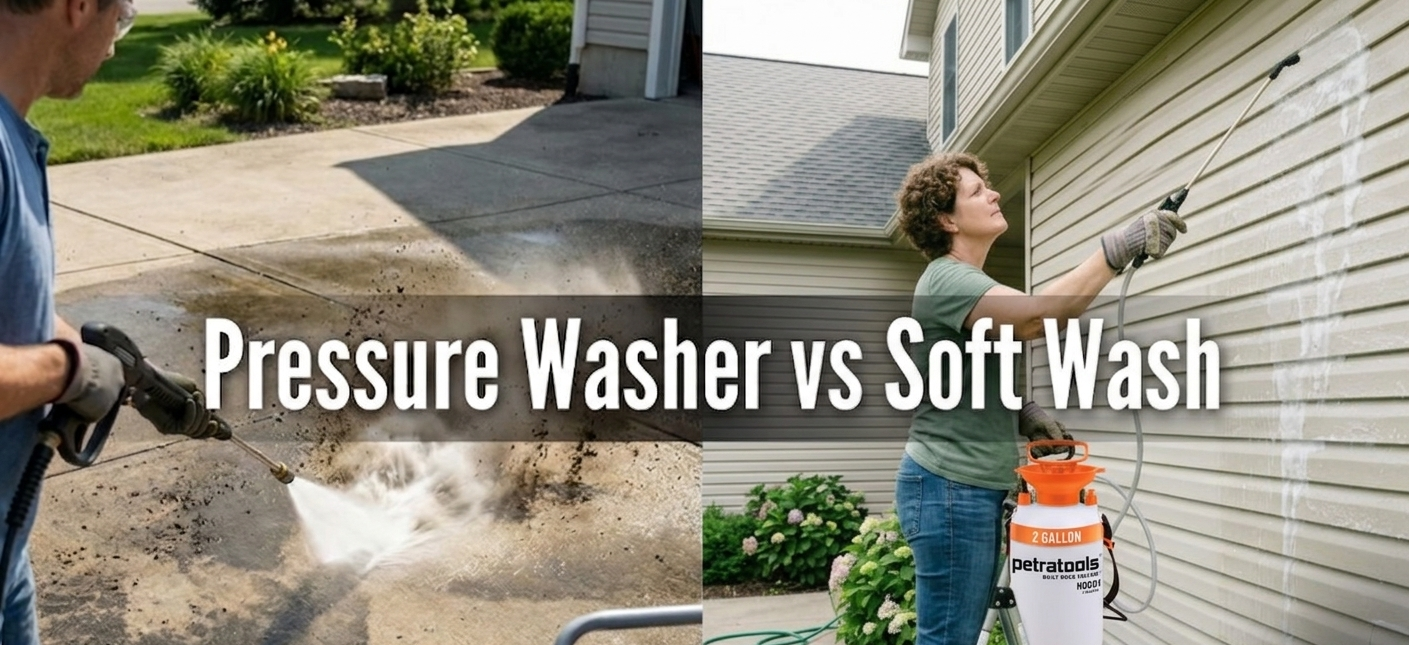
Why the Cleaning Method You Choose Matters
When exterior surfaces get dirty, most homeowners immediately think pressure washer.
The idea of blasting away dirt feels satisfying. Water, pressure, instant results.
But here’s the important detail many people miss:
Not every surface should be pressure washed.
In fact, using high pressure in the wrong situation can:
- damage siding
- force water behind walls
- strip paint or stain
- crack wood fibers
- loosen roof shingles
That’s why many professional cleaners use two different house washing methods:
- Pressure washing
- Soft washing
Each has its place. The key is knowing which method is right for the job.
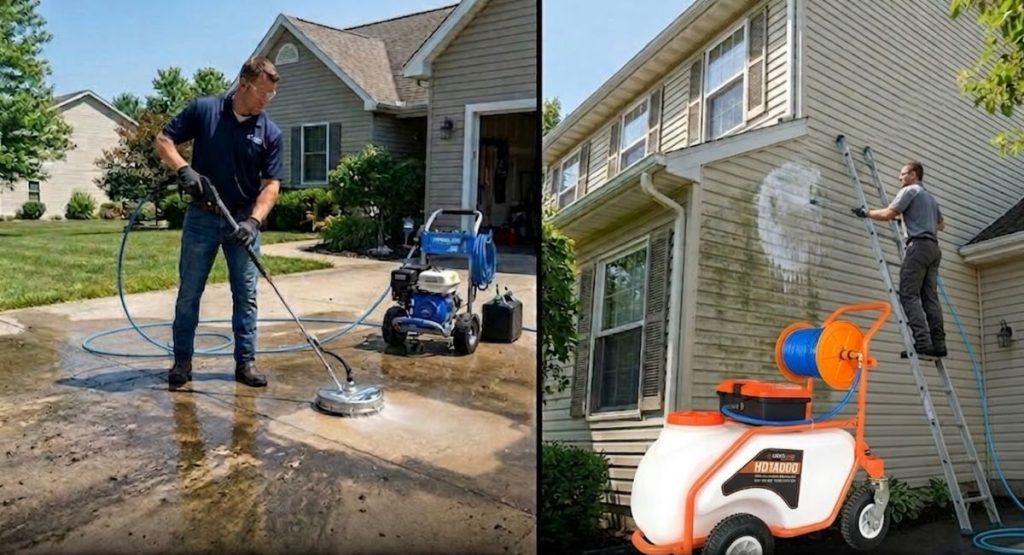
Quick Decision Guide: Should You Pressure Wash or Soft Wash?
If you’re trying to decide quickly, here’s a simple rule of thumb:
| Surface | Recommended Method |
|---|---|
| Concrete driveways | Pressure washing |
| Stone patios | Pressure washing |
| Brick | Pressure washing |
| Vinyl siding | Soft washing |
| Roof shingles | Soft washing |
| Wood siding | Soft washing |
| Painted surfaces | Soft washing |
| Decks and fences | Usually soft washing |
Quick rule:
If the surface is hard and mineral-based, pressure washing works well.
If the surface is painted, sealed, or organic (wood, siding, roofing), soft washing is usually safer.
What Is Pressure Washing?
Pressure washing uses high-pressure water to remove dirt, grime, and buildup from hard surfaces.
Most residential pressure washers operate between:
1,500 – 3,000 PSI
The force of the water does the majority of the cleaning.
Surfaces That Handle Pressure Washing Well
Pressure washing works best on durable, non-porous surfaces such as:
- concrete driveways
- sidewalks
- stone patios
- brick walls
- pavers
These materials can handle strong pressure without damage.
Where Pressure Washing Can Cause Problems
Using high pressure on delicate surfaces can cause damage.
Examples include:
- vinyl siding
- wood siding
- painted surfaces
- roof shingles
- window trim
On these surfaces, the pressure itself can become the problem.
Can Pressure Washing Damage Siding?
Yes, it can if the pressure is too high.
Common problems include:
- forcing water behind siding panels
- stripping paint or stain
- cracking vinyl siding
- damaging insulation barriers
Most siding manufacturers recommend low-pressure cleaning combined with cleaning solutions instead of high PSI washing.
This is one reason soft washing has become the preferred method for many residential exterior cleaning jobs.
What Is Soft Washing?
Soft washing cleans surfaces using low pressure combined with cleaning solutions.
Instead of blasting dirt away, soft washing works by:
- applying a cleaning solution
- allowing it to break down organic growth
- rinsing the surface with low pressure
This approach removes:
- algae
- mildew
- mold
- dirt buildup
- pollen residue
Because the pressure is low, the process is much safer for many exterior materials.
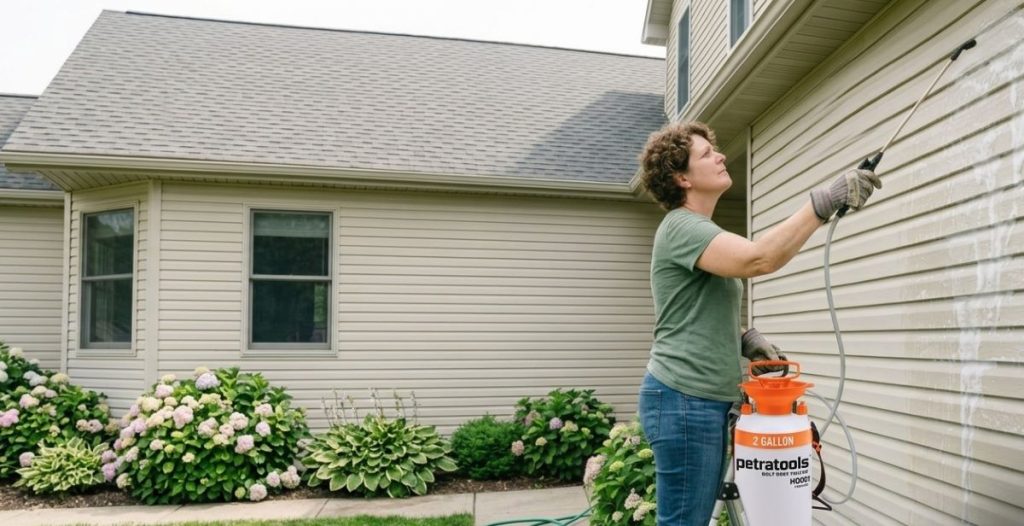
Soft Washing vs Pressure Washing: The Core Difference
Both methods clean outdoor surfaces, but they do it in very different ways.
| Feature | Pressure Washing | Soft Washing |
|---|---|---|
| Cleaning method | High pressure water | Cleaning solution + low pressure |
| Best for | Concrete, stone, pavers | Siding, roofs, fences |
| Risk of surface damage | Higher | Much lower |
| Equipment cost | Often expensive | Much more affordable |
Pressure washing removes debris with force.
Soft washing breaks down contaminants chemically.
Many professionals use both methods depending on the surface being cleaned.
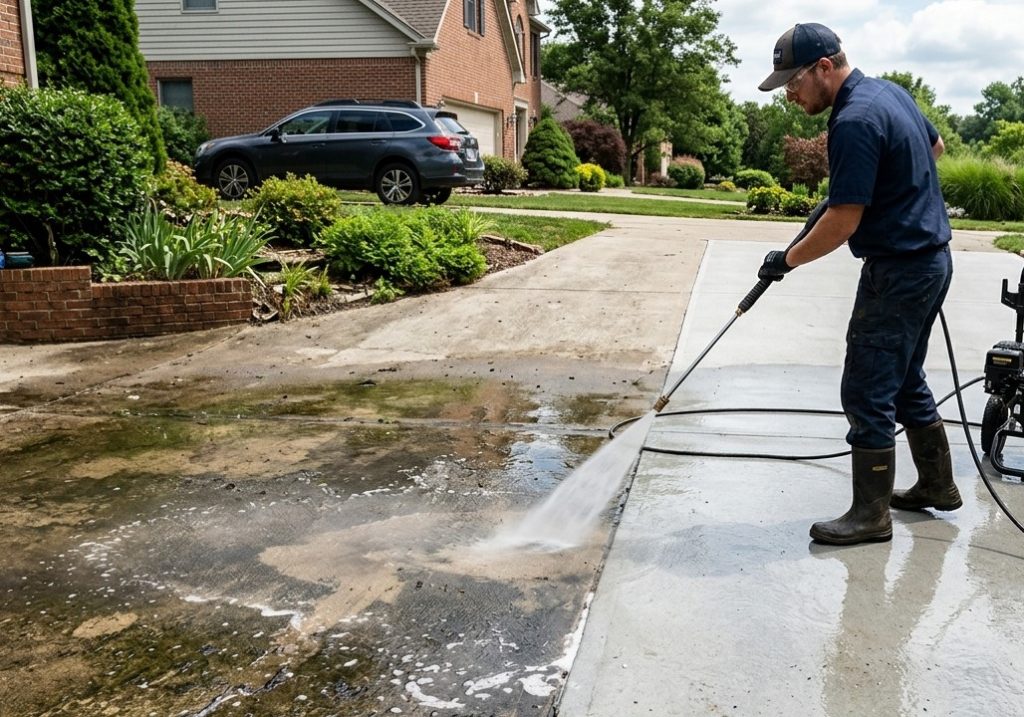
When to Use Pressure Washing
Hard Surfaces With Embedded Dirt
Common examples include:
- Driveways and Concrete: Oil stains, tire marks, and ground-in dirt respond well to high pressure.
- Stone Patios and Walkways: Pressure washing can quickly remove years of grime.
- Paver Surfaces: It helps clean pavers before sealing or sand replacement.
When Soft Washing Is the Better Choice
Soft washing is ideal when surfaces need cleaning without physical force.
This is especially important for materials that can be damaged by pressure.
Vinyl Siding
High pressure can force water behind siding panels. Soft washing cleans safely.
Roof Shingles
Pressure washing can remove protective granules from shingles. Soft washing preserves the roof.
Painted Wood
Low-pressure cleaning prevents paint stripping.
Fences and Decks
Soft washing removes mildew while protecting wood fibers.
For many homeowners wondering “should I pressure wash or soft wash my house siding?” the answer is usually soft washing.
Soft washing is also commonly used when preparing wood surfaces before treatments like deck staining.
Soft Washing Without Expensive Equipment
Many homeowners assume soft washing requires expensive professional equipment.
Many professional soft washing systems actually use very low pressure pumps and chemical injectors, not the high PSI machines most homeowners associate with exterior cleaning.
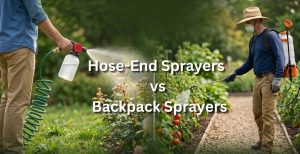
Because the cleaning power comes primarily from the solution rather than the pressure, homeowners can often achieve similar results using pump or backpack sprayers designed for applying cleaners and treatments.
In reality, soft washing mainly requires:
- a cleaning solution
- controlled spray application
- a low-pressure rinse
This is where pump sprayers and backpack sprayers can become a practical option.
For example, tools like the PetraTools Stainless Steel Concrete Sprayer are designed to apply cleaning solutions, sealers, and treatments evenly across large surfaces.
Because the sprayer distributes the solution without high pressure, it works well for:
- siding cleaning solutions
- deck cleaners
- mildew removers
- algae treatments
For larger properties, some homeowners prefer battery-powered backpack sprayers such as the PetraTools HD4000 Battery Backpack Sprayer, which allow continuous spraying without manual pumping.

PetraTools HD4000 Backpack Sprayer
Best for: Lawn care, pest control, property maintenance
Key features: 4-gallon tank, adjustable pressure, rechargeable battery
Availability: In stock for $199.99
Buy ProductThis approach can make soft washing far more affordable than buying a pressure washer system.
Soft Washing Tools That Simplify the Job
If you’re applying exterior cleaning solutions, tools designed for even spray distribution make the job easier and more consistent.
Many homeowners use sprayers like:
- PetraTools Stainless Steel Concrete Sprayer
- PetraTools HD4000 Backpack Sprayer
These tools allow you to apply cleaners evenly across siding, fences, decks, and other surfaces without relying on high pressure.
Typical House Washing Workflow
Many exterior cleaning projects actually combine both methods.
A typical process might look like this:
- Soft wash siding using a cleaning solution
- Rinse with low pressure
- Pressure wash driveway or concrete areas
- Soft wash decks or fences
This hybrid approach allows homeowners to clean their property thoroughly while protecting more delicate surfaces.
Common Cleaning Mistakes Homeowners Make
Using Too Much Pressure
High pressure can gouge wood and damage siding.
Skipping Cleaning Solutions
Water alone often fails to remove mildew and algae.
Spraying Upward on Siding
Water forced upward can seep behind siding panels.
Cleaning Roofs With Pressure Washers
Roof manufacturers typically recommend soft washing instead.
Understanding house washing methods helps prevent these issues.
Industry groups such as the Industry groups such as the Asphalt Roofing Manufacturers Association recommend low-pressure cleaning methods for asphalt shingles to avoid damaging the protective granules.recommend low-pressure cleaning methods for asphalt shingles to avoid damaging the protective granules.
Cost Comparison: Pressure Washing vs Soft Washing
| Method | Typical Equipment Cost |
|---|---|
| Pressure Washer | $200 – $700 + |
| Soft washing setup | Often under $100 |
Professional pressure washing services can cost $200 to $500 per cleaning, depending on home size.
For homeowners who clean their exterior periodically, soft washing with a sprayer can be a budget-friendly alternative.
Safety Considerations When Cleaning Exterior Surfaces
Always:
- wear eye protection
- avoid spraying electrical fixtures
- test cleaning solutions on small areas first
- protect landscaping when using cleaners
Frequently Asked Questions
Yes. Soft washing removes organic growth like algae and mildew more effectively because it uses cleaning solutions rather than pressure alone.
Yes. High pressure can crack siding, remove paint, or force water behind panels.
Soft washing typically uses under 500 PSI, often much lower.
In most cases, yes. Soft washing safely removes dirt, mold, and algae without damaging siding materials.
The Bottom Line
Pressure washing and soft washing both have their place in exterior cleaning.
Pressure washing works best for hard surfaces like concrete and stone.
Soft washing is usually the safer option for siding, roofs, fences, and painted wood.
For homeowners deciding between the two, the key question isn’t just how dirty the surface is.
It’s how much pressure that surface can safely handle.
By choosing the right method for each area of your property, you can keep your home looking clean while avoiding unnecessary damage.