

Introduction
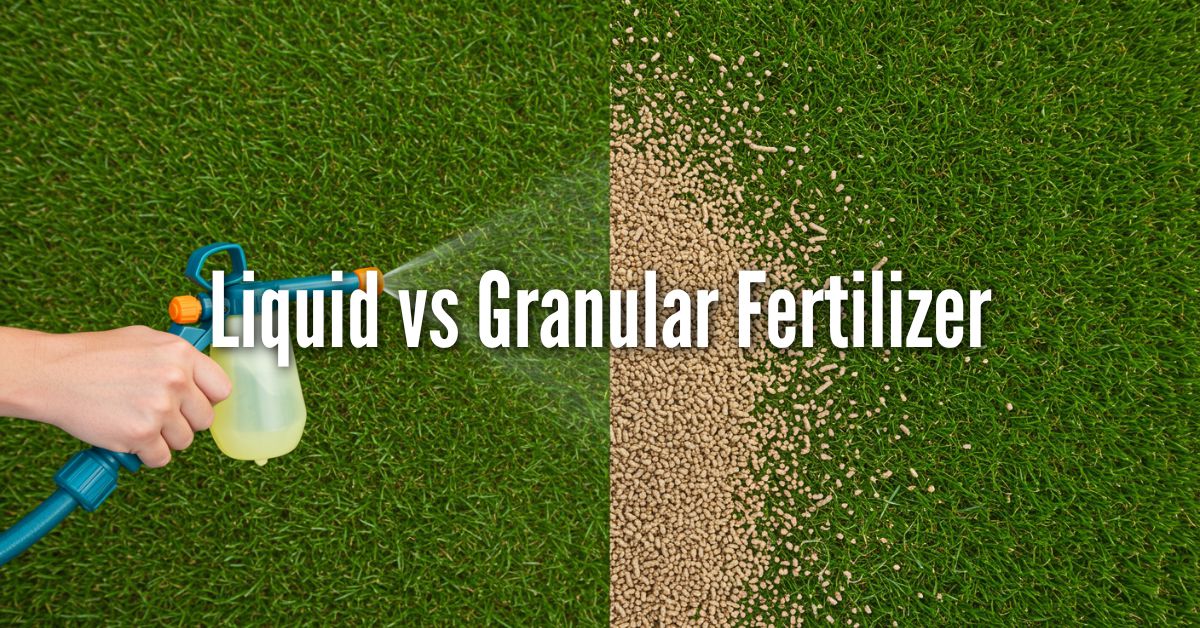
A lush, green lawn doesn’t happen by accident — it happens by feeding your grass the right nutrients at the right time. One of the most common choices homeowners face is whether to use liquid fertilizer or granular fertilizer. These two approaches can both provide essential plant nutrients, but they work in significantly different ways and serve different purposes in a lawn care plan. Understanding how they compare will help you choose the best lawn fertilizer strategy, or combination for your grass’s needs.
Studies and lawn care experts agree that neither option is universally superior; the best choice depends on lawn size, your goals, the timing of application, and real-world conditions like soil and climate. Additionally, ease of application and personal preference also influence choosing a fertilizer. Modern lawn programs increasingly combine both fertilizer types because turf responds best to layered nutrient delivery.
How Fertilizer Works: Basics You Need to Know
What Fertilizer Does for Your Lawn
Fertilizer supplies nitrogen, phosphorus, and potassium. These are the core nutrients your grass needs for strong roots, deep green color, and consistent growth throughout the season. Whether liquid or granular, these nutrients ultimately support photosynthesis, cell structure, and stress resilience. Liquid fertilizer introduces nutrients in a solution that roots and blades can absorb quickly, while granular fertilizer slowly releases nutrients into the soil as granules break down over time.
Healthy lawns rarely fail because of fertilizer choice alone. Timing, soil condition, and application consistency matter just as much.
Buy ProductLiquid Fertilizer Explained
What Is Liquid Fertilizer?
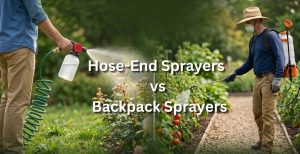
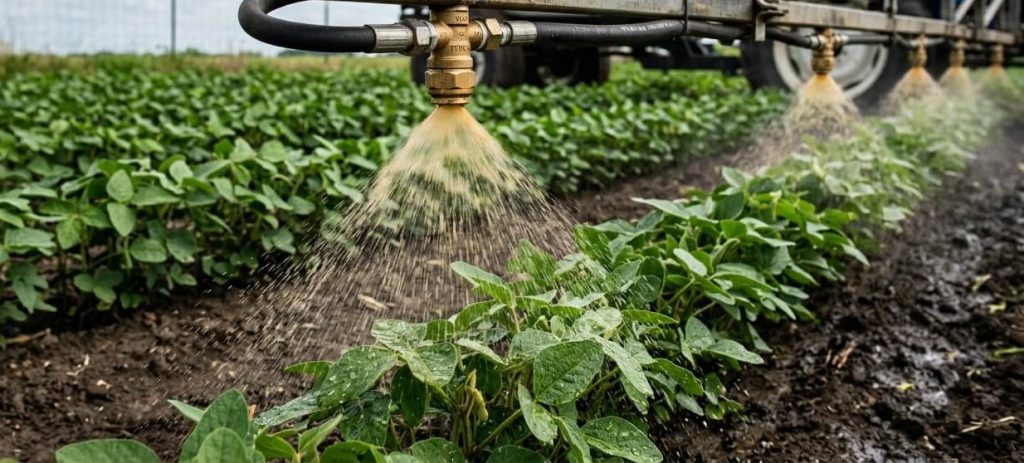
Liquid fertilizer is a concentrated mix of lawn nutrients dissolved in water and sprayed onto the grass or soil. Because it’s already dissolved, the lawn can absorb nutrients immediately after application. This type of fertilizer is sometimes used with a hose-end sprayer, backpack sprayer, or professional spray system to deliver nutrients evenly across the turf.
Pros of Liquid Fertilizer
Liquid fertilizer applications offer several advantages: fast green-up, immediate nutrient availability, and precise coverage because each drop carries a uniform blend of nutrients. Liquid fertilizer can also be combined with weed controls or foliar feeds, making it efficient for addressing multiple lawn needs in a single application. This is why liquid feeding is popular for corrective lawn care.
Cons of Liquid Fertilizer
Because nutrients are available right away, liquid fertilizer must be applied more frequently than slow-release granular formulas. Repeated applications may increase labor and product use, especially on larger lawns. Additionally, liquid fertilizers can be more costly per application and have a shorter shelf life than granular forms.
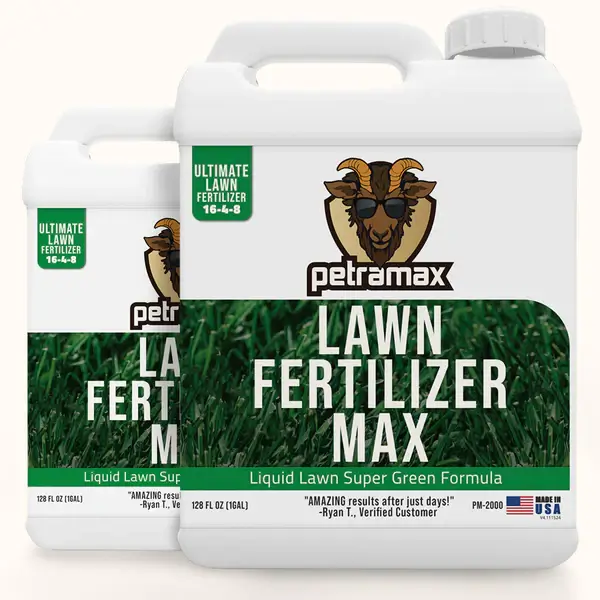
PetraMax Liquid Fertilizer Max
Best for: Lawn greening, root development, all grass types, spring & summer feeding, disease resistance
Key features: 16-4-8 NPK, quick & slow-release nitrogen, chelated iron, pet-friendly, treats up to 12,800 sq. ft.
Availability: In stock, starting from $78.99
Buy ProductGranular Fertilizer Explained
What Is Granular Fertilizer?
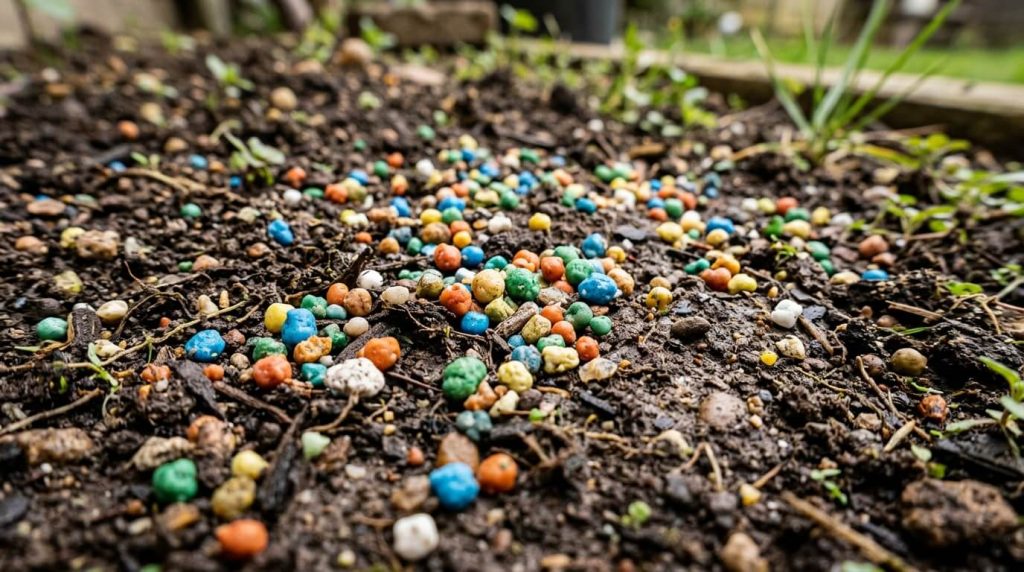
Granular fertilizer consists of dry pellets that sit on the soil surface. Once watered in by irrigation or rain, they slowly release nutrients over weeks or months. Because the nutrient release is gradual, it supports steadier lawn growth over longer periods.
Pros of Granular Fertilizer
Granular fertilizer’s slow-release nature means fewer applications and longer intervals between feedings. Many homeowners find granular products more cost-effective, especially when treating large lawns. The visible granules also make it easy to verify coverage and distribute evenly using a spreader.
Cons of Granular Fertilizer
Applying granular fertilizer requires spreaders and physical effort to distribute evenly. Without careful watering in, nutrients may not reach the root zone effectively. Some granular formulations can leave salt residues that may harm roots if overapplied. Most problems arise from overapplication, not the fertilizer itself.
Liquid vs Granular Fertilizer – Side-by-Side Comparison
This fertilizer comparison highlights why neither system replaces the other entirely.
Speed of Results
In real lawn conditions, liquid fertilizer delivers nutrients rapidly, often greening turf within days. This makes it ideal for fast results or remedying stress. Granular fertilizer releases nutrients slowly, which supports consistent growth over weeks.
Duration of Effect
Where liquid fertilizer provides a quick pulse of nutrients, granular fertilizer’s slow-release profile means fewer applications and longer-lasting plant feed. Homeowners often find that a seasonal schedule using both types gives the best coverage.
Ease of Use
Liquids usually spray easily with minimal equipment (hose-end sprayers). Granular products require spreaders and water activation, but need fewer repeat treatments.
Cost Considerations
Liquid fertilizers can be more expensive per application, particularly on larger lawns or when frequent applications are needed. Granular fertilizers are generally more economical in bulk and require less frequent use.
Cost should be evaluated per season, not per application, since liquid programs typically require more frequent feeding.
When Each Excels
Quick fixes, foliar feeding, and stress recovery favor liquid options. Long-term lawn nourishment and broad-area maintenance lean toward granular products. For many lawns, an integrated plan using both throughout the season yields the best results.
How to Choose the Right Fertilizer for Your Lawn
Match to Lawn Needs
Smaller lawns or lawns needing a rapid nutrient boost often benefit from liquid fertilizer. Larger lawns or lawns with steady growth goals usually perform well with granular fertilizer. Experienced lawn programs match fertilizer type to lawn size and feeding goals.
Consider Season and Climate
Cooler temperatures and early growth stages may respond better to liquid fertilizer, while seasonal transitions and long-term maintenance lean on slow-release granular products.
Soil and Coverage
Sandy soils that drain quickly can benefit from multiple liquid applications for rapid absorption. Dense or clay soils often hold granular nutrients effectively over time.
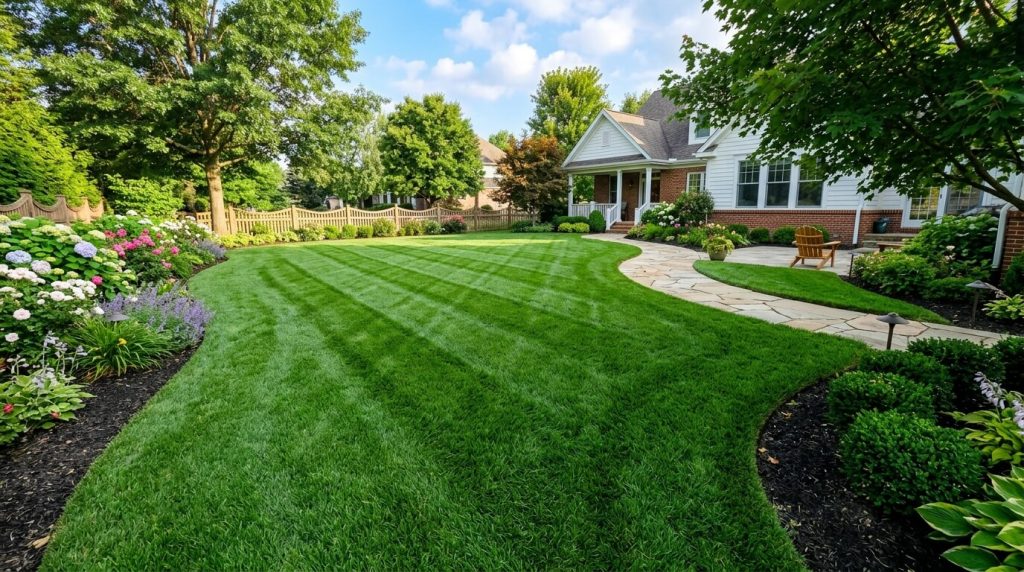
Best Lawn Fertilizer Options for Liquid & Granular Feeding 2026
Once you understand how liquid and granular feeding work together, the next step is choosing products that support that strategy.

PetraMax Neighbor's Envy
Best for: Deep green color, all grass types, drought & heat tolerance, season-long turf care
Key features: 7 key nutrients in one bottle, visible green-up in 7–14 days, covers up to 16,000 sq. ft. per gallon, pet safe once dry
Availability: In stock — from $56.99 (1 gallon)
Buy ProductDisclaimer: The fertilizer products mentioned in this guide, including Neighbor’s Envy Liquid Fertilizer and PetraMax Lawn Fertilizer Max, have been used and evaluated in real lawn applications and are recommended because they perform well with the strategies discussed here. As with any lawn care product, results can vary depending on your soil, climate, and how the fertilizer is applied.
Both fertilizers are designed for homeowners who want reliable, visible lawn improvement, but they serve slightly different purposes depending on your feeding strategy.
PetraMax Lawn Fertilizer Max
Best for homeowners looking for a balanced, versatile feeding program. It supports rapid greening, root development, and overall turf resilience. This makes it ideal when alternating liquid-style feeding with seasonal granular support.
Choose PetraMax Lawn Fertilizer Max when you want:
• Faster visible greening
• Recovery from lawn stress
• Flexible seasonal feeding
Neighbor’s Envy Fertilizer
Designed as a longer-duration feeding option, this fertilizer excels at maintaining consistent growth across larger lawn areas. It’s well suited as a foundational granular feed that carries turf through peak growth periods.
Buy ProductChoose Neighbor’s Envy when you want:
• Fewer seasonal applications
• Sustained nutrient delivery
• Broad-area lawn maintenance
Practical Strategy
Many homeowners get the best results by using:
PetraMax Lawn Fertilizer Max → for targeted boosts and seasonal greening
Neighbor’s Envy Fertilizer → for steady baseline feeding
This hybrid approach mirrors professional lawn care schedules.
Lawn Care Seasonal Fertilizer Calendar
| Season | Lawn Growth Focus | Primary Fertilizer Strategy | Why this Works | Pro Tips |
|---|---|---|---|---|
| Spring | Wake-up growth & root activation | Start with liquid fertilizer, follow with light granular feeding | Liquid provides fast nutrient uptake after dormancy; granular sustains early growth | Apply once grass is actively growing, not while dormant |
| Early Summer | Peak growth & turf density | Granular fertilizer with optional liquid spot feeding | Slow release supports steady growth during high activity | Use liquid only for uneven or stressed patches |
| Late Summer | Heat stress management & recovery | Light liquid fertilizer applications | Controlled feeding supports recovery without forcing excess growth | Avoid heavy granular feeding during extreme heat |
| Fall | Root strengthening & nutrient storage | Granular fertilizer with optional early-season liquid boost | Slow nutrients build root reserves before dormancy | This is one of the most important feeding windows |
| Winter | Dormancy & observation | No fertilization | Turf is inactive; nutrients won’t absorb effectively | Use this time to plan next season’s schedule |
Here’s what that seasonal calendar looks like in practice
A balanced lawn feeding plan uses both liquid and granular fertilizer at different times of year to match turf growth cycles.
Spring — Wake-Up Feeding
Use liquid fertilizer to jump-start nutrient uptake and correct winter stress. Follow with a light granular application for sustained growth.
Early Summer — Growth Support
Granular fertilizer provides steady feeding during peak hybrid growth. Liquid spot feeding can address stressed areas.
Late Summer — Recovery & Heat Management
Use liquid fertilizer strategically to support stressed turf without overfeeding.
Fall — Root Strengthening
Granular fertilizer builds root reserves and prepares grass for winter dormancy.
This calendar structure mirrors professional lawn programs while staying DIY friendly.
Fertilizer Application Tips
When to Apply
Apply fertilizer when grass is actively growing at temperatures above roughly 50°F and the soil is moist but not waterlogged. Avoid heavy rain forecasts immediately after application.
Watering In
Granular fertilizer requires watering in to activate nutrient release. Liquid fertilizer needs a rain-free window of about 24 hours after application so nutrients can absorb into the soil.
Frequency Recommendations
Liquid fertilization is most effective when applied at 3–6-week intervals during active growth, while granular products may be applied every 6–12 weeks depending on blend and lawn needs.
Safety & Environmental Considerations
Avoiding Lawn Burn
Overapplying any fertilizer — especially fast-acting liquid formulations — can cause nutrient burn. Always follow label directions and calibrate spreaders or sprayers to avoid excess.
Environmental Impact
Proper application methods help limit runoff and protect waterways. Slow-release granular products typically reduce nutrient loss compared to liquid that can wash away if applied before rain.
Frequently Asked Questions
No — liquid fertilizer is best for immediate needs and frequent feeding, while granular fertilizer excels at slow-release, long-term nourishment.
Yes — many lawn care plans alternate liquid applications for quick greening with granular products for sustained feeding.
Liquid fertilizer needs a sprayer or hose-end applicator, while granular fertilizer needs a spreader.
Most professional lawn programs combine liquid and granular feeding because turf benefits from both rapid correction and sustained nutrition.
Conclusion
There isn’t a universal “best” fertilizer — the ideal choice depends on your lawn’s condition, the results you want, and your maintenance schedule. Liquid fertilizer delivers speed and precision; granular fertilizer delivers consistency and lasting performance. In many cases, a hybrid approach that uses both types at the right times will create a greener, healthier lawn you can be proud of in 2026 and beyond.