

Introduction: Clear Water Is Not Just About Sanitizer
You can balance chlorine. You can clean filters. You can test pH like a lab technician.
And your water can still look hazy, like someone stirred a glass of skim milk into your spa.
That is because sanitizers kill contaminants. They do not remove the microscopic debris that makes water appear cloudy. That job belongs to a water clarifier.
A well-chosen hot tub clarifier or spa clarifier acts like a magnetfor the particles your filter cannot catch on its own, helping your system finish the cleanup work faster and more efficiently.
Water clarity is often the first visible indicator of how well a filtration system is performing.
Buy Product on AmazonWhat a Water Clarifier Actually Does And Why It Works
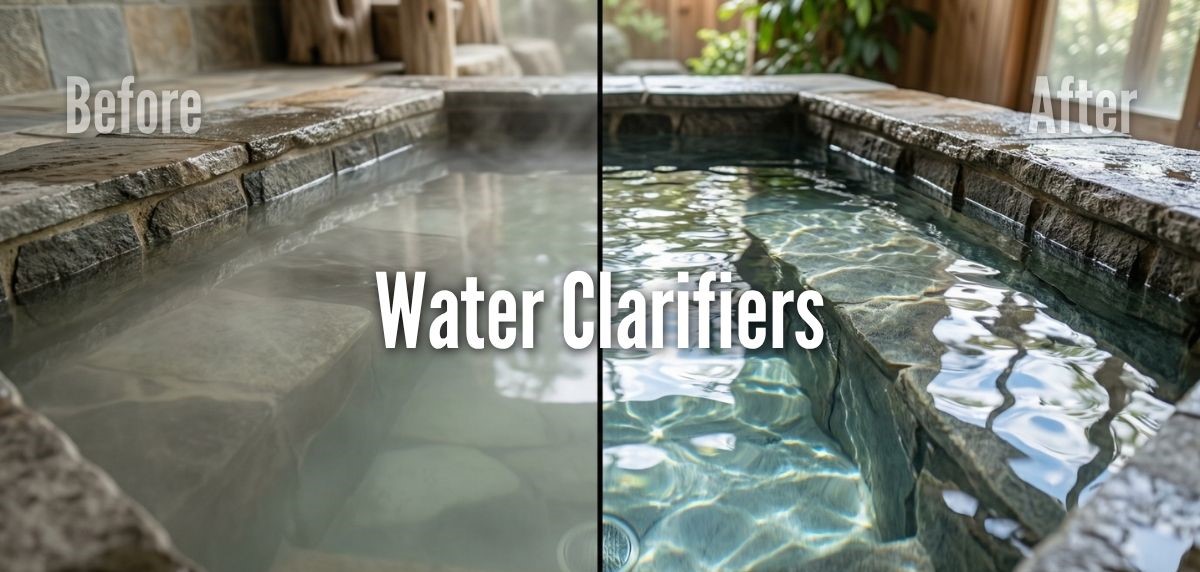
Image suggestion: Hot tub and cold plunge tub side by side – looking clean.
Alt text: Clear hot tub and cold plunge water after treatment with a water clarifier.
In simple terms:
- Tiny particles in water are too small for filters to trap.
- Clarifiers bind those particles together.
- The combined debris becomes large enough for the filter to remove.
- Water clarity returns as circulation continues.
Clarifiers do not replace sanitizers. They assist your filtration system by making it more effective.
Common Causes of Cloudy Hot Tub or Plunge Water
Understanding when to use a water clarifier starts with knowing what causes haze in the first place.
Microscopic Organic Load
Body oils, lotions, sweat, and detergents introduce particles too small to filter directly.
High Bather Use
More people equals more suspended debris, even when sanitizer levels are correct.
Fine Particulates
Dust, pollen, and environmental debris easily enter uncovered systems.
Water Changes or Refills
Fresh water can contain dissolved minerals that temporarily cloud clarity.
Cold Plunge Circulation Differences
Cold plunges often rely on smaller pumps and shorter filtration cycles, which makes clarifier support even more useful.
When You Should Use a Hot Tub Clarifier
Use a clarifier as a targeted correction tool, not a daily chemical.
You should add clarifier when:
- Water looks dull even after balancing chemicals
- You notice persistent haze after heavy use
- Filters are clean but clarity has not returned
- You recently refilled the tub or plunge
- Fine debris remains suspended after shocking
Think of it as pressing the “reset visibility” button for your water.
Types of Water Clarifiers And How They Differ
Not all clarifiers behave the same. Choosing the right one depends on how your system is used.
Polymer-Based Clarifiers
These are the most common and safest for portable spas and plunges.
Best For:
- Routine clarity correction
- Small filtration systems
- Weekly or biweekly maintenance support
They bind particles gently without affecting water balance.
Enzyme + Clarifier Blends
These combine particle binding with organic breakdown.
Best For:
- High-use hot tubs
- Oils, sunscreen, or body residue buildup
- Reducing scum lines and filter clogging
They work slower but address root contamination better.
Heavy-Duty Flocculants (Less Common for Spas)
These drop debris to the bottom for vacuum removal.
Best For:
- Large pools, not typical hot tubs
- Situations where manual cleanup is possible
Most residential spa owners should avoid flocculants because they require extra labor and can overwhelm small filters.
How Clarifier Needs Differ Between Hot Tubs and Cold Plunges
Cold plunges may look like small spas, but their water chemistry behaves very differently.
Hot Tubs
Hot water accelerates:
- Organic breakdown
- Chemical reactions
- Oil and contaminant dispersion
- Sanitizer demand
This is why spa clarifiers are often paired with oxidizers, enzymes, or stronger treatment routines.
Cold Plunges
Cold water slows those same reactions dramatically.
Instead of fighting heat-driven contamination, plunge maintenance focuses on:
- Capturing fine particulate matter
- Supporting mechanical filtration
- Maintaining stable, simple water conditions
- Avoiding unnecessary chemical stacking
Because of this difference, clarifiers designed specifically for cold plunge environments are typically more streamlined and concentration-driven rather than multi-additive spa formulas.
Products such as Pure 55 Water Clarifier are formulated specifically for cold plunge systems, where the goal is helping compact filtration capture suspended particles without introducing unnecessary additives used in heated spa environments.
| Feature | Hot Tub Clarifier | Cold Plunge Clarifier |
|---|---|---|
| Higher water temperature | Yes | No |
| Targeted oils/lotions heavily | Yes | Minimal |
| Works with frequent sanitizer demand | Yes | Lower demand |
| Designed for compact filtration | Sometimes | Always |
| Typical goal | Manage organic load | Capture fine particles |
| Best use case | Heated spa maintenance | Cold plunge water maintenance |
Pure 55: 3-in-1
Gentle yet powerful formula that keeps your plunge tank clean & clear.
What to Look for in the Best Spa Clarifier
When comparing products, focus less on brand names and more on functional characteristics.
Compatibility With Small Filtration Systems
Hot tubs and cold plunges use compact filters. The clarifier must support, not overload them.
Low-Dose Effectiveness
You want a formula that works in small volumes without repeated applications.
No Impact on Sanitizer Performance
A good water clarifier works alongside chlorine, bromine, or other systems without interfering.
Residue-Free Operation
Proper clarifiers should not create foam, slime, or secondary buildup.
Example of a Modern Clarifier Approach
Products like Pure 55 Water Clarifier are designed specifically for cold plunge and low-temperature systems, using concentrated polymer technology to help filtration systems capture suspended particles quickly without altering balance or requiring complicated dosing routines.
This type of formulation is especially useful for homeowners who want a predictable maintenance rhythm rather than reactive chemical adjustments.
It is not intended to replace full spa-style treatment systems, but rather to support clarity in streamlined plunge setups.
How to Use a Water Clarifier Properly
Adding more clarifier does not mean faster results. Precision matters.
Step 1: Balance Your Water First
Always ensure:
- pH is within range
- Sanitizer levels are correct
- Filters are clean
Clarifiers work best in balanced water.
Using more clarifier than recommended does not speed up results and can actually reduce filtration efficiency.
Step 2: Add the Recommended Dose
Small, measured additions allow proper particle binding without overloading filtration.
Step 3: Run Circulation
Operate pumps for at least one full filtration cycle. This allows the clarifier to gather suspended debris.
Step 4: Clean the Filter After Treatment
Your filter just captured everything the clarifier collected. Rinse it to restore performance.
How Often Should You Use a Water Clarifier?
Most systems benefit from occasional use, not constant dosing.
| Usage Pattern | Clarifier Frequency |
|---|---|
| Light residential use | Every 2 – 4 weeks |
| Heavy family use | Every 1 – 2 weeks |
| Cold plunge setups | After water refresh or visible haze |
| Post-party recovery | Single corrective dose |
Clarifiers are maintenance tools, not everyday additives.
Clarifier vs Shock: Understanding the Difference
Many people confuse these two treatments.
| Treatment | What It Does | What It Does Not Do |
|---|---|---|
| Shock | Oxidizes contaminants | Does not clear particles |
| Clarifier | Removes suspended debris | Does not sanitize |
| Both Together | Restore water fully | Work best as a team |
Shock cleans chemically. Clarifiers clean visually.
You often need both, just at different stages.
Maintenance Habits That Reduce the Need for Clarifiers
The best way to use a spa clarifier is to not need it often.
- Rinse filters weekly
- Shower before entering (huge impact)
- Keep water covered when not in use
- Maintain consistent sanitizer levels
- Avoid overcorrecting with chemicals
These habits reduce suspended waste before it becomes visible.
In most cases, cloudy water is not a sanitation failure but a filtration limitation that a properly matched clarifier helps resolve.
Buy Product on AmazonFAQ: Water Clarifiers for Spas and Plunges
Yes, when used as directed, clarifiers are designed to be compatible with acrylic spas, portable tubs, and most filtration systems.
Yes. Overdosing can reduce effectiveness by overwhelming filters rather than helping them.
Most systems clear within one filtration cycle, though heavily clouded water may take 24 hours.
They can. Cold water slows natural breakdown of contaminants, making filtration assistance helpful after repeated use.
No. Sanitization must be corrected first. Clarifiers only address suspended particles, not biological growth.
Some clarifiers are designed for heated spa environments, while others are formulated specifically for cold-water systems. Choosing a product matched to your setup helps avoid over-treating the water and keeps filtration working efficiently.
Final Thought: Clarity Is a Filtration Problem, Not Just a Chemical One
Clear water is the result of chemistry and mechanics working together. Sanitizers handle safety. Filters handle removal. A well-formulated water clarifier helps those two systems connect, especially in smaller environments like hot tubs and cold plunges where circulation capacity is limited.
Used correctly, a clarifier is less of a fix and more of a precision tool that keeps water looking as clean as it already is.
Matching the clarifier to the type of system you’re running matters far more than simply adding more product.