


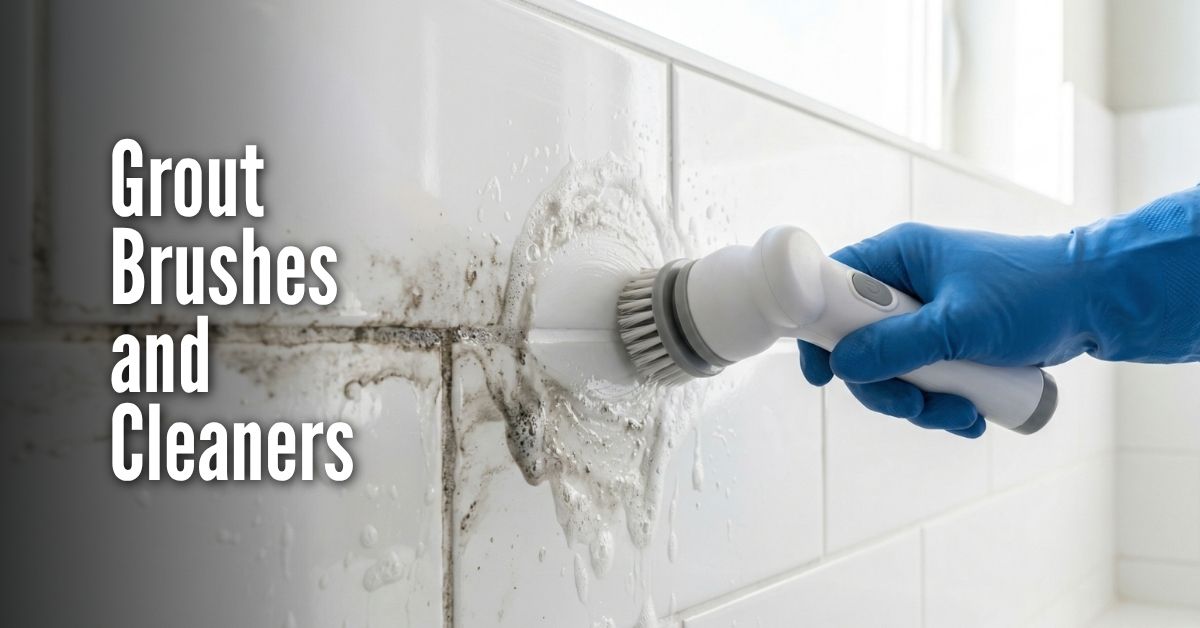
Why Grout Gets So Dirty in Bathrooms
Grout is porous. That means it absorbs:
- Soap residue
- Hard water minerals
- Body oils
- Moisture that feeds mildew
Unlike tile, which wipes clean easily, grout traps buildup below the surface. That’s why regular bathroom cleaners often don’t fix the problem.
You’re not just wiping dirt away. You’re lifting it out.
Types of Grout Brushes And When to Use Each
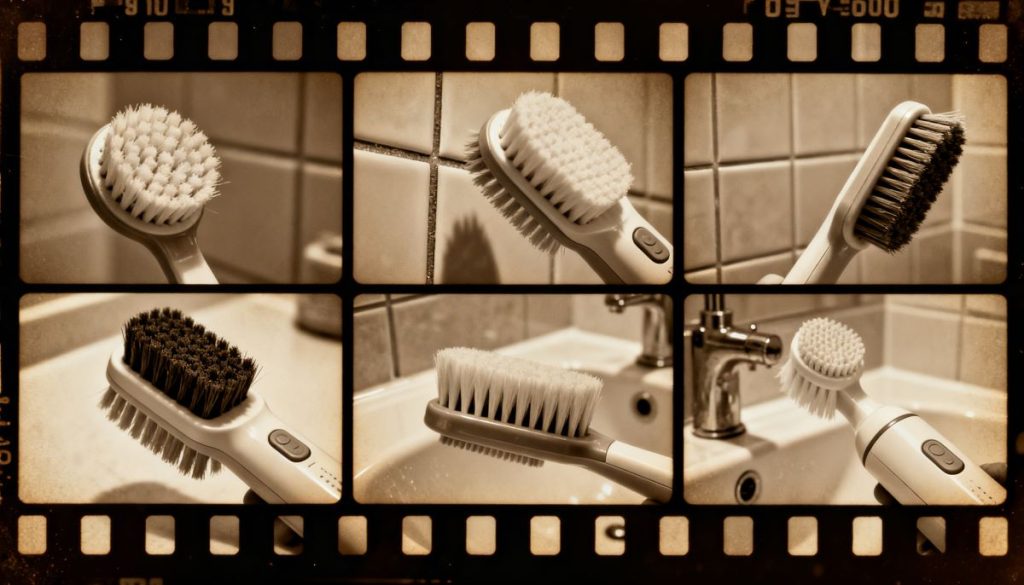
Handheld Grout Brushes
Best for:
- Small bathrooms
- Detail work around fixtures
- Occasional cleaning
They offer control but require more physical effort, especially on floors or large shower walls.
Long-Handle or Angled Brushes
Best for:
- Floor grout lines
- Reducing bending or kneeling
- Maintenance cleaning
They help with reach but still rely on manual scrubbing power.
Powered Grout Brushes
Best for:
- Deep cleaning buildup
- Larger bathrooms or tile areas
- Homeowners who want faster results with less strain
Electric brushes apply consistent agitation, which matters because grout needs repeated motion to release trapped debris.
Electric vs Manual Scrubbing: What Actually Works Better?
Manual scrubbing can work. It just takes longer and often leads to uneven results.
A powered tool maintains:
- Consistent pressure
- Repeated motion
- Better contact in narrow grout lines
That combination removes buildup more efficiently without needing harsh chemicals.
Grout Brush Buyer’s Guide: Choosing the Right Tool for the Job
Not all grout brushes are built for the same kind of cleaning. The best choice depends on how much tile you’re dealing with, how deep the buildup is, and how much effort you want to put into the process.
Quick Comparison of Common Grout Brush Types
| Brush Type | Best For | Cleaning Power | Effort Required | When to Choose It |
|---|---|---|---|---|
| Small Handled Brush | Detail work, tight areas | Moderate | Higher | Occasional spot cleaning |
| Angled Manual Brush | Floor grout and reach | Moderate | Medium | Routine maintenance |
| Large Surface Brush | Wide tile areas | Moderate-High | Medium | Faster coverage on bathrooms |
| Powered Electric Brush | Deep cleaning, heavy buildup | High | Low | Full bathroom refresh or neglected grout |
When a Larger Grout Brush Makes Sense
If you’re cleaning expansive tile floors or large shower walls, a wider brush head helps cover more area evenly. It reduces cleaning time and keeps pressure consistent across long grout runs.
Homeowners often underestimate how much faster a slightly larger brush can do the job, especially when paired with a cleaner designed to break down soap film and mildew.
When to Step Up to a Powered Grout Brush
For deeper restoration cleaning or larger bathrooms, powered options like the BEEST GroutCare electric scrubber or BEEST rechargeable grout cleaning brush provide continuous motion that manual scrubbing struggles to match.
They are especially useful when:
- Cleaning multiple bathrooms
- Restoring grout that hasn’t been cleaned in years
- Wanting consistent results without heavy physical effort
Instead of pushing harder, the tool does the repetition for you while you guide it along the grout line.
Choosing the Right Grout Cleaner
The cleaner matters just as much as the brush.
Look for formulas designed to:
- Break down soap film and oils
- Lift mildew staining
- Penetrate porous grout surfaces
Avoid overly acidic solutions unless you know the grout is sealed and compatible. Many homeowners assume stronger is better, but correct chemistry plus agitation is what actually works.
Always test cleaners on an inconspicuous area first, especially on natural stone tile, which can be damaged by the wrong chemistry.
Many tile manufacturers recommend neutral or mildly alkaline cleaners to avoid degrading grout over time.
Step-by-Step: How to Clean Bathroom Grout Properly
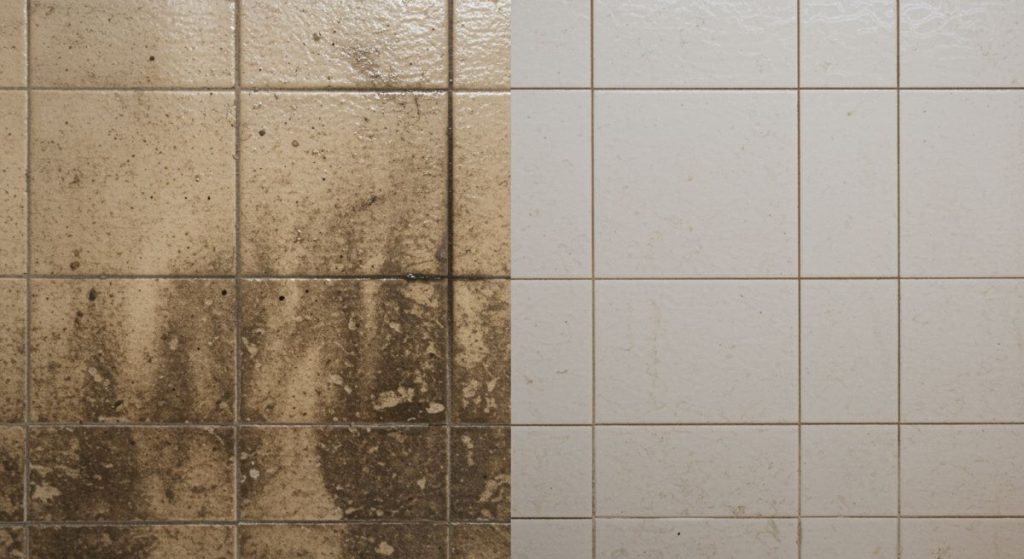
Once you’ve chosen the right brush and cleaner, technique is what determines how well the grout actually responds.
Step 1: Apply Grout Cleaner Generously
Allow it to sit for 5–10 minutes so it can penetrate buildup.
Step 2: Agitate the Surface
Use your grout brush to work along the joints, not across them. This keeps bristles inside the grout channel where cleaning is needed.
Step 3: Rinse and Wipe
Remove lifted residue with clean water and a microfiber cloth.
Step 4: Inspect and Repeat If Needed
Heavily stained grout may require a second pass rather than more aggressive scrubbing.
Most bathrooms take 30–60 minutes to clean properly depending on buildup. Severely stained grout may require a second session rather than more aggressive scrubbing.
When a Powered Grout Brush Makes the Job Easier
For bathrooms with extensive tile, a powered option like the BEEST GroutCare electric scrubber or BEEST rechargeable grout cleaning brush can reduce the physical effort required while delivering consistent results.
These tools are especially helpful when:
- Cleaning shower walls where pressure is hard to maintain
- Tackling years of buildup
- Wanting a faster full-bathroom refresh rather than spot cleaning
Instead of relying on arm strength alone, the brush provides the motion while you guide placement.
Maintenance Tips to Keep Grout Clean Longer
Once the grout is clean, keeping it that way is much easier.
- Wipe tile surfaces weekly to reduce buildup
- Run ventilation to limit moisture retention
- Perform a light cleaning every few months instead of waiting for heavy staining
- Consider sealing grout annually if it’s unsealed
Preventive care dramatically reduces how often deep scrubbing is needed.
FAQs: Grout Cleaning Questions Homeowners Ask
Yes. Narrow, stiff bristles are designed to reach into grout lines without damaging surrounding tile.
General cleaners help with surface dirt but often don’t penetrate grout deeply enough for restoration cleaning.
Most bathrooms benefit from a deep clean every 3–6 months depending on moisture levels and usage.
For larger spaces or heavily used showers, they can significantly reduce time and effort while improving consistency.
Final Thought
Grout cleaning doesn’t have to mean hours on your hands and knees. The right brush, paired with the right cleaner and technique, turns it into a manageable maintenance task instead of a major project.
The right tools and methods turn grout cleaning from an exhausting chore into routine maintenance you only need to do a few times a year.
Author Bio: Kimberly Schuyler has over 10 years of experience writing practical home and property maintenance guides based on real-world testing, industry best practices, and hands-on DIY experience.