

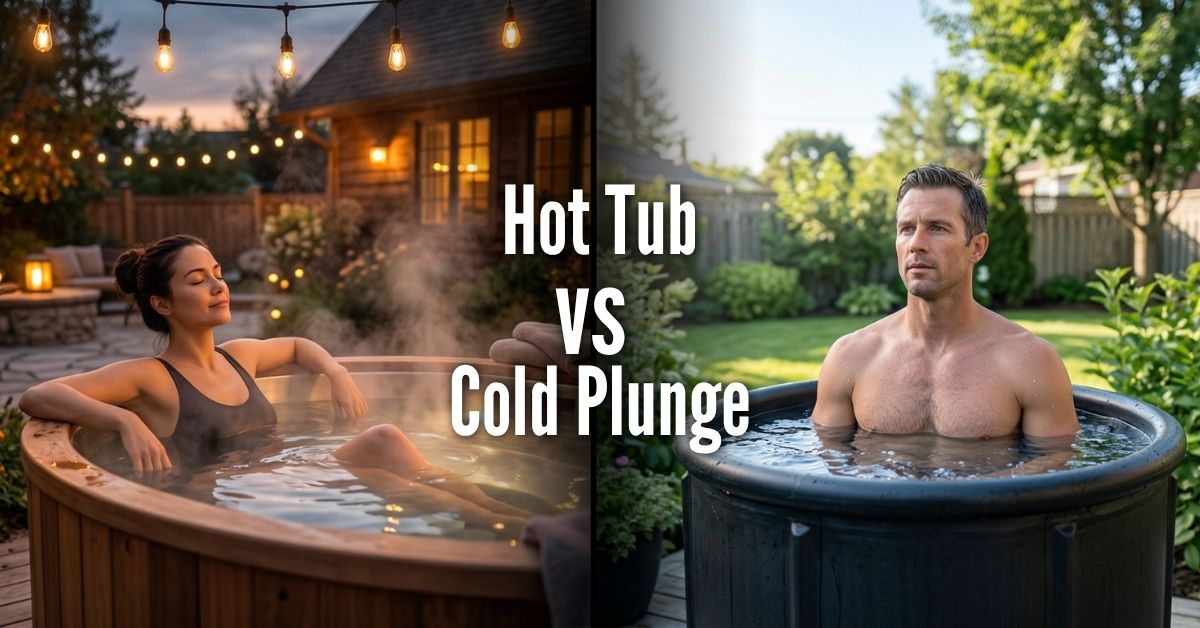
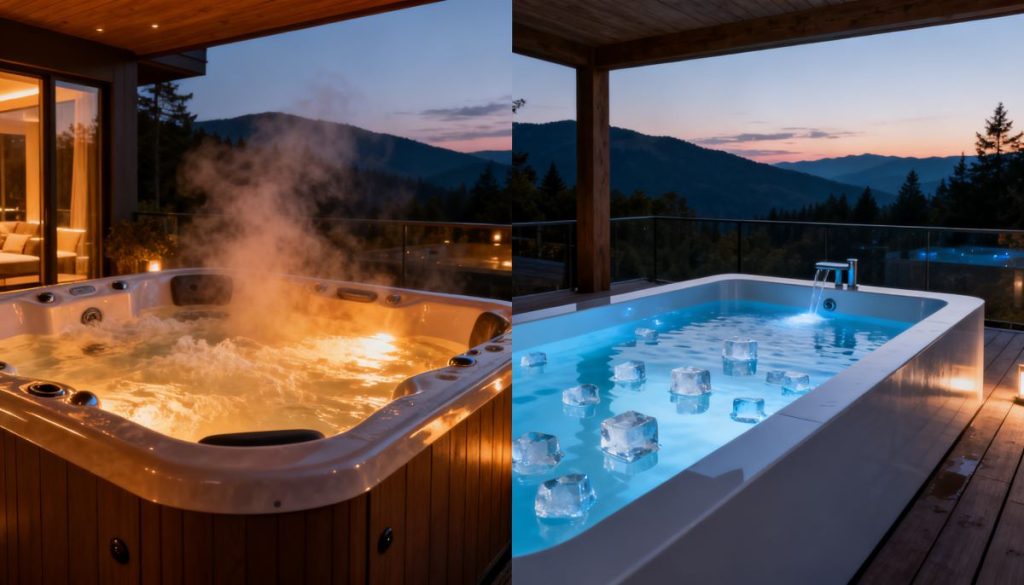
Hot tubs and cold plunges are often grouped together as “hydrotherapy,” but they serve very different purposes. One uses heat to relax and increase circulation. The other uses cold to manage inflammation and stimulate recovery. Understanding when to use each can help you get better results instead of guessing which is right.
The Core Difference: Heat Therapy vs Cold Therapy
Hot tubs and cold plunges do very different things in the body.
- Heat opens blood vessels and relaxes muscles.
- Cold constricts blood vessels and helps control inflammation.
They are not interchangeable. Each one works best in specific situations.
This is why the decision is less about preference and more about choosing the right tool for recovery, relaxation, or performance.
Here’s a simple way to understand the difference:
| Therapy | What Happens in the Body | Main Benefit |
|---|---|---|
| Hot Tub | Blood vessels open | Relaxation, mobility |
| Cold Plunge | Blood vessels tighten | Inflammation control, recovery |
Circulation and Cardiovascular Response
Hot Tub:
Warm water increases blood flow to muscles and joints. This helps with stiffness and general soreness.
Best for:
- Tight muscles
- Chronic aches
- Relaxation after a long day
Cold Plunge:
Cold water shifts blood toward the core, then circulation rebounds when you get out. This can help reduce swelling and support recovery after hard activity.
Best for:
- Post-workout recovery
- Reducing inflammation
- Feeling more alert
Muscle Recovery and Inflammation
Cold plunges are often used right after intense exercise because they may help limit the inflammatory response that leads to soreness.
Hot tubs help muscles loosen, but they do not reduce inflammation the same way. That makes heat better later, not immediately after a tough workout.
Simple rule:
Cold first for recovery. Heat later for comfort.
Research on cold water immersion shows the strongest benefits for short-term recovery, while heat therapy is more associated with mobility and comfort rather than acute inflammation control.
Nervous System, Stress, and Sleep Effects
Cold exposure can feel like a reset. Many people report feeling more awake and focused afterward.
Hot water encourages the body to slow down, which is why it is commonly used in the evening.
If you want to relax and unwind, soak in a hot tub. If you want to wake up and feel recharged, plunge in a cold tub.
Hot tubs can support better sleep because they help the body relax and lower stress levels.
Cold plunges can be stimulating, which is great earlier in the day but not ideal right before bed for some people.
When to Use Each
Both the benefits and the timing of the soak matter.
| Situation | Recommended | |
|---|---|---|
| After intense workout | Cold plunge | |
| Morning reset | Cold plunge | |
| Evening relaxation | Hot tub | |
| Joint stiffness | Hot tub | |
| Swelling or inflammation | Cold plunge |
Can You Use Both? Contrast Therapy
Some people alternate between hot and cold. This is called contrast therapy.
A common approach:
- 3 to 4 minutes in heat
- 1 to 2 minutes in cold
- Repeat a few cycles
This may help circulation and is often used in sports recovery settings.
Practical Considerations for Home Use
If you are setting this up at home, consistency and safety matter more than extremes.
Once you decide how you want to use heat or cold, the next consideration is how these systems function at home.
Typical temperature ranges:
- Cold plunge: 50°F to 59°F
- Hot tub: 100°F to 104°F
Hot and cold systems operate very differently, especially when it comes to water care. Cold plunges are usually smaller, less filtered, and used in short sessions, which means maintenance looks different than traditional hot tubs.
Basic Setup Essentials Most People Overlook
Before focusing on routines, make sure the system itself stays consistent. A few small tools make a big difference in keeping cold plunge water usable and predictable:
- A reliable thermometer to monitor safe temperature ranges (like our thermometer once available)
- A simple sanitation routine to prevent buildup between uses
- A cold-plunge–specific stabilizing treatment such as Pure 55 Water Treatment designed to help maintain clean, balanced water in low-temperature systems
Unlike hot tubs, cold plunges typically do not rely on heated circulation or traditional spa chemistry, so using products intended specifically for cold water environments helps simplify maintenance without overcomplicating the setup.
These are not complicated additions, but they help avoid the most common issue with home plunges: water that becomes unpleasant or needs to be changed more often than expected.
Water Quality and Maintenance Matter
Even though cold plunges operate differently than hot tubs, the water still needs to stay clean between uses. Standing water can collect contaminants over time, especially with repeated use.
A stabilizing treatment like Pure 55 Water Treatment can help maintain clarity and balance without complicated maintenance routines.
Which One Should You Choose?
Choose a cold plunge if your main goal is:
- Exercise recovery
- Managing inflammation
- Short, focused sessions
- Feeling energized afterward
Choose a hot tub if your goal is:
- Relaxation
- Loosening tight muscles
- Stress relief
- Longer, more comfortable soaks
Many people use both because they solve different problems.
FAQ
Cold is usually better right after intense activity because it helps manage inflammation. Heat is better later for relaxation.
Most people see benefits within 2 to 5 minutes.
Yes, as long as temperatures are safe and you stay hydrated.
Yes. Even cold systems need basic sanitation to stay safe.
Neither is “better.” They serve different purposes depending on timing and need.
Bottom Line
Cold plunges are useful when you want to recover or reduce inflammation.
Hot tubs are better when you want to relax, loosen up, or wind down.
Used correctly, they complement each other rather than compete.