

What Those NPK Numbers Really Mean and Why They Matter
Every fertilizer label shows three numbers, like 24-0-6. That’s the NPK ratio:
- N (Nitrogen): Helps grass grow and stay green
- P (Phosphorus): Supports roots, especially in new lawns
- K (Potassium): Helps grass handle stress like heat or drought
For most established lawns, nitrogen is doing most of the work.
If you want to take the guesswork out of fertilizing, a basic soil test can show what nutrients your lawn is actually lacking. Many local extension offices offer simple testing that helps you choose a fertilizer based on real conditions instead of trial and error.
Buy ProductOrganic vs. Synthetic Fertilizers: Which Should You Use?
This isn’t about one being good and the other bad. It’s about how quickly you want results.
| Type | How It Works | Best For |
|---|---|---|
| Organic | Breaks down slowly, feeds the soil | Long-term improvement |
| Synthetic | Nutrients available right away | Quick green-up |
| Blended Programs | Mix of both | Balanced approach |
Many homeowners use faster-acting fertilizer during peak growing times, then focus on maintaining soil health over time
When to Fertilize: Timing Matters More Than Brand
Fertilizer only works when grass is actively growing.
Cool-season lawns – common in northern areas:
- Early spring: Light feeding
- Late spring: Growth support
- Early fall: Most important feeding
- Late fall: Pre-winter support
Warm-season lawns:
- Late spring through summer is the main window.
Applying fertilizer at the wrong time is one of the biggest reasons people don’t see results.
Choose Fertilizer Based on What You Want to Fix
Instead of asking what’s “best,” ask what your lawn needs right now.
| Goal | What to Look For |
|---|---|
| Improve color | Higher nitrogen |
| Thicker lawn | Balanced formula |
| Help stressed grass | Added potassium |
| Maintain growth | Slow-release nitrogen |
Common Fertilizer Types Homeowners Use
All-Purpose Fertilizers
Good for regular feeding without pushing too much growth.
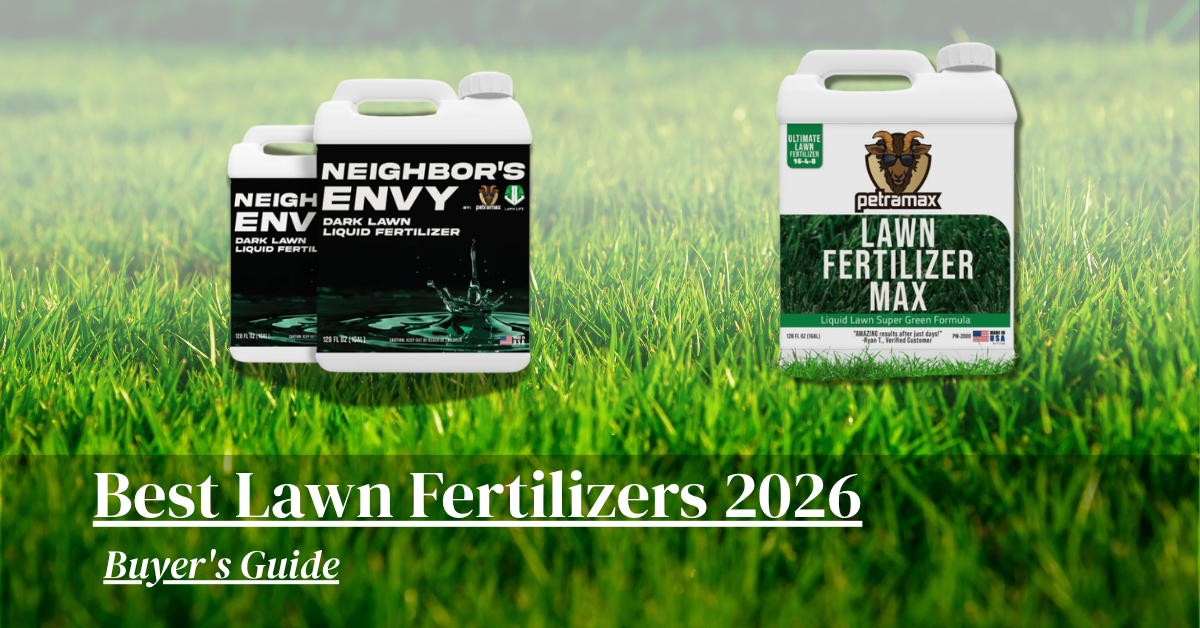
Products like PetraMax Lawn Fertilizer Max are used to maintain steady color and density throughout the season.
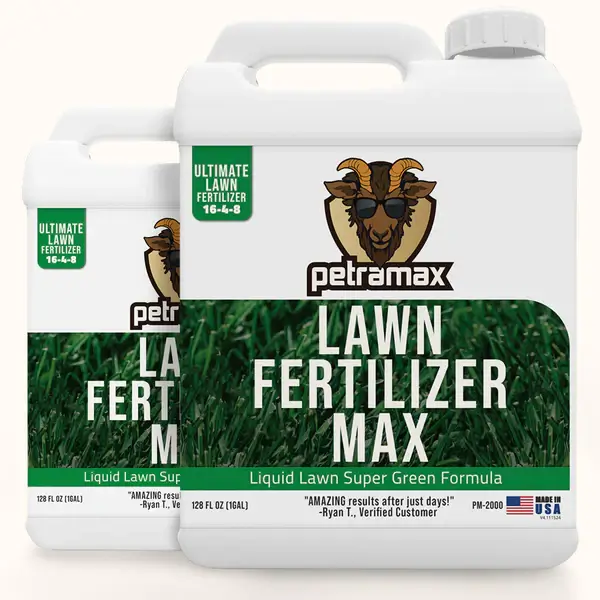
PetraMax Liquid Fertilizer Max
Best for: Lawn greening, root development, all grass types, spring & summer feeding, disease resistance
Key features: 16-4-8 NPK, quick & slow-release nitrogen, chelated iron, pet-friendly, treats up to 12,800 sq. ft.
Availability: In stock, starting from $78.99
Buy ProductNitrogen-Focused Fertilizers
Used when lawns need a noticeable boost, especially after winter.
Formulas such as PetraMax Nitrogen Max deliver the nitrogen grass needs during active growth.
Blends for Deeper Green Color
Designed to improve appearance while still supporting overall health.
Neighbor’s Envy is often used when homeowners want richer color without overstimulating growth.
How to Apply Fertilizer the Right Way
Even a good fertilizer won’t help if it’s applied incorrectly.
Basic rules to follow:
- Apply to dry grass
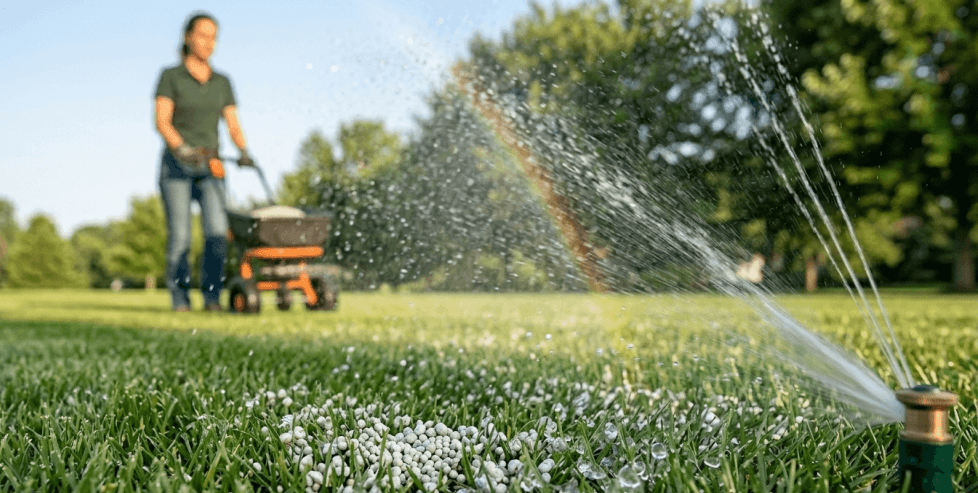
- Water lightly afterward
- Use a spreader for even coverage
- Don’t overapply
- Fertilize when grass is growing, not dormant
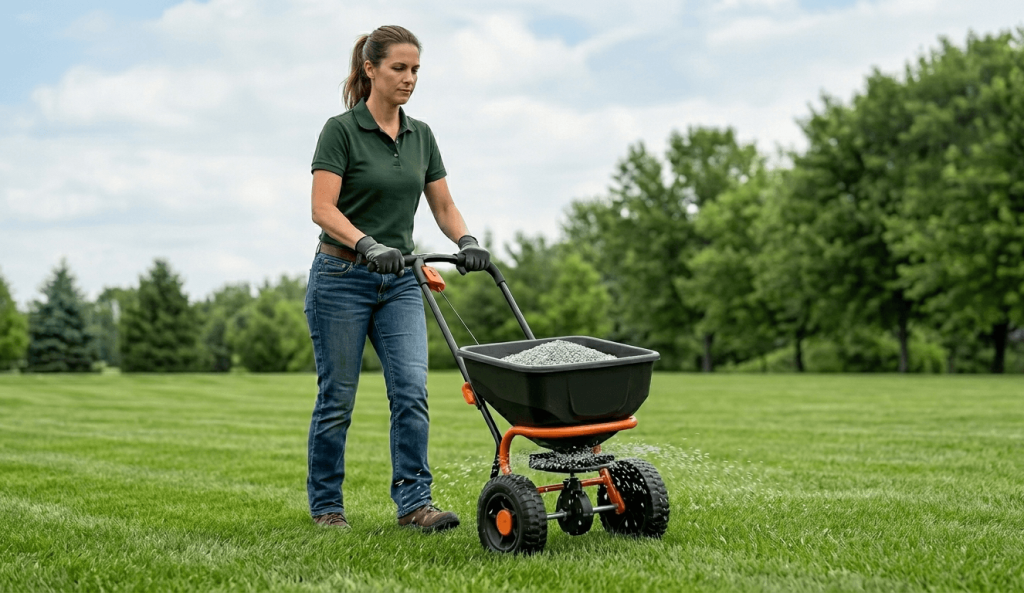
Fertilizing is just one part of building a healthier lawn. Many homeowners pair a feeding program with other lawn and landscape treatments to improve soil condition, color consistency, and overall curb appeal throughout the season.
Slow-Release vs. Quick-Release Nitrogen
| Feature | Slow-Release | Quick-Release |
|---|---|---|
| Feeds lawn | Gradually | Immediately |
| Burn risk | Lower | Higher if overused |
| Growth | Steady | Fast Surge |
| Applications | Fewer | More frequent |
Many fertilizers combine both so you get an early response plus longer feeding.
How Much Fertilizer Does a Lawn Need?
Most lawns need 2 to 4 pounds of nitrogen per 1,000 sq. ft. per year, split into several applications.
Too much fertilizer can cause:
- Excess mowing
- Weak roots
- More disease problems
- Runoff into surrounding areas
A steady plan works better than heavy applications.
Common Fertilizing Mistakes
Fertilizing too early: Wait until the lawn is growing.
Applying before heavy rain: Nutrients can wash away.
Trying to force fast color: Healthy lawns come from steady feeding.
Building a Simple Fertilizer Schedule
| Season | What To Do |
|---|---|
| Spring | Light feeding |
| Early Summer | Support growth |
| Late Summer | Help lawn handle stress |
| Fall | Strengthen roots |
Fall is the most important step most people skip.
How to Choose the Right Product
If you’re comparing products and trying to narrow it down, start by matching the fertilizer to your lawn’s current condition rather than looking for a one-size-fits-all solution.
When comparing fertilizers, focus on:
- Nitrogen level for the season
- Slow-release ingredients for consistency
- Coverage that matches your yard size
- Application method you’ll actually use
- A schedule you can stick to
The best fertilizer is the one you apply correctly and regularly.
FAQ: Fertilizer Questions
No. Too much can damage grass and create weak growth.
Usually not. Three to four applications per year is enough.
Not necessarily. Many people use one reliable product and adjust timing.
Schedule. Timing has a bigger impact than switching brands.
Bottom Line
Fertilizing isn’t about throwing nutrients on the lawn and hoping for the best. It’s about feeding grass when it can use those nutrients.
Understand what the numbers mean, apply at the right time, and stay consistent. That approach will give you better results than chasing quick fixes or changing products every season.Author: Kimberly Schuyler