

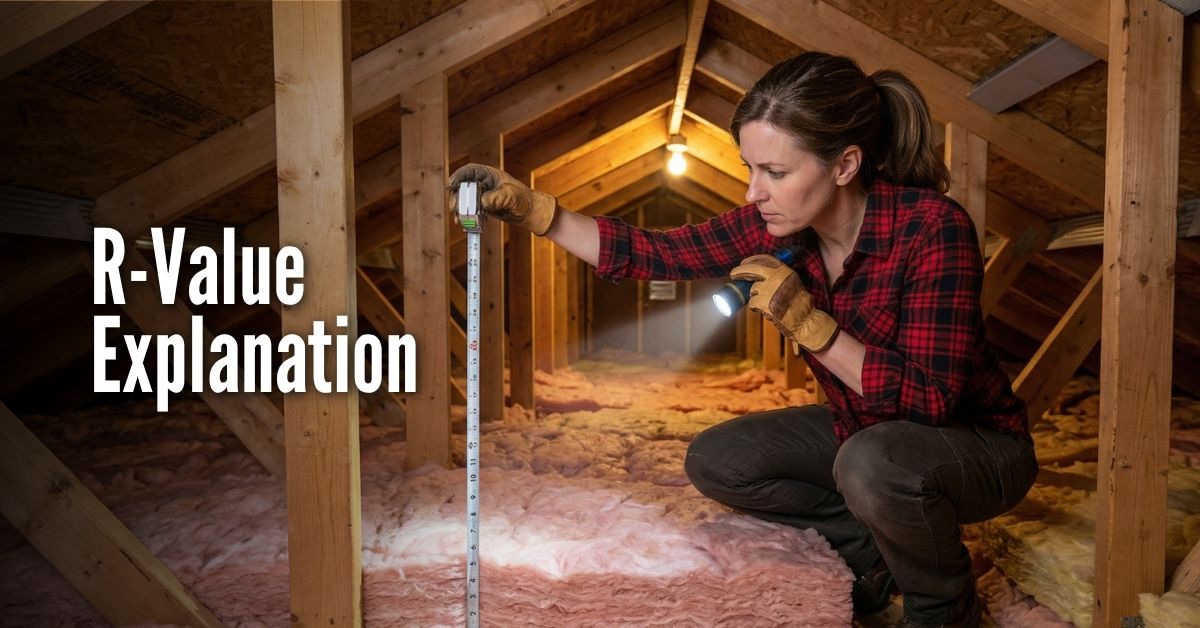
What Is R-Value and Why Does It Matter?
R-value is simply a measure of how well insulation resists heat flow. The higher the R-value, the better the material slows heat from moving in or out of your home.
In winter, insulation helps keep warm air inside. In summer, it helps keep hot air outside. That means more consistent indoor temperatures, improved energy efficiency, and less work for your HVAC system.
But the goal is not to chase the highest number possible. The goal is to install the right amount of insulation in the right places.
How R-Value Actually Works Without the Science Lesson
R-value depends on a few basic things:
- The type of material
- How dense it is
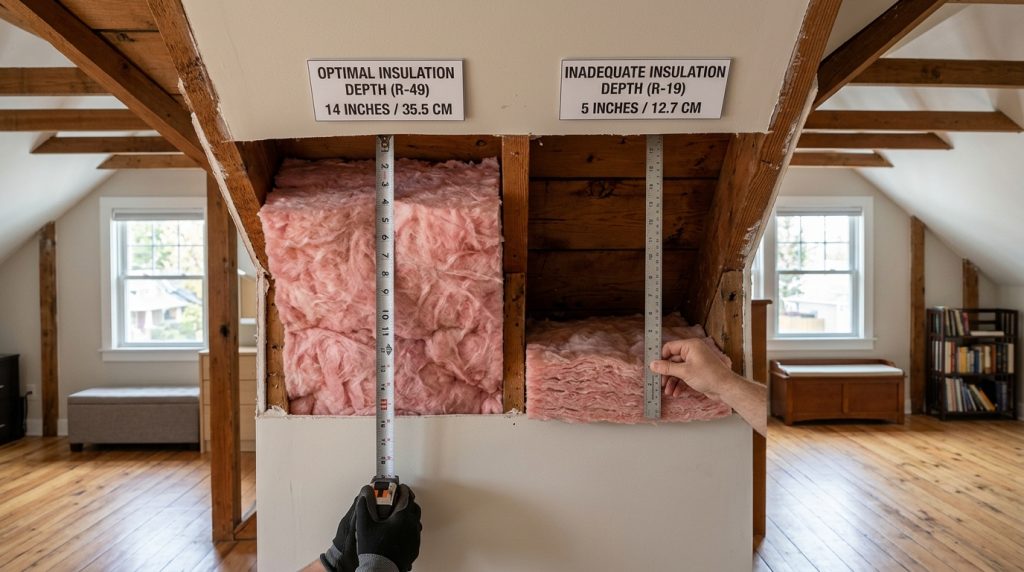
- How thick it is installed
- Whether air can move through or around it
Here is the part many homeowners do not realize: insulation that allows air movement often performs worse in real life than its labeled R-value suggests.
Why Air Movement Matters So Much
If air can leak through gaps, seams, or around insulation, heat travels with it. That reduces effectiveness no matter what the label says.
This is why two homes with the same rated insulation can feel completely different. Air sealing plays a huge role in real-world performance.
Buy ProductRecommended R-Values by Climate Zone
The U.S. Department of Energy divides the country into climate zones to help guide insulation levels. Pennsylvania falls into Zone 4, which means you deal with both cold winters and humid summers.
Typical R-Value Recommendations for Zone 4
| Area of the Home | Recommended R-Value |
|---|---|
| Attic | R-49 to R-60 |
| Exterior Walls | R-20 to R-25 |
| Floors Over Unconditioned Space | R-25 to R-30 |
| Basement Walls | R-15 to R-20 |
| Crawl Spaces | R-19 to R-25 |
These ranges are where most homes see strong efficiency gains without overspending.
Insulation Needs by Room Type
Not every part of your home loses energy the same way. Some areas matter much more than others.
Attics: The Biggest Opportunity
Heat rises, which makes the attic the most common place for energy loss. If attic insulation is lacking, your heating and cooling system has to work much harder.
Upgrading attic insulation is often the first place to start because it delivers one of the best returns.
Basements and Rim Joists: Small Areas That Leak a Lot
These areas tend to allow significant air leakage, especially where framing meets foundation walls. Sealing and insulating here can make a noticeable difference in comfort.
Bonus Rooms, Garages, and Additions
These spaces are often under-insulated during construction and can be harder to keep comfortable. Targeted insulation upgrades help stabilize temperatures and reduce drafts.
Comparing Insulation Materials by R-Value
Different insulation materials reach these R-values in different ways, which is why material choice matters as much as thickness.
| Material | R-Value Per Inch | Air Sealing Ability | Moisture Resistance |
|---|---|---|---|
| Fiberglass Batt | R-3.2 to R-3.8 | No | Low |
| Blown-In Cellulose | R-3.5 to R-3.7 | Limited | Moderate |
| Rigid Foam Board | R-4.5 to R-6.5 | Yes | High |
| Closed-Cell Spray Foam | R-6 to R-7 | Yes | Excellent |
The main difference is not just insulation value per inch, but how well the material maintains performance once installed.
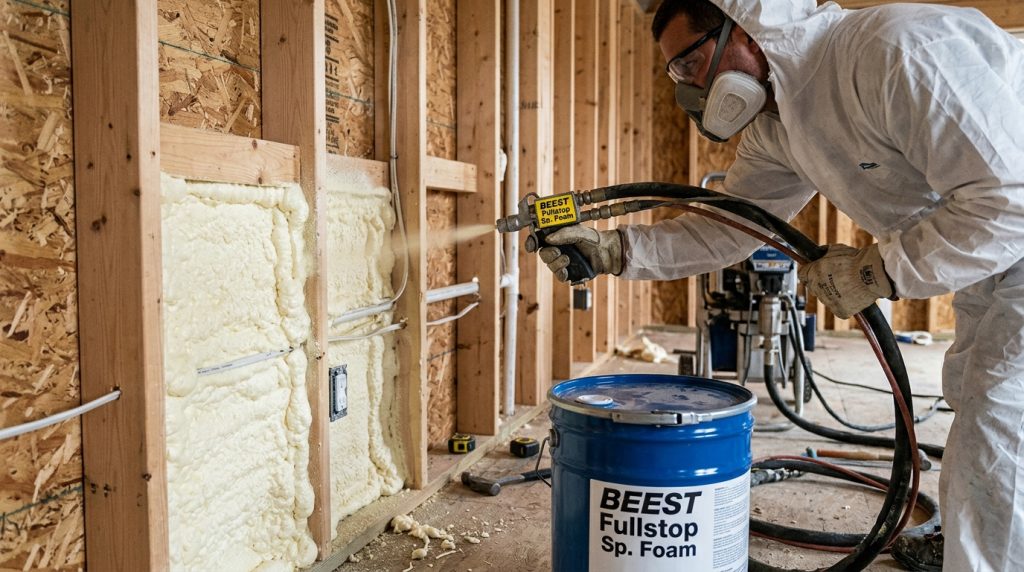
Because closed-cell spray foam delivers a higher R-value per inch than many traditional materials, it is often used where wall depth is limited or where adding thick layers is not practical.
Why Installed R-Value Matters More Than the Label
Insulation only performs well if it is installed correctly. Problems like gaps, compression, or moisture can reduce effectiveness significantly.
Common issues that lower performance include:
- Insulation stuffed around wiring or pipes
- Gaps between batts and framing
- Settling over time
- Air leaks around edges
Materials that both insulate and air seal can help avoid these issues. Closed-cell spray foam expands after application to fill cracks, gaps, and irregular cavities, creating a continuous thermal barrier instead of relying on perfectly fitted batts. This approach helps reduce uncontrolled air movement while delivering high R-value in a relatively thin layer.
At about 2 inches thick, a typical application delivers roughly R-8 while covering up to about 240 square feet, depending on installation.
How to Estimate How Much Insulation You Need
You can take a practical approach instead of guessing.
Step 1: Identify Your Climate Zone
Look up your Department of Energy zone to determine your recommended R-value range.
Step 2: Measure What You Already Have
Check insulation depth and type to estimate current R-value.
Example:
About 6 inches of fiberglass typically equals around R-19.
Step 3: Find the Difference
Subtract your existing R-value from the recommended level to determine what needs to be added or improved.
Step 4: Decide Whether to Add or Upgrade
If insulation is damaged, damp, or poorly installed, replacing sections may perform better than simply adding more material.
If you are unsure about existing insulation levels, a simple visual inspection and depth measurement can provide a useful estimate before deciding whether a professional energy audit is necessary.
When More R-Value Stops Making a Big Difference
Energy savings do not increase evenly as R-value goes up.
- Moving from R-13 to R-30 delivers major improvement
- Moving from R-30 to R-49 still helps
- Moving beyond recommended levels produces smaller gains
At some point, air sealing and proper installation matter more than adding thickness.
Where Spray Foam Can Be Especially Useful
Spray foam is not meant to replace every type of insulation. It is most effective when used in specific problem areas where traditional materials struggle to perform.
Spray foam is not necessary everywhere, but it works well in areas that are hard to insulate with traditional materials:
- Rim joists
- Crawlspaces
- Irregular framing cavities
- Retrofit projects with limited space
- Areas prone to moisture or air leakage
In these situations, combining insulation and air sealing can simplify the upgrade.
For DIY applications, systems like the BEEST Closed-Cell Spray Foam Insulation Kit allow homeowners to apply this type of insulation themselves in targeted areas without needing a full-house installation.
Many homeowners use closed-cell spray foam not to insulate an entire house, but to solve specific problem areas where traditional insulation is difficult to install correctly. These targeted upgrades often deliver noticeable comfort improvements without major renovation.
Buy ProductHomeowners often discover insulation problems through comfort issues rather than inspections. If any of these sound familiar, a targeted foam upgrade may help:
Quick Self-Check
When Targeted Spray Foam May Make Sense:
- Certain rooms are always hotter or colder
- You feel drafts near floors or basement ceilings
- Your attic insulation looks adequate but energy bills are still high
- You are renovating small areas rather than the entire home
- You want to improve performance without opening finished walls
Common R-Value Mistakes to Avoid
Focusing Only on Thickness
More insulation does not always mean better performance if gaps remain.
Ignoring Air Leaks
Unsealed air movement can cancel out insulation benefits.
Mixing Materials Without a Plan
Improper layering can trap moisture or reduce effectiveness.
Insulating the Wrong Areas First
Target the biggest loss points before adding insulation everywhere else.
A Realistic Upgrade Example for a Zone 4 Home
A typical improvement plan might include:
- Air sealing and insulating rim joists
- Bringing attic insulation up to R-49
- Addressing basement leakage points
- Leaving wall insulation as-is if already adequate
This kind of targeted approach often performs better than trying to increase insulation uniformly.
Frequently Asked Questions
No. Once recommended levels are reached, sealing air leaks often provides greater benefit.
Yes, as long as the existing insulation is dry and in good condition.
Most insulation lasts for decades, but performance can decline if exposed to moisture or air movement.
In some applications it can, especially where air sealing is needed along with insulation.
You may see savings quickly, but the main benefit is improved comfort and long-term efficiency.
The Bottom Line
Insulation upgrades work best when combined with proper air sealing and moisture control throughout the home’s exterior and structural transitions.
Instead of asking, “What is the highest R-value I can install?” the better question is, “Where is my home losing energy, and how do I fix that efficiently?”
Targeted insulation, proper air sealing, and the right materials in the right locations almost always outperform simply adding more thickness everywhere.