

Learn when to fertilize your lawn based on grass type. This complete lawn fertilizer schedule explains timing for cool-season and warm-season grasses with practical seasonal guidance.
Why Fertilizer Timing Matters More Than Most Homeowners Realize
Most homeowners know fertilizer helps grass grow greener and thicker.
What many don’t realize is that timing matters just as much as the fertilizer itself.
Grass has natural growth cycles. Applying fertilizer during those cycles allows nutrients to be absorbed efficiently.
Applying fertilizer at the wrong time can lead to:
- wasted nutrients
- excessive top growth
- weak root systems
- increased weed pressure
A proper lawn fertilizer schedule by grass type works with the biology of the grass rather than against it.
Many university extension programs recommend fertilizing lawns primarily during active growth periods rather than during dormancy.
Understanding the Two Major Grass Categories
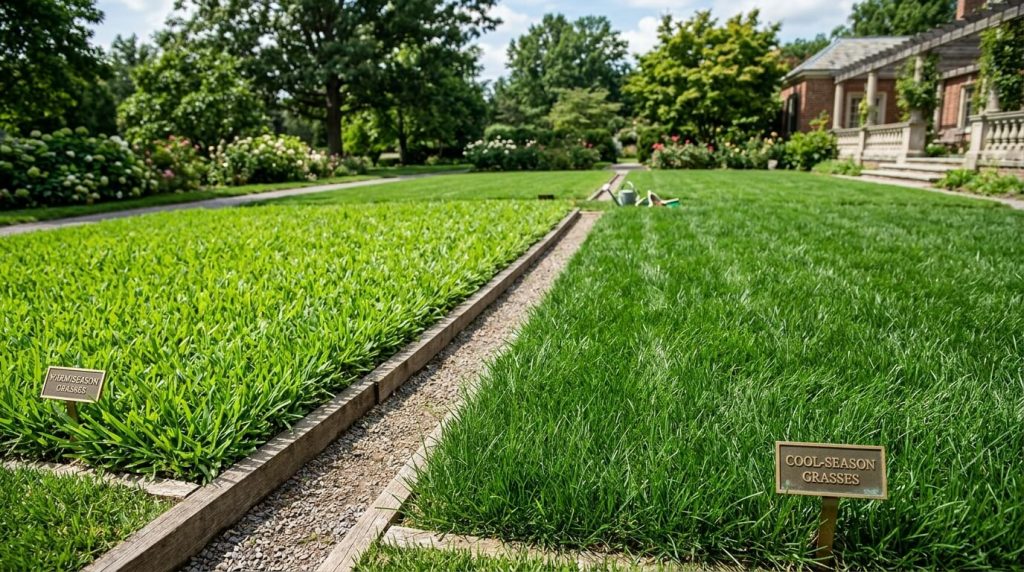
Before building a fertilizer calendar, it’s important to know which type of grass your lawn contains.
Most residential lawns fall into one of two groups:
- cool-season grasses
- warm-season grasses
These grasses grow at different times of the year, which means their fertilizer needs differ significantly.
Cool Season Grass Fertilizer Schedule
Cool-season grasses grow most actively during spring and fall when temperatures are moderate.
Common cool-season grasses include:
- Kentucky bluegrass
- perennial ryegrass
- fine fescue
- tall fescue
These grasses are most common in northern regions.
Early Spring Feeding
As soil temperatures rise above about 50°F, grass begins to wake up.
A light fertilizer application helps lawns recover from winter stress.
Homeowners often apply a balanced fertilizer such as PetraMax Lawn Fertilizer Max to support early growth and color.
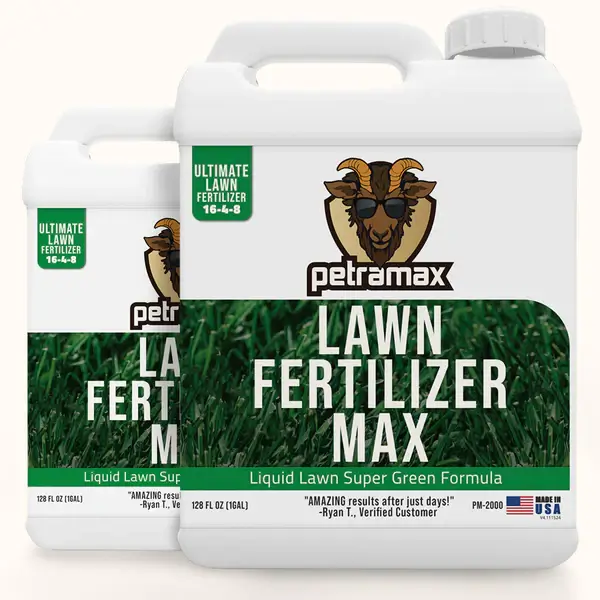
PetraMax Liquid Fertilizer Max
Best for: Lawn greening, root development, all grass types, spring & summer feeding, disease resistance
Key features: 16-4-8 NPK, quick & slow-release nitrogen, chelated iron, pet-friendly, treats up to 12,800 sq. ft.
Availability: In stock, starting from $78.99
Buy ProductLate Spring Application
A second light feeding can support continued growth as temperatures warm.
However, heavy fertilization during late spring can encourage rapid growth that becomes stressed during summer heat.
Moderation is key.
Early Fall Feeding
Fall is the most important fertilizing window for cool-season lawns.
During this period grass focuses on root development rather than top growth.
Fertilizing in early fall helps:
- thicken turf
- strengthen roots
- prepare the lawn for winter dormancy
Many homeowners also apply fertilizers like PetraMax Neighbor’s Envy to encourage deep green color as temperatures cool.

Late Fall “Winterizer” Feeding
A final fall application supports root reserves before winter dormancy.
This feeding helps lawns green up faster the following spring.
Warm Season Grass Fertilizer Schedule
Warm-season grasses thrive in heat and grow most actively during late spring through summer.
Common warm-season grasses include:
- Bermuda grass
- Zoysia grass
- St. Augustine grass
- Centipede grass
- Bahia grass
These grasses dominate southern climates.
Complete Lawn Fertilizer Schedule for Bermuda Grass in the Southeast
Bermuda grass is one of the most popular lawns across the southeastern United States.
Its fertilizer schedule generally follows this pattern.
Late Spring (First Application)
Wait until the grass is fully green and actively growing.
Applying fertilizer too early can encourage weeds rather than turf growth.
Early Summer Feeding
Bermuda grass grows aggressively during summer.
A balanced fertilizer supports strong color and dense growth.
Products like PetraMax Lawn Fertilizer Max can help maintain consistent nutrient levels during the active growing season.
Mid-Summer Feeding
In hot climates, Bermuda lawns may benefit from another light feeding to sustain growth and recovery from heavy use.
However, avoid over-fertilizing during extreme heat.
Late Summer Feeding
A final warm-season application supports the lawn before fall dormancy begins.
Avoid fertilizing too late in the season, which can encourage growth before cooler weather.
Fertilizer Calendar by Grass Type (H2)
A simplified fertilizer calendar can help homeowners quickly determine the right timing.
A proper lawn fertilizer schedule by grass type works with the biology of the grass rather than against it.
| Season | Cool Season Grass | Warm Season Grass |
|---|---|---|
| Early Spring | Light feeding | Wait |
| Late Spring | Optional light feeding | First application |
| Summer | Minimal feeding | Active feeding period |
| Early Fall | Major feeding | Light feeding |
| Late Fall | Winterizer | Stop fertilizing |
This seasonal framework helps homeowners maintain healthy lawns without over-fertilizing.
Quick rule:
Cool-season lawns fertilize mainly spring and fall.
Warm-season lawns fertilize mainly late spring through summer.
Choosing the Right Fertilizer for Each Season
Different seasons benefit from different nutrient balances.
General guidelines include:
Spring fertilizers
• balanced nitrogen for early growth
Summer fertilizers
• moderate nitrogen to maintain color without overstimulation
Fall fertilizers
• slightly higher potassium to support root strength before winter

PetraMax Neighbor's Envy
Best for: Deep green color, all grass types, drought & heat tolerance, season-long turf care
Key features: 7 key nutrients in one bottle, visible green-up in 7–14 days, covers up to 16,000 sq. ft. per gallon, pet safe once dry
Availability: In stock — from $56.99 (1 gallon)
Buy ProductMany homeowners rotate seasonal applications using products such as PetraMax Lawn Fertilizer Max for general feeding and Neighbor’s Envy when deeper color and visual lawn improvement are the goal.
Soil Temperature Matters More Than Calendar Dates
Grass growth responds to soil temperature, not just the calendar.
General guidelines include:
- Cool-season grass begins active growth around 50°F soil temperature
- Warm-season grass begins active growth around 65°F soil temperature
Because weather varies each year, many lawn care experts recommend watching soil temperature trends rather than fixed calendar dates.
Many homeowners check soil temperatures using simple online soil temperature maps or local extension data before scheduling fertilizer applications.
Applying Lawn Fertilizer Evenly
Even fertilizer distribution is essential for consistent lawn color and growth.
Uneven application can cause:
- streaking
- patchy growth
- fertilizer burn
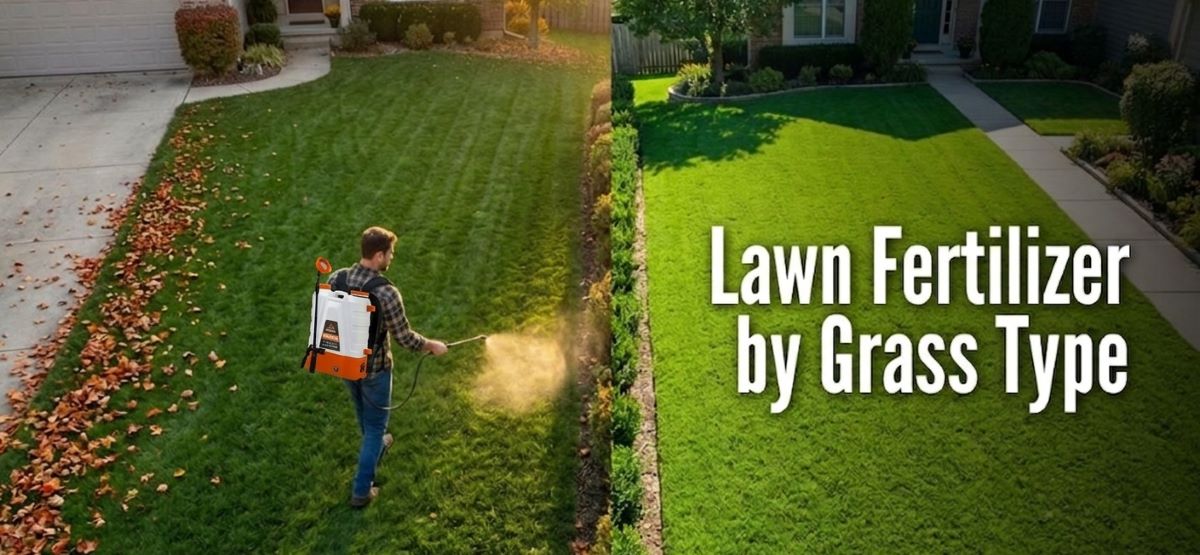
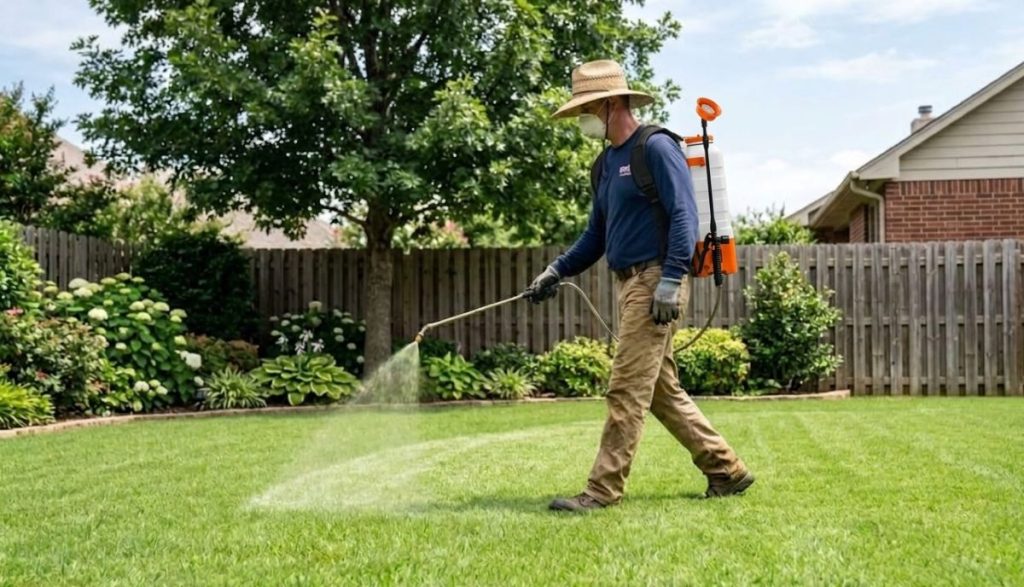
Many homeowners use sprayers to apply liquid fertilizers evenly across large areas.
Tools like the PetraTools HD4000 Battery Backpack Sprayer allow homeowners to apply fertilizer solutions consistently across the lawn.

PetraTools HD4000 Backpack Sprayer
Best for: Lawn care, pest control, property maintenance
Key features: 4-gallon tank, adjustable pressure, rechargeable battery
Availability: In stock for $199.99
Buy ProductFor smaller lawns or spot treatments, pump sprayers such as the PetraTools HD1000-S or HD2000-S can be a practical option.
Sprayers allow fertilizer to be distributed evenly while reducing the risk of concentrated buildup in specific areas.
Liquid fertilizers applied with sprayers allow homeowners to control coverage more precisely than granular spreaders, which helps reduce uneven feeding patterns.
Can You Fertilize a Lawn Too Much?
Yes. Over-fertilizing is one of the most common lawn care mistakes.
Too much fertilizer can cause:
- fertilizer burn
- shallow root systems
- excessive mowing
- increased disease pressure
Applying fertilizer according to a consistent lawn fertilizer schedule helps prevent these problems.
Common Lawn Fertilizing Mistakes
Even well-intentioned lawn care can go wrong when fertilizer timing or amounts are incorrect.
Fertilizing Too Early
Grass must be actively growing before fertilizer is applied.
Applying Too Much Fertilizer
Excess nutrients can stress grass and contribute to runoff.
Ignoring Grass Type
Warm-season and cool-season grasses require very different fertilizer timing.
Uneven Application
Uneven fertilizer distribution often leads to visible lawn streaking.
Understanding when to fertilize a lawn helps avoid these issues.
How Often Should You Fertilize a Lawn?
Most lawns benefit from two to four fertilizer applications per year, depending on grass type.
General guidelines include:
- cool-season grasses: 2–4 feedings annually
- warm-season grasses: 3–5 feedings annually
Local climate, soil quality, and lawn usage can influence the exact schedule.
Frequently Asked Questions
Fertilizer should be applied during periods of active grass growth, which vary depending on whether the lawn contains cool-season or warm-season grasses.
For cool-season lawns, fertilization often occurs in spring and fall. Warm-season lawns are typically fertilized from late spring through summer.
Light rain after fertilizing can help nutrients move into the soil. Heavy rain immediately after application can wash nutrients away.
Grass type often depends on geographic region. Northern lawns typically contain cool-season grasses, while southern lawns commonly use warm-season varieties like Bermuda or Zoysia.
The Bottom Line
A healthy lawn depends less on how much fertilizer you apply and more on when you apply it.
By matching fertilization timing with your grass type’s natural growth cycle, you can encourage stronger roots, better color, and more resilient turf.
Whether your lawn contains cool-season grasses or warm-season varieties like Bermuda, a consistent fertilizer schedule helps keep your lawn looking healthy throughout the year.
With the right timing, the right fertilizer, and consistent application, maintaining a vibrant lawn becomes much easier to manage season after season.