

Why Many Homeowners Prefer Liquid Fertilizer Application
Liquid fertilizer has become increasingly popular with homeowners who want more control over how nutrients reach their lawn. Instead of spreading dry granules and hoping rainfall activates them evenly, liquid fertilizer is diluted in water and sprayed directly across the grass.
This allows nutrients to be distributed more uniformly and absorbed quickly through both the soil and the grass blades.
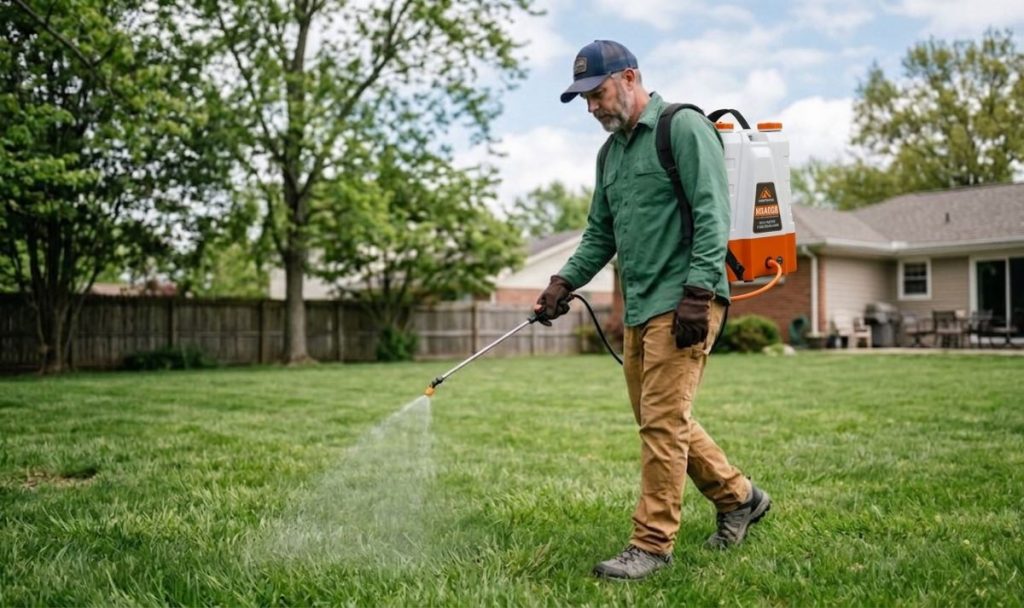
Using a backpack sprayer for fertilizer application makes the process especially efficient. A good sprayer gives you steady pressure, wide coverage, and the ability to walk your lawn methodically without stopping every few steps.
For many DIY homeowners, this combination of liquid fertilizer + backpack sprayer strikes a practical balance between professional-level results and manageable effort.
In this guide, we’ll walk through how to mix and apply liquid lawn fertilizer using a backpack sprayer, including calibration tips, spraying patterns, and common mistakes to avoid.
What You Need Before You Start
Before mixing or spraying anything, it helps to gather the right equipment and plan the job.
Typical supplies include:
- A backpack sprayer with adjustable pressure and spray wand
- A liquid lawn fertilizer concentrate
- A measuring cup or graduated container
- Clean water
- Basic protective gear such as gloves and eye protection
Many homeowners use backpack sprayers like the PetraTools HD4000 Backpack Sprayer because they provide steady spray pressure and cover larger areas comfortably.

PetraTools HD4000 Backpack Sprayer
Best for: Lawn care, pest control, property maintenance
Key features: 4-gallon tank, adjustable pressure, rechargeable battery
Availability: In stock for $199.99
Buy ProductFor fertilizer solutions, products such as:
are designed specifically for lawn feeding and can be applied using standard sprayers.
Before applying any fertilizer, it is also helpful to understand the nutrient balance your lawn may need. Resources like guidance from the U.S. Environmental Protection Agency on responsible fertilizer use can help homeowners avoid over-application and protect nearby waterways.
Step 1: Calculate How Much Fertilizer You Need
The first step in liquid fertilizer application is determining the area you plan to treat.
Most fertilizer labels list application rates based on square footage, commonly:
- per 1,000 square feet
- per 5,000 square feet
- or per acre
Measure your lawn area or estimate it using simple length-by-width calculations.
Example:
If your lawn area is 2,000 square feet and the fertilizer label recommends 4 ounces per 1,000 sq ft, you would need:
8 ounces of fertilizer total
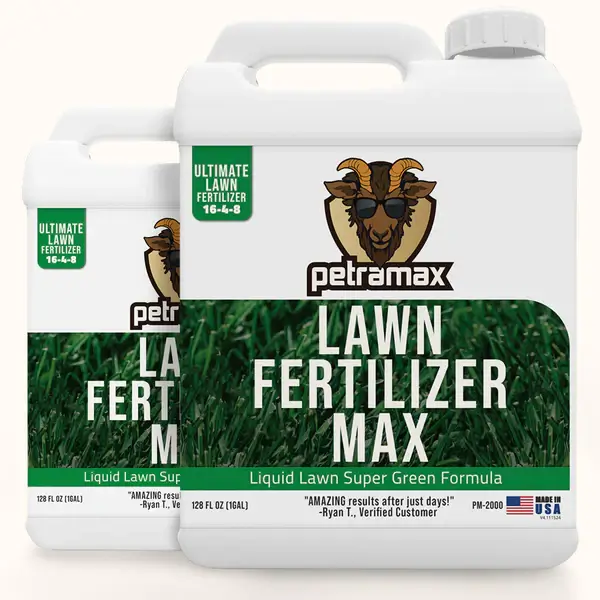
PetraMax Liquid Fertilizer Max
Best for: Lawn greening, root development, all grass types, spring & summer feeding, disease resistance
Key features: 16-4-8 NPK, quick & slow-release nitrogen, chelated iron, pet-friendly, treats up to 12,800 sq. ft.
Availability: In stock, starting from $78.99
Buy ProductKnowing the correct amount prevents underfeeding the lawn and avoids applying more nutrients than necessary.
If you want a deeper background on fertilizer nutrient ratios and lawn feeding basics, the University of Minnesota Extension provides a useful overview of how fertilizers support turf growth.
Step 2: Mix the Liquid Fertilizer in Your Sprayer
Once you know how much fertilizer is required, it’s time to mix the solution.
Most products are concentrated and need to be diluted with water before spraying.
A typical mixing process looks like this:
- Fill the sprayer tank halfway with clean water
- Measure the fertilizer concentrate according to label instructions
- Pour the fertilizer into the tank
- Add the remaining water to reach the desired volume
- Secure the lid and gently agitate the tank
Mixing fertilizer this way helps ensure the nutrients disperse evenly in the water.

When learning how to mix and apply liquid lawn fertilizer using a backpack sprayer, always follow the product label since mixing ratios can vary between formulas.
PetraTools HD4000 Backpack Sprayer
Best for: Lawn care, pest control, property maintenance
Key features: 4-gallon tank, adjustable pressure, rechargeable battery
Availability: In stock for $199.99
Buy ProductStep 3: Calibrate the Sprayer for Even Coverage
Calibration simply means figuring out how much liquid your sprayer applies over a certain area.
This step helps you apply fertilizer evenly instead of accidentally over-spraying some areas while missing others.
A simple calibration method:
- Fill the sprayer with plain water
- Spray a 1,000 sq ft test area
- Note how much liquid was used
- Adjust your walking pace or nozzle if needed
Once you know how much solution your sprayer distributes per area, you can confidently mix fertilizer at the correct dilution rate.
Backpack sprayers designed for lawn care typically include adjustable nozzles that allow you to control spray width and droplet size.
Step 4: Apply the Liquid Fertilizer Across the Lawn
When you’re ready to apply fertilizer, consistency is more important than speed.
A few simple habits make a big difference:
Walk at a steady pace
Maintain the same walking speed across the entire lawn.
Overlap slightly with each pass
This prevents missed strips between spray paths.
Keep the nozzle height consistent
Holding the wand at the same height ensures even coverage.
Work in rows
Many homeowners spray in straight lines similar to mowing patterns.
This methodical approach helps achieve smooth, uniform liquid fertilizer sprayer coverage.
A helpful trick many homeowners use is to mark the water levels inside the sprayer tank with a permanent marker. This makes it much easier to mix fertilizer quickly the next time without guessing the volume.

Many homeowners find it helpful to imagine mowing stripes while spraying fertilizer. Walking consistent rows with slight overlap helps ensure the entire lawn receives even nutrient coverage.
Best Conditions for Spraying Lawn Fertilizer
Timing and weather conditions affect how well fertilizer works.
The best conditions usually include:
- Mild temperatures
- Light or no wind
- Slightly moist soil
- No heavy rain expected for several hours
Early morning or late afternoon is often ideal because cooler conditions reduce evaporation and help plants absorb nutrients efficiently.
Avoid spraying during strong sunlight or windy conditions, since drift and evaporation can reduce effectiveness.
Common Mistakes When Applying Liquid Fertilizer
Many fertilizer problems come down to simple application mistakes.
Common ones include:
Applying too much fertilizer
Overfeeding can stress the lawn and potentially burn grass.
Uneven spray coverage
Inconsistent walking speed or poor calibration can cause patchy results.
Ignoring label instructions
Different fertilizers contain different nutrient concentrations.
Spraying during high heat
Hot conditions can cause faster evaporation and reduce nutrient uptake.
Paying attention to these details helps maximize the benefits of your fertilizer application.
Frequently Asked Questions (FAQs)
Yes. Backpack sprayers are one of the most common tools homeowners use for applying liquid fertilizers because they provide consistent pressure and allow even coverage across lawns.
Application rates depend on the fertilizer formula. Most labels recommend amounts based on 1,000 square feet of lawn area.
Some fertilizers recommend light watering to help nutrients reach the soil, while others are designed for foliar absorption through the grass blades. Always check the product label.
Most lawns benefit from fertilization every 4–6 weeks during the growing season, depending on the fertilizer formula and grass type. Always follow label instructions to avoid overfeeding.
The Bottom Line
Applying liquid fertilizer with a backpack sprayer is one of the most controlled and efficient ways to feed a lawn.
With the right approach, the process is straightforward:
- measure the lawn area
- mix the fertilizer according to label directions
- calibrate the sprayer
- spray evenly across the lawn
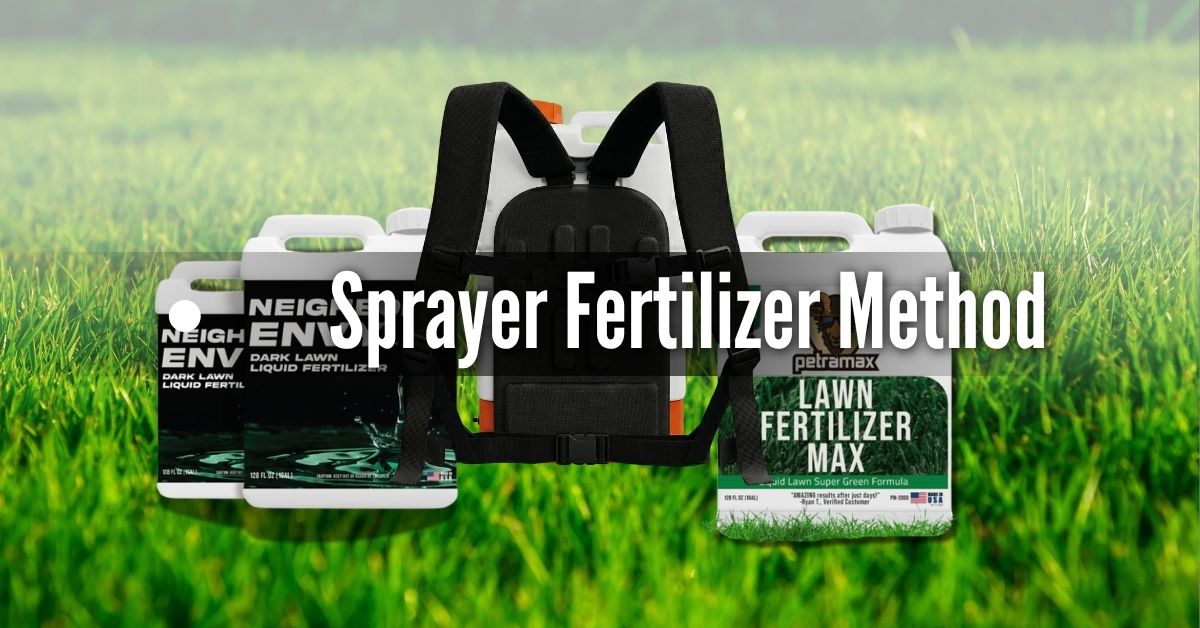
Using a dependable backpack sprayer fertilizer setup, combined with lawn nutrients like PetraMax Lawn Fertilizer Max or Neighbor’s Envy, allows homeowners to treat their lawn with the same method many professionals use.
The result is a lawn that receives nutrients more evenly, helping support stronger color, healthier growth, and better overall lawn performance over time.
When applied carefully, liquid fertilizer programs can help homeowners maintain steady lawn nutrition throughout the growing season while avoiding the patchiness that sometimes occurs with granular fertilizers.