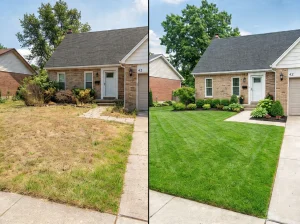


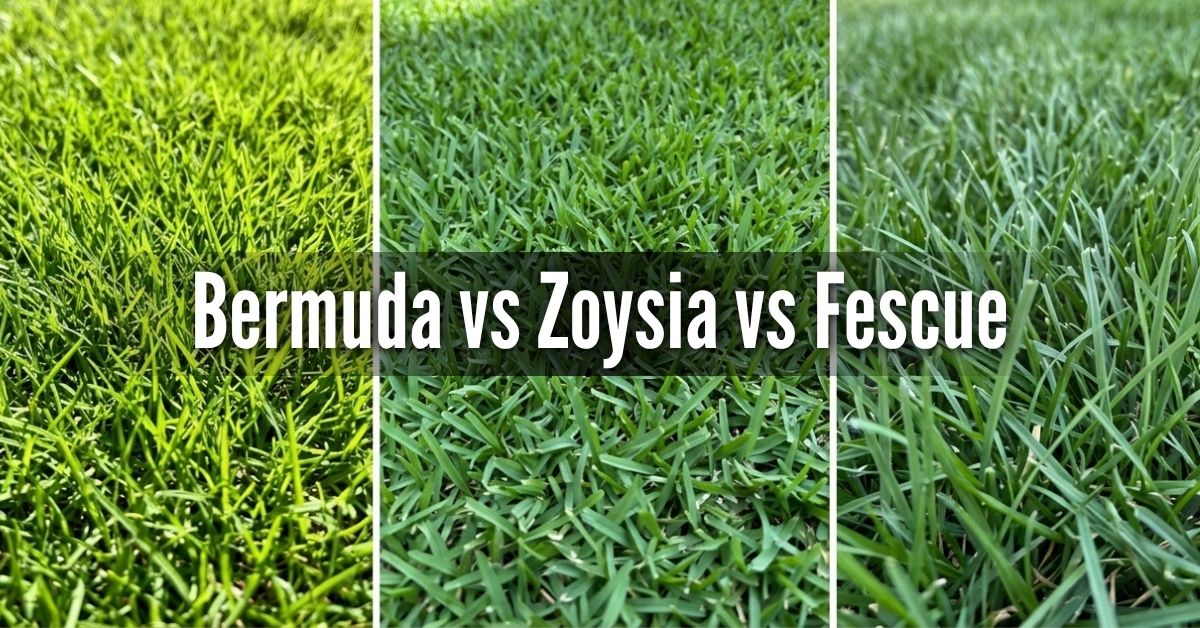
Why Choosing the Right Grass Type Matters
When homeowners plan a new lawn or try to improve an existing one, the first question often isn’t fertilizer or mowing height.
It’s grass type.
Different grasses thrive in different climates. Choosing the wrong one can lead to:
• patchy lawns
• constant reseeding
• excessive watering
• poor heat or cold tolerance
Choosing the right grass for your region makes everything easier. The lawn becomes more resilient, requires less maintenance, and responds better to proper fertilization.
Three of the most common lawn grasses in the United States are:
• Bermuda grass
• Zoysia grass
• Fescue grass
Each one has strengths depending on climate and lawn conditions.
Once the right grass is chosen, proper fertilization and even application—often using lawn sprayers—play a major role in keeping turf healthy.
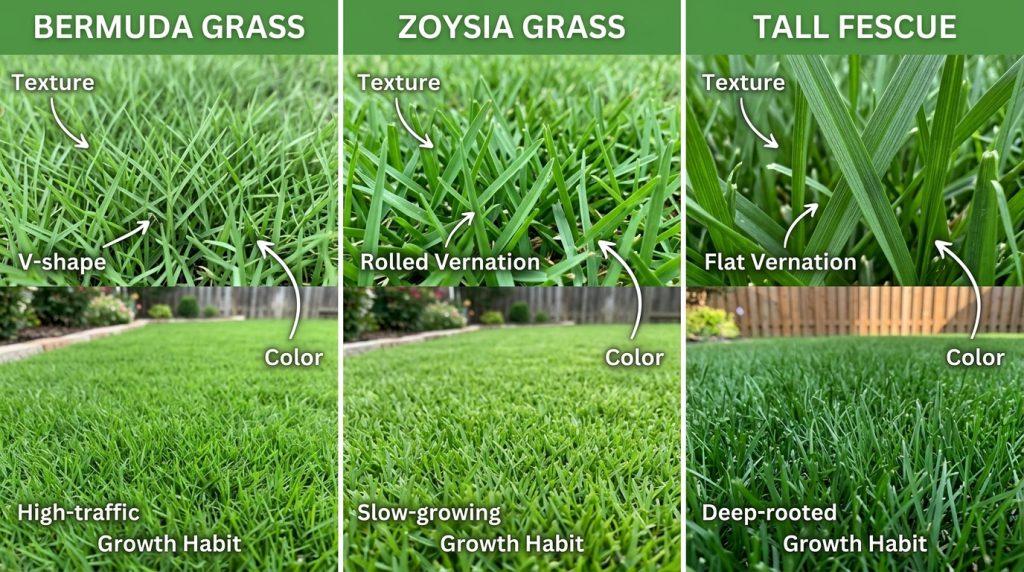
Understanding the Transition Zone
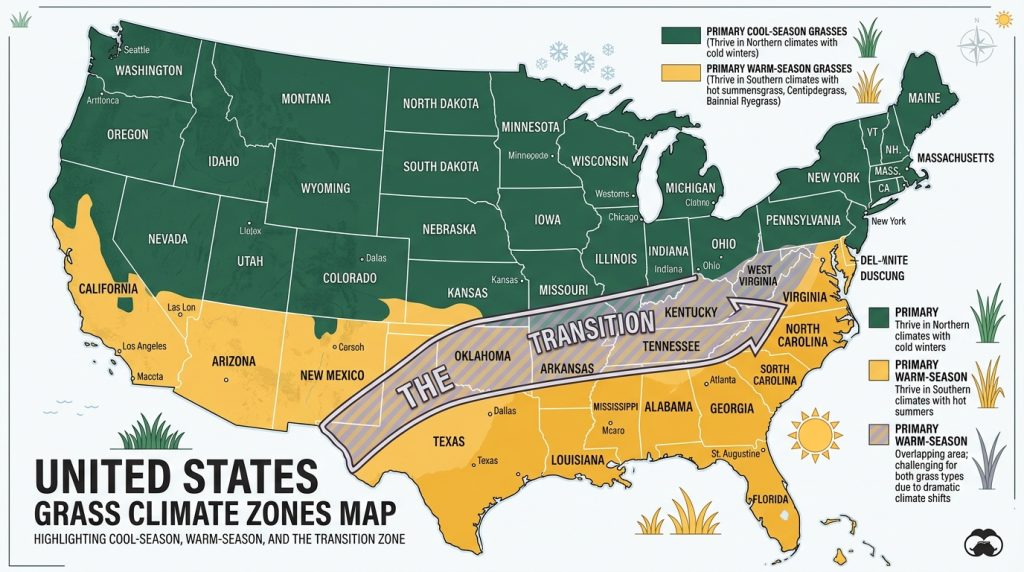
Before comparing grasses, it helps to understand the transition zone.
The transition zone is a band across the central United States where both warm-season and cool-season grasses can grow—but neither is perfectly suited year-round.
This region includes states such as:
• North Carolina
• Tennessee
• Kentucky
• parts of Virginia
• Missouri
• Southern Pennsylvania
Lawns in this area often struggle with extreme seasonal changes.
The United States Department of Agriculture plant hardiness map is often used to help determine which turfgrass types perform best in different climate zones.
Warm-season grasses thrive in summer but turn brown in winter.
Cool-season grasses stay green longer but can struggle in intense summer heat.
Bermuda Grass: Built for Heat and Sun
Bermuda grass is one of the most popular warm-season grasses for southern lawns.
It thrives in hot climates and grows aggressively during summer.
Pros of Bermuda Grass
• excellent heat tolerance
• durable for heavy foot traffic
• fast spreading growth
• strong recovery after damage
Cons of Bermuda Grass
• turns brown during winter dormancy
• struggles in shaded areas
• can spread into flower beds
Because Bermuda grows rapidly during warm months, it benefits from consistent feeding with fertilizers such as PetraMax Lawn Fertilizer Max, which helps support strong summer growth and root development.
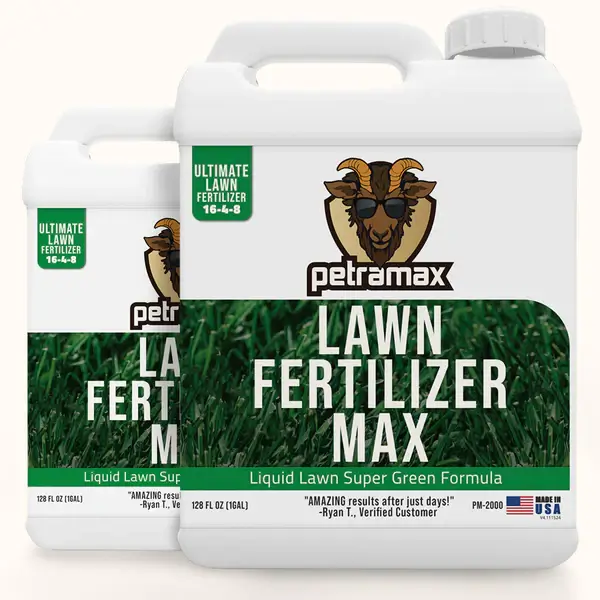
PetraMax Liquid Fertilizer Max
Best for: Lawn greening, root development, all grass types, spring & summer feeding, disease resistance
Key features: 16-4-8 NPK, quick & slow-release nitrogen, chelated iron, pet-friendly, treats up to 12,800 sq. ft.
Availability: In stock, starting from $78.99
Buy ProductMany homeowners apply fertilizers using sprayers like the PetraTools HD4000 Battery Backpack Sprayer, which helps distribute liquid fertilizer evenly across larger lawns.
Zoysia Grass: Dense and Durable
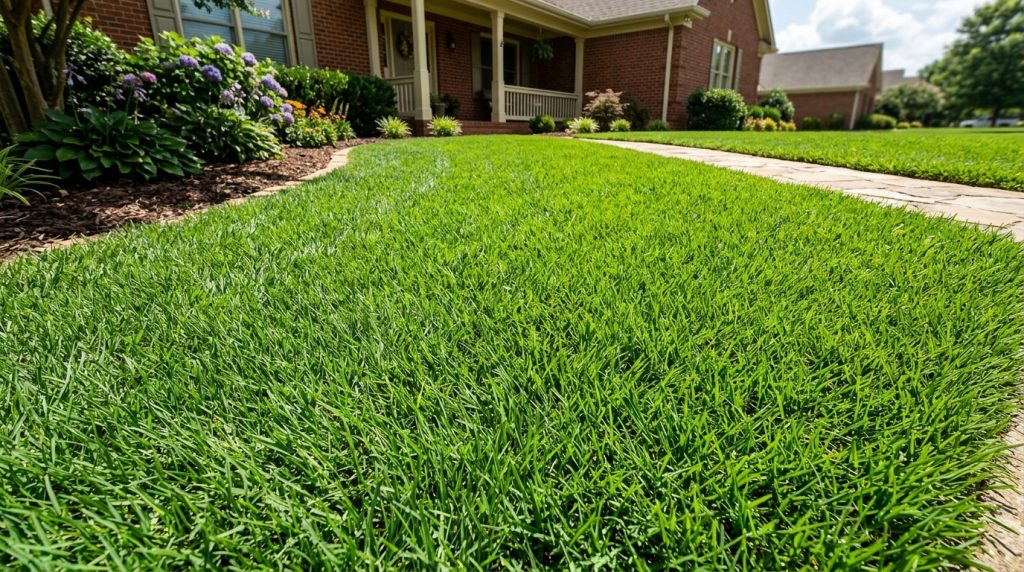
Zoysia grass is another warm-season grass that has become increasingly popular in transitional climates.
It creates a dense, carpet-like lawn that crowds out weeds effectively.
Pros of Zoysia Grass
• thick turf that resists weeds
• good heat tolerance
• tolerates moderate shade better than Bermuda
• slower growth means less mowing
Cons of Zoysia Grass
• slow to establish
• may require professional installation in some cases
• turns dormant in winter
Because Zoysia grows densely, proper fertilization helps maintain color and vigor.
Homeowners often use fertilizers like PetraMax Neighbor’s Envy Liquid Fertilizer to encourage deep green color during the growing season.

PetraMax Neighbor's Envy
Best for: Deep green color, all grass types, drought & heat tolerance, season-long turf care
Key features: 7 key nutrients in one bottle, visible green-up in 7–14 days, covers up to 16,000 sq. ft. per gallon, pet safe once dry
Availability: In stock — from $56.99 (1 gallon)
Buy ProductLiquid fertilizers can be applied evenly with sprayers such as the PetraTools HD2000-S Sling Sprayer, making lawn care easier across medium-sized properties.
Fescue Grass: The Cool-Season Favorite
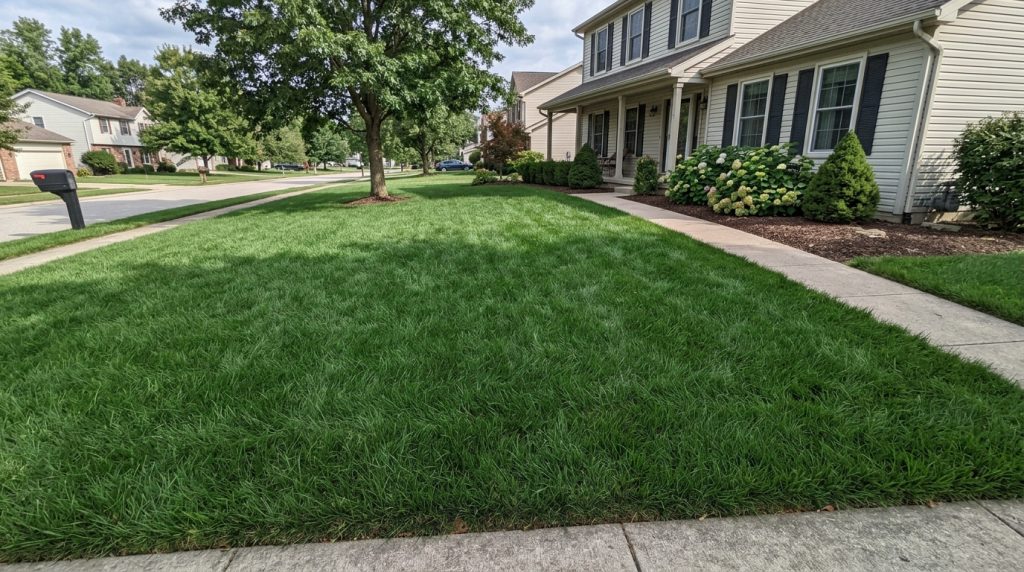
Tall fescue is one of the most common cool-season grasses used in the transition zone.
Unlike warm-season grasses, fescue stays green much longer during fall and winter.
Pros of Fescue Grass
• stays green longer during cooler months
• good shade tolerance
• relatively drought tolerant compared to other cool-season grasses
Cons of Fescue Grass
• may struggle during extreme summer heat
• requires overseeding over time
• does not spread aggressively
Because fescue lawns often thin over time, homeowners frequently overseed and fertilize to maintain density.
Consistent fertilization with balanced lawn nutrients can help strengthen fescue during its active growth periods.
Bermuda vs Zoysia vs Fescue: Key Differences
| Feature | Bermuda | Zoysia | Fescue |
|---|---|---|---|
| Grass Type | Warm-Season | Warm-Season | Cold-Season |
| Heat Tolerance | Excellent | Excellent | Moderate |
| Shade Tolerance | Poor | Moderate | Good |
| Winter Color | Dormant Brown | Dormant Brown | Stays Green Longer |
| Growth Speed | Fast | Slow to moderate | Moderate |
This comparison highlights why climate plays such a major role in lawn success.
Which Grass Type Is Best for the Transition Zone: Bermuda or Fescue?
One of the most common questions homeowners ask is:
Should I choose Bermuda or fescue in the transition zone?
The answer depends on your priorities.
Turfgrass researchers and extension programs often recommend selecting grass species based on regional climate patterns and seasonal temperature extremes.
Choose Bermuda if you want:
• excellent heat tolerance
• strong summer performance
• durable turf for active lawns
Choose Fescue if you prefer:
• longer green season
• better shade tolerance
• cooler-season growth
Zoysia sits somewhere in between, offering dense turf with moderate shade tolerance.
For additional turfgrass selection guidance, the U.S. Department of Agriculture provides regional lawn recommendations here:
https://www.usda.gov/
Lawn Care Considerations for Each Grass Type
Regardless of the grass you choose, good lawn care practices make a major difference.
Healthy lawns typically require:
• proper mowing height
• seasonal fertilization
• consistent watering
• occasional overseeding
Many homeowners prefer liquid lawn treatments because they allow more precise coverage.
Using sprayers such as PetraTools backpack sprayers or sling sprayers makes it easier to apply fertilizers evenly across the lawn.
Products like PetraMax Lawn Fertilizer Max and Neighbor’s Envy Liquid Fertilizer are commonly used to support healthy turf growth during active growing seasons.
Frequently Asked Questions (FAQs)
Tall fescue is one of the most common choices, but Bermuda and Zoysia also perform well depending on sunlight and lawn usage.
Bermuda typically grows faster and handles heavy traffic well, while Zoysia forms denser turf and requires less mowing.
Tall fescue can survive in many southern regions but may require careful watering and shade management during extreme heat.
Zoysia is often considered lower maintenance once established, though initial establishment may take longer.
The Bottom Line
Choosing the right grass type is one of the most important decisions for long-term lawn success.
Bermuda grass thrives in hot, sunny climates and grows aggressively during summer.
Zoysia offers dense turf with good durability and moderate shade tolerance.
Fescue remains a popular choice in cooler climates and transitional regions because it stays green longer and tolerates shade better.
Understanding your climate, sunlight conditions, and lawn expectations can help you select the grass that will perform best for your yard.
Once established, proper fertilization, watering, and maintenance will keep your lawn healthy and resilient for years to come.