

Why Lawn Aeration Matters More Than Most People Realize
A lot of lawn problems don’t start on the surface—they start below it.
If your lawn:
- looks thin even after fertilizing
- struggles during heat or drought
- feels hard underfoot
There’s a good chance your soil is compacted.
That’s where lawn aeration comes in.
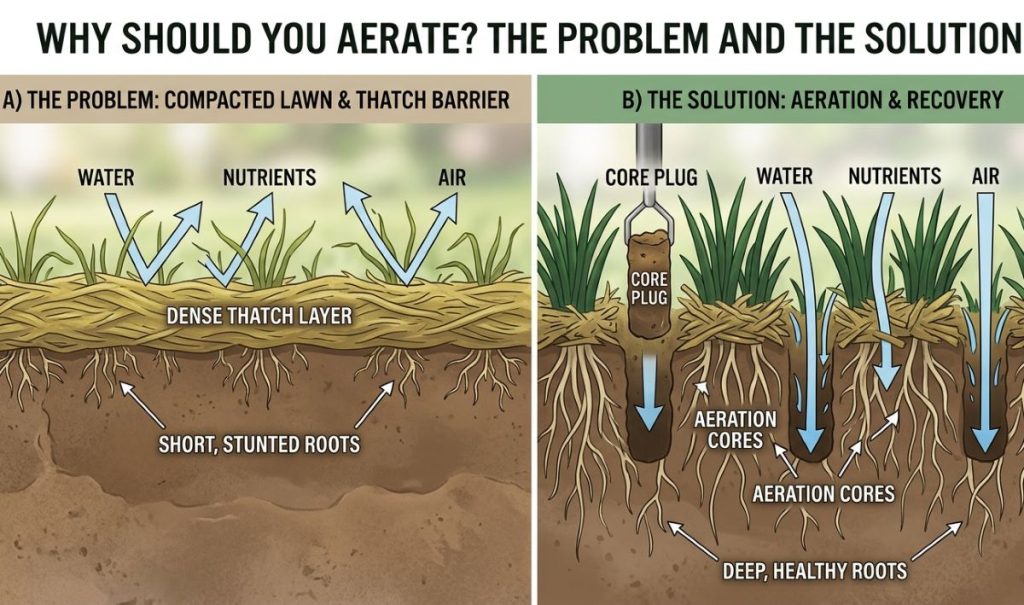
Aeration loosens the soil and creates space for:
- air
- water
- nutrients
to reach the roots where they actually matter.
Without it, even the best fertilizer or lawn treatment can struggle to do its job.
What Is Lawn Aeration?
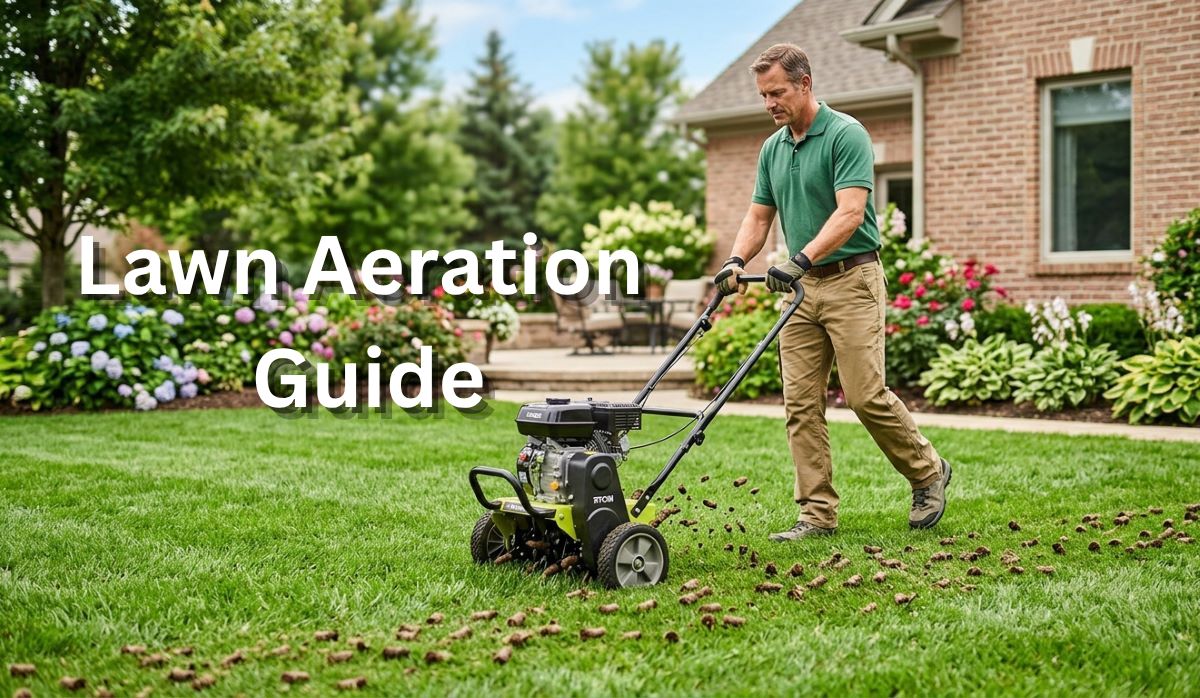
Lawn aeration is the process of loosening compacted soil so your grass roots can breathe and grow properly.
There are two main approaches:
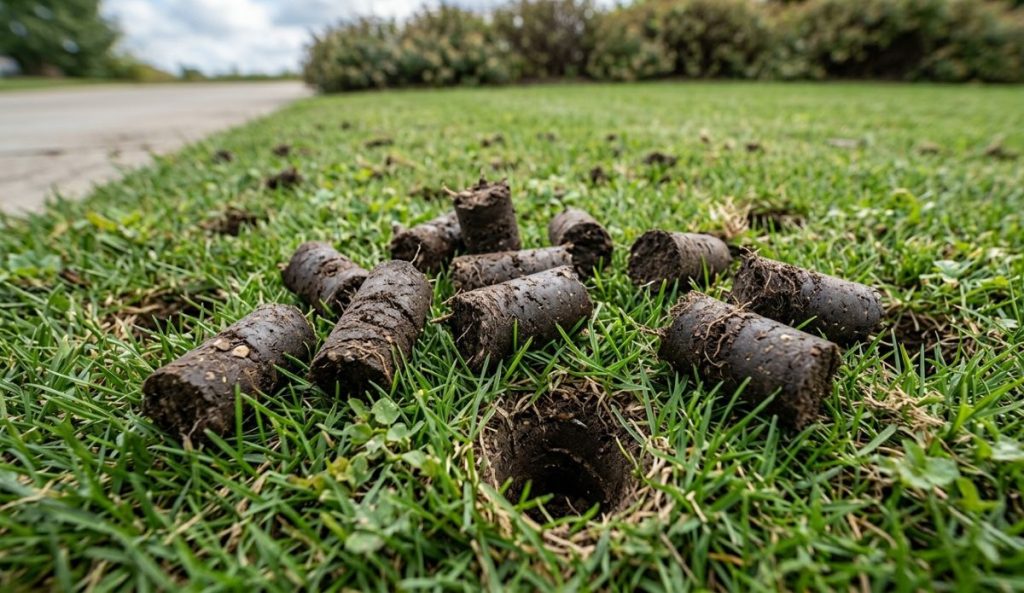
Core Aeration
- Removes small plugs of soil
- Creates physical holes in the ground
- Traditional method
Liquid Aeration
- Uses a liquid solution to break up compacted soil
- Improves soil structure over time
- Easier to apply for many homeowners
Both methods aim to solve the same problem—compacted soil—but they do it differently.
Why Aeration Helps (Real Benefits)
The benefits of aeration show up quickly—and below the surface first.
Improved Root Growth
Roots can expand deeper and stronger when soil isn’t packed tight.
Better Water Absorption
Instead of running off, water soaks into the soil.
Stronger Fertilizer Results
Nutrients actually reach the root zone instead of sitting on top.
Reduced Soil Compaction
This is the core problem aeration solves.
Healthier, Thicker Lawn Over Time
Not overnight—but consistently over a season.
Signs Your Lawn Needs Aeration
Not every lawn needs aeration every year.
Look for these signs:
- water puddles after rain
- hard, compacted soil
- thinning grass
- high foot traffic areas
- patchy growth despite fertilizing
If you can push a screwdriver into your soil easily, you’re probably fine.
If not, aeration will help.
While aeration is key, make sure you also avoid other common lawn care mistakes to keep your yard healthy.
When to Aerate Lawn
Timing matters more than most people think.
The best time to aerate depends on your grass type.
Cool-Season Grasses
(Fescue, Kentucky Bluegrass)
- Best time: early fall or spring
- Fall is ideal for recovery and growth
Warm-Season Grasses
(Bermuda, Zoysia)
- Best time: late spring to early summer
- During active growth
A general rule:
👉 Aerate when your grass is actively growing so it can recover quickly
How Often Should You Aerate Your Lawn?
This depends on your soil and usage.
- Once per year → typical lawns
- Twice per year → heavy traffic or clay soil
- Every 2–3 years → low-traffic, sandy soil
If your lawn gets a lot of use (kids, pets, foot traffic), you’ll likely benefit from more frequent aeration.
Core Aeration vs Liquid Aeration
This is where most homeowners get stuck.
Core Aeration
Pros:
- immediate results
- physically removes soil plugs
Cons:
- labor-intensive
- requires equipment
- can be messy
Liquid Aeration
Pros:
- easy to apply
- no heavy equipment
- improves soil over time
Cons:
- results are more gradual
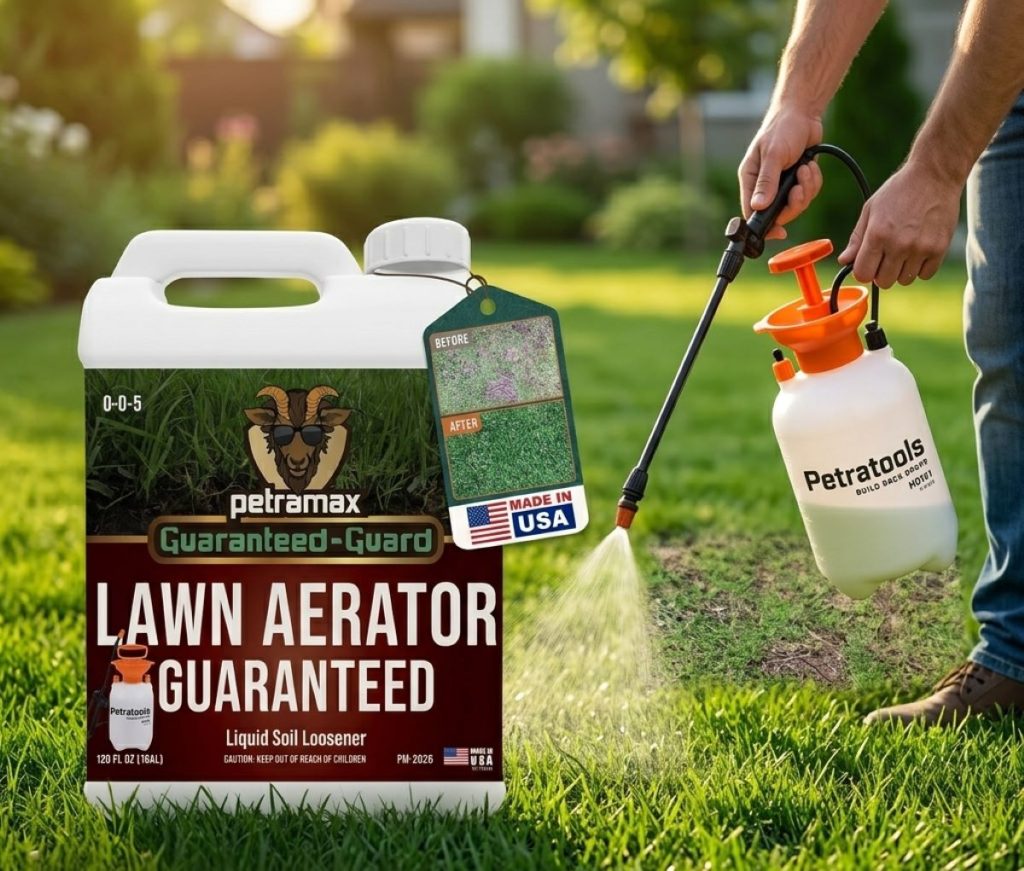
Products like PetraMax Liquid Lawn Aerator make it possible to aerate your lawn without renting machinery—helping loosen soil and improve nutrient flow with a simple spray application.
For many homeowners, liquid aeration is a more practical way to maintain soil health consistently.
How to Aerate Your Lawn (Step-by-Step)
Step 1: Mow and Water the Lawn
- mow slightly shorter than usual
- water the lawn the day before
This softens the soil and improves effectiveness.
Step 2: Choose Your Aeration Method
- core aerator for immediate impact
- liquid aerator for easier application
Step 3: Apply Even Coverage
- walk in consistent passes
- overlap slightly
- cover the entire lawn
If using a liquid aerator, apply evenly using a sprayer for best results.
Step 4: Follow with Lawn Treatment
This is a great time to apply:
- fertilizer
- soil conditioners
- lawn boosters
Because nutrients can now reach deeper into the soil.
Step 5: Water Lightly After
This helps move nutrients into the soil and activates treatments.
Common Mistakes to Avoid
Aerating at the Wrong Time
Doing it during dormancy limits results.
Skipping Watering Before Aeration
Dry soil reduces effectiveness.
Expecting Instant Results
Aeration is a process, not an overnight fix.
Not Following Up with Lawn Care
Aeration works best when paired with feeding and proper maintenance.
Frequently Asked Questions
During active growth—spring or fall for cool-season grass, late spring for warm-season grass.
Better root growth, improved water absorption, and stronger lawn performance.
It can be, especially over time. Liquid aeration improves soil structure gradually without heavy equipment.
You may notice improvement within a few weeks, with stronger results over a full growing season.
The Bottom Line
Lawn aeration isn’t complicated—but it’s one of the most overlooked steps in lawn care.
If your soil is compacted, your lawn is already working at a disadvantage.
Loosen the soil, improve airflow, and give your roots room to grow.
Whether you choose traditional core aeration or a simpler approach with a liquid aerator, the goal is the same:
healthier soil → stronger grass → better lawn over time
Do it consistently, and your lawn starts to respond in ways that fertilizer alone can’t fix.