

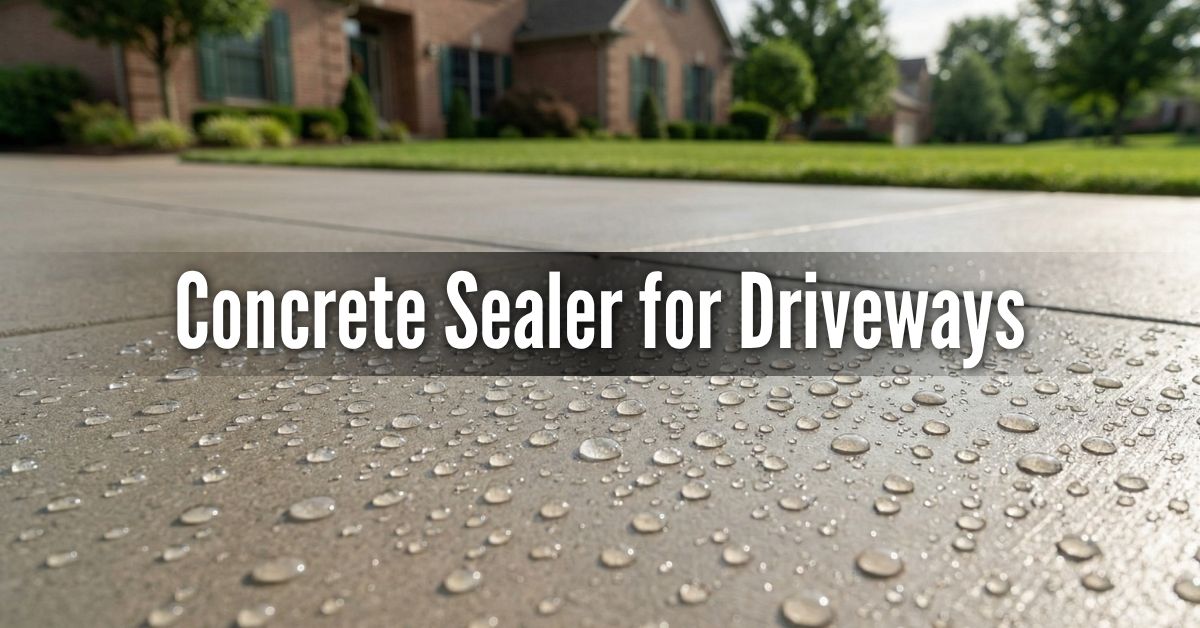
Why Sealing Concrete Matters More Than Most Homeowners Realize
Concrete looks solid and permanent, but it is naturally porous. Water, salts, oils, and dirt can slowly penetrate the surface over time.
Without protection, this can lead to:
• surface staining
• cracking from freeze-thaw cycles
• fading and discoloration
• erosion of the top layer of concrete
This is why sealing concrete is one of the most important long-term maintenance steps for driveways, patios, walkways, and garage floors.
A good concrete sealer creates a protective barrier that helps prevent damage while extending the life and appearance of the surface.
This is why many homeowners search for the best concrete sealer for driveways or garage floors before investing in repairs.
What Concrete Sealers Actually Do
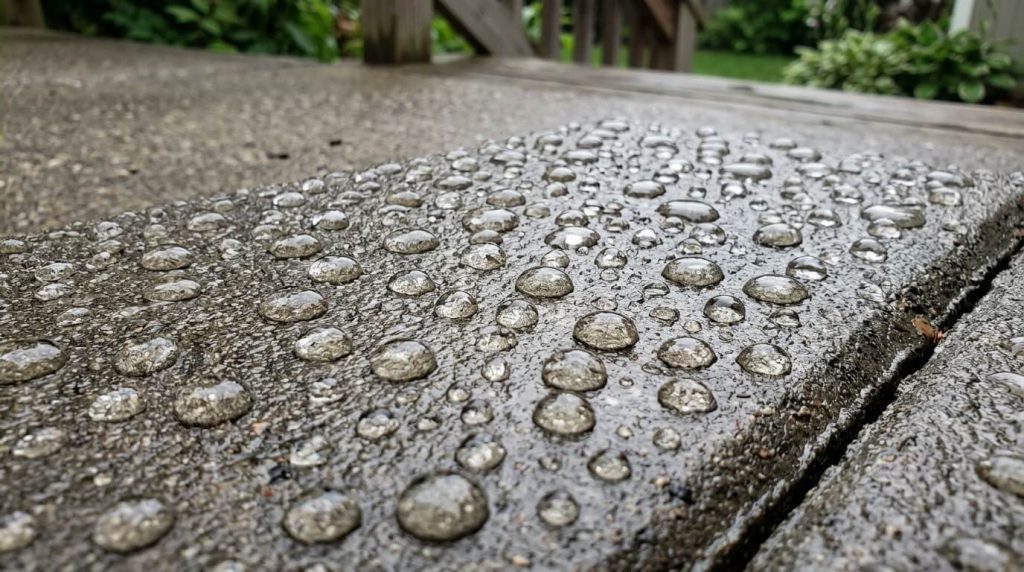
Concrete sealers protect the surface in several ways.
They can:
• reduce moisture absorption
• prevent stains from oils or chemicals
• slow down surface wear
• protect against UV damage
• improve surface appearance
For residential properties, sealers are often used to extend the life of driveways, patios, and garage floors while reducing maintenance.
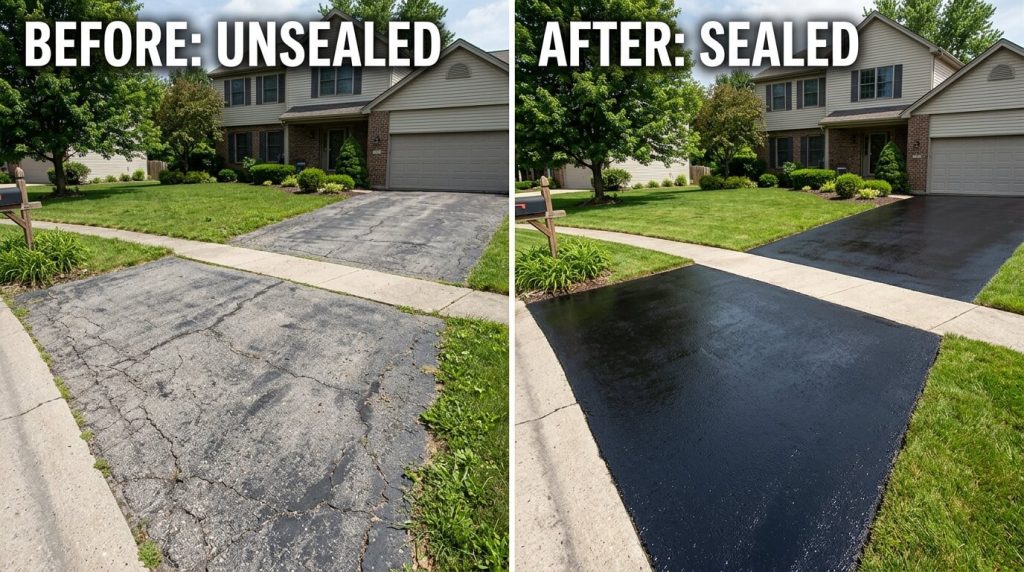
Types of Concrete Sealers Explained
There are several major categories of concrete sealers.
Understanding the difference helps homeowners choose the right product.
Acrylic Sealers
Acrylic sealers create a protective film on the surface.
Advantages:
• easy to apply
• affordable
• enhances color and surface appearance
They are commonly used for patios, walkways, and decorative concrete.
Penetrating Sealers
Penetrating sealers soak into the concrete rather than sitting on top of it.
Advantages:
• natural appearance
• strong moisture protection
• longer lifespan
These are often used for driveways or outdoor concrete exposed to weather.
Epoxy and Polyurethane Sealers
These heavy-duty coatings create a thick protective layer.
Advantages:
• high durability
• strong chemical resistance
• excellent for garage floors
They are typically used in garages or workshops where surfaces experience heavy use.
Penetrating vs Film-Forming Sealers
One of the most common decisions homeowners face is choosing between penetrating and film-forming sealers.
| Type | Appearance | Durability | Best For |
|---|---|---|---|
| Penetrating Sealer | Natural | Long-lasting | Driveways, exterior concrete |
| Film-Forming Sealer | Gloss or wet look | Moderate | Patios, decorative concrete |
Both approaches can work well depending on the surface type and the level of protection needed..
Best Concrete Sealer for Different Surfaces
Different parts of a property experience different types of wear.
Concrete Driveways
Driveways deal with:
• vehicle traffic
• oil stains
• freeze-thaw cycles
• road salts
A penetrating or heavy-duty protective sealer is usually best for these surfaces.
Products like BEEST CS-9500 Concrete Sealer are designed for residential concrete protection and can help prevent water intrusion while improving surface durability.
Garage Floors
Garage floors face different challenges:
• oil and chemical exposure
• tire wear
• abrasion
Sealers designed for interior concrete surfaces can provide a protective layer that reduces staining and surface deterioration.
Patios and Walkways
Patios often benefit from sealers that enhance appearance while providing protection.
Sealers can help prevent:
• fading from UV exposure
• moisture damage
• surface staining from outdoor use
Products such as BEEST PS-8600or PS-8700 Paver& Concrete Sealers are commonly used for these applications because they combine protection with visual enhancement.
Buy ProductRecommended Concrete Sealers for Residential Projects
For homeowners looking for easy-to-apply protection, several BEEST concrete sealers are designed specifically for residential driveways, patios, and pavers.
BEEST CS-9500 Concrete Sealer
• designed for exterior concrete surfaces
• helps protect driveways from moisture penetration and weather damage
• suitable for residential sealing projects
BEEST PS-8600 and PS-8700 Paver & Concrete Sealers
• enhance color and appearance of patios and pavers
• provide protective sealing against moisture and stains
• commonly used for decorative outdoor concrete surfaces
These types of sealers allow homeowners to protect concrete surfaces with professional-level results without requiring professional installation.
What to Look for in a Concrete Sealer
When comparing products, focus on a few key characteristics.
Water Resistance
A good sealer should reduce water penetration into the concrete.
UV Protection
Outdoor concrete is constantly exposed to sunlight. UV resistance helps prevent fading and degradation.
Breathability
Concrete needs to release trapped moisture. Breathable sealers help prevent surface damage.
Ease of Application
Many residential sealers are designed to be applied using a sprayer or roller.
Proper application tools can help achieve consistent coverage across large surfaces like driveways and patios.
How to Choose the Right Concrete Sealer for Your Project
Choosing the best concrete sealer depends on how the surface is used and the level of protection you need.
For residential driveways
Look for sealers that offer strong water resistance and protection from freeze-thaw cycles and road salts.
For garage floors
Choose sealers designed to resist oil stains, tire wear, and chemical exposure.
For patios and walkways
Appearance often matters more, so many homeowners choose sealers that enhance color or provide a wet-look finish while still protecting the surface.
Matching the sealer type to the surface ensures better durability and longer maintenance intervals.
How Long Concrete Sealers Last
The lifespan of a concrete sealer depends on several factors.
Typical ranges include:
• Acrylic sealers: 1–3 years
• Penetrating sealers: 5–10 years
• Heavy-duty coatings: up to 10 years depending on traffic
Driveways may require more frequent maintenance due to vehicle wear and weather exposure.
How to Apply Concrete Sealer Properly
Application quality has a major impact on how well a sealer performs. Factors such as climate, surface preparation, traffic, and the type of sealer used all influence how long protection will last.

PetraTools HD1000-S Backpack Sprayer
Best for: Weed control, fertilizing, pest management, foliar feeding, small gardens & containers
Key features: No manual pumping, 1 Gallon, long battery life (recharges in 4–6 hrs), padded shoulder strap, lightweight & compact, 2 professional nozzles included
Availability: In stock — $119.99
Buy ProductBefore You Seal Concrete
Before applying any concrete sealer, make sure the surface is fully cured and properly cleaned.
For new concrete surfaces, most professionals recommend waiting at least 28 days before sealing.
Older surfaces should be thoroughly cleaned and allowed to dry completely before application.
Proper preparation helps the sealer bond correctly and improves long-term performance.
Step 1: Clean the Surface
Concrete must be free of:
• dirt
• oil stains
• debris
• previous coatings
Proper surface preparation allows the sealer to bond effectively.
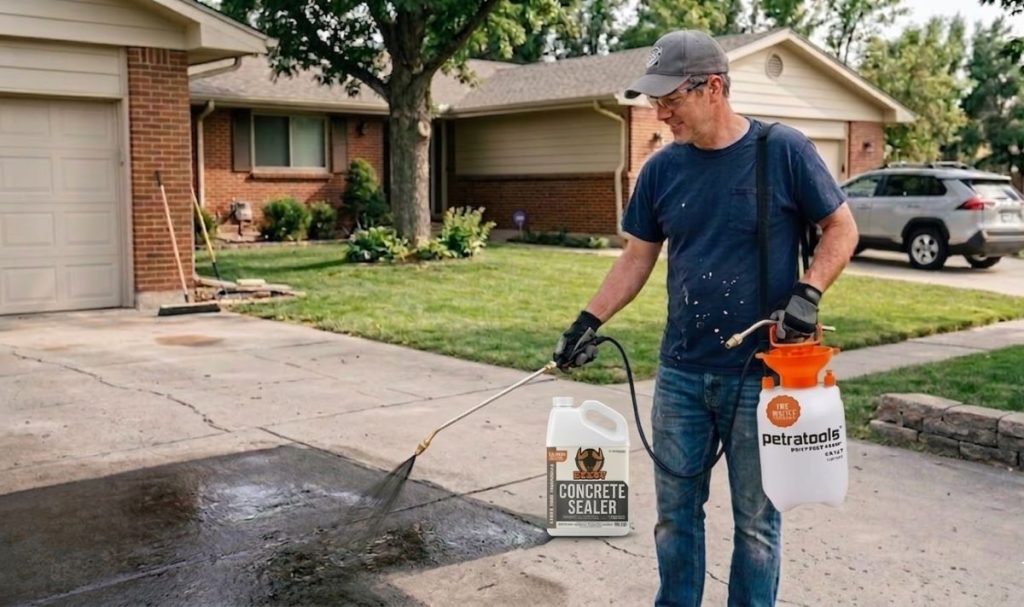
Step 2: Apply Evenly
Sealers should be applied in thin, uniform coats.
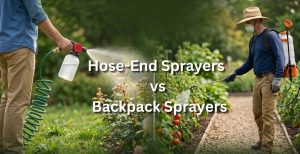
Many homeowners apply liquid sealers using sprayers to maintain consistent coverage across large surfaces.
Many DIY homeowners apply concrete sealers using pump or battery-powered sprayers because they allow even coverage across large surfaces like driveways and patios.
Step 3: Allow Proper Dry Time
Follow product instructions carefully for curing time.
Most sealers require:
• 24 hours before foot traffic
• up to 72 hours before vehicle traffic
Common Mistakes When Sealing Concrete
Applying Too Thick of a Coat
Multiple thin layers perform better than one heavy application.
Sealing Dirty Concrete
Surface contamination prevents proper adhesion.
Ignoring Weather Conditions
Temperature and humidity affect curing and performance.
Frequently Asked Questions (FAQs)
A penetrating or heavy-duty protective sealer designed for outdoor exposure typically provides the best protection for residential driveways.
Most residential surfaces benefit from resealing every 2–5 years depending on exposure and traffic.
Yes. Many modern sealers are designed for DIY application with basic tools.
Some sealers create a natural look, while others enhance color or produce a wet-look finish.
The Bottom Line
Concrete surfaces last significantly longer when properly protected.
The best concrete sealer depends on the surface, climate conditions, and how the concrete is used.
By choosing the right type of sealer and applying it correctly, homeowners can protect driveways, patios, and garage floors for years while improving the appearance and durability of their property.