

Why Rust Stains Are So Stubborn (and Why Some Cleaners Fail)
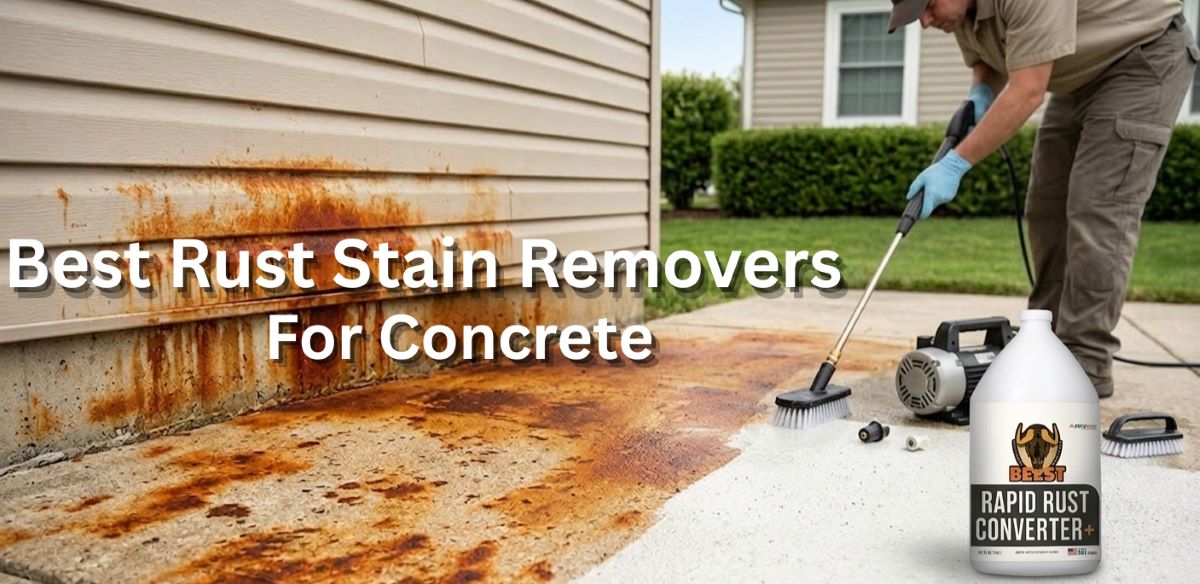
Rust stains form through a process called oxidation—when iron reacts with oxygen and moisture. The U.S. Geological Survey explains that this reaction is what creates the reddish-brown staining commonly seen on concrete, siding, and other outdoor surfaces.
These stains tend to stick around longer than you expect.
You’ll see them:
- on concrete driveways
- patios
- siding
- around metal fixtures
And once they set in, regular cleaners don’t do much.
That’s because rust isn’t just surface-level dirt—it actually bonds to porous materials like concrete. So scrubbing with soap or blasting it with a pressure washer usually isn’t enough to break it down.
If you’ve already tried:
- soap
- pressure washing
- general cleaners
…and nothing worked, you’re not doing anything wrong—you’re just using the wrong type of cleaner for the job.
This guide walks through what actually works to remove rust stains from concrete and outdoor surfaces, and how to avoid wasting time on methods that don’t.
What Causes Rust Stains on Outdoor Surfaces
Rust stains usually come from:
- metal furniture or tools left on concrete
- sprinkler systems with iron in the water
- fertilizer or well water runoff
- nails, screws, or fixtures exposed to moisture
Concrete and stone are porous, which means they absorb and hold onto rust particles over time.
That’s why stains often look worse the longer they sit.
Types of Rust Stain Removers
Not all rust cleaners are created equal.
Here are the main categories you’ll come across:
Acid-Based Rust Removers
- Fast-acting
- Break down rust chemically
- Best for heavy stains
Oxalic Acid Cleaners
- Common in outdoor rust cleaners
- Effective but slightly gentler
- Good for siding and lighter stains
Rust Converters
- Convert rust into a stable compound
- Often used on metal
- Can also help treat rust sources before they stain surfaces
Products like BEEST Rapid Rust Converter Plus are useful not just for treating visible rust, but for stopping the source—so stains don’t keep coming back after you clean them.
The right choice usually comes down to how deep the stain is and whether you’re trying to remove it or prevent it from coming back
Best Rust Stain Removers by Surface
Different surfaces need slightly different approaches.
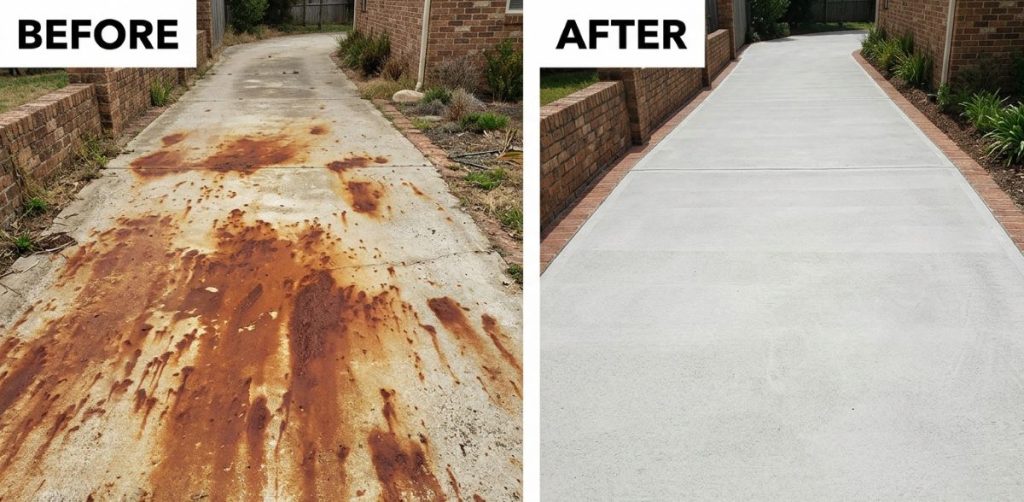
Concrete (Driveways & Patios)
- Use stronger rust removers
- Focus on penetration and dwell time
Siding (Vinyl or Painted Surfaces)
- Use gentler formulas
- Avoid harsh acids that can damage finishes
Outdoor Surfaces (Stone, Brick, Pavers)
- Match cleaner strength to material
- Test a small area first
The key is matching the cleaner to both:
- the stain severity
- the surface type
Extremely deep or old stains may require multiple treatments, especially on older or highly porous concrete.
How to Remove Rust Stains from a Concrete Driveway or Patio
If you’re dealing with concrete, here’s a method that actually works.
Step 1: Pre-Clean the Area
Remove:
- dirt
- debris
- loose surface buildup
This helps the rust remover reach the stain directly.
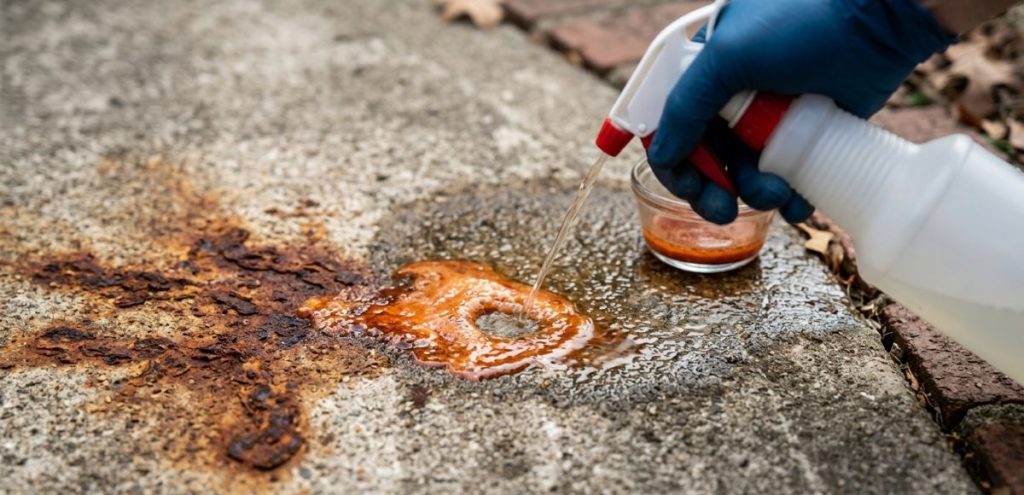
Step 2: Apply the Rust Stain Remover
Apply your chosen rust cleaner outdoor solution directly to the stain.
Tips:
- follow label instructions
- don’t dilute unless directed
- apply evenly
Let it sit (dwell time matters here).
Step 3: Light Scrubbing
Use a stiff brush for stubborn spots.
Don’t overdo it—the cleaner should be doing most of the work.
Step 4: Rinse Thoroughly
Rinse with water to remove residue.
You should start seeing the stain lift or disappear.
Step 5: Repeat if Necessary
Older stains may need a second pass.
That’s normal—especially with deep-set rust.
Some stains may lighten rather than disappear completely on the first pass—especially older ones—but noticeable improvement is a good sign you’re using the right method.
If you’ve ever cleaned rust stains only to see them come back, it’s usually because the source wasn’t treated. Pairing a good rust remover with something that addresses the cause—like a rust converter—can make a big difference long term.
Preventing Rust Stains from Coming Back
Once you remove the stain, the next goal is keeping it from returning.
A few simple habits help:
- avoid leaving metal objects on concrete
- rinse fertilizer spills quickly
- check sprinkler systems for iron content
- treat metal surfaces before they rust
This is where a product like BEEST Rapid Rust Converter Plus becomes especially useful—helping stabilize rust at the source so you’re not dealing with the same stains over and over.
Common Mistakes to Avoid
Using Regular Cleaners
They don’t break down rust chemically.
Skipping Dwell Time
If you rinse too soon, the cleaner doesn’t have time to work.
Using the Wrong Strength Cleaner
Too weak = ineffective
Too strong = surface damage
Not Treating the Source
If rust keeps forming, stains will keep coming back.
Frequently Asked Questions
Acid-based or oxalic acid cleaners are typically the most effective for removing rust stains from concrete.
Yes. With the right rust remover and proper application, most stains can be significantly reduced or completely removed.
Not usually. Rust requires chemical treatment, not just pressure.
Remove the source of rust and treat metal surfaces before oxidation spreads.
Rust stains on concrete are usually caused by metal objects, sprinkler systems with iron in the water, or fertilizer runoff reacting with the surface over time.
The Bottom Line
Rust stains are frustrating—but they’re not permanent.
With the right approach, you can:
- remove rust stains from concrete
- clean siding and outdoor surfaces
- prevent stains from returning
The key is using a true rust stain remover, not a general cleaner.
Do that, and what looked like a permanent stain turns into a fixable weekend project.
Author Bio: Kimberly Schuyler
Publication Date: March 19, 2026
Last Updated: March 19, 2026