

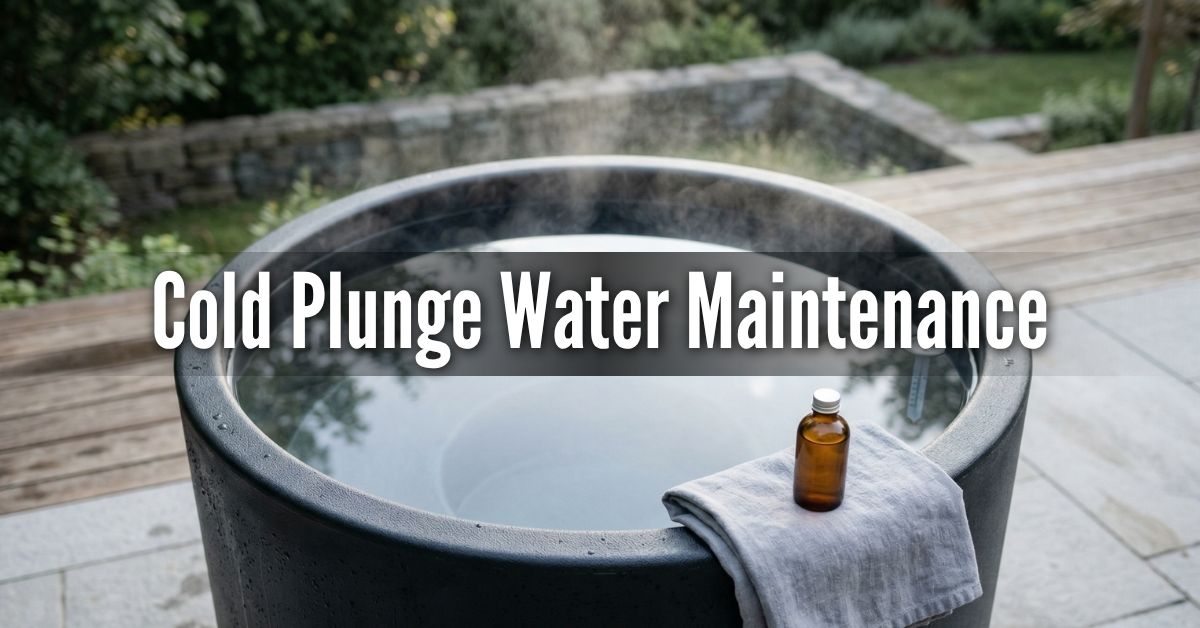
Why Cold Plunge Water Maintenance Matters
Cold plunging has exploded in popularity. What used to be reserved for athletes and spa facilities is now showing up on patios, decks, and backyard wellness setups across the country because of the positive mental and physical benefits.
Many cold plunge tubs use far smaller water volumes than pools or hot tubs, which means water chemistry can change more quickly if maintenance is ignored.
But one thing new plunge owners quickly realize is this:
Cold water does not automatically mean clean water.
Body oils, sweat, dust, leaves, and bacteria can slowly build up in a cold plunge if the water is not maintained properly. Without a simple maintenance routine, the water can turn cloudy, develop odors, or require constant draining and refilling.
The good news is that maintaining clean plunge water does not require harsh chemicals or complicated pool systems. With the right habits and a few simple tools, you can keep your plunge water clear and safe for weeks at a time.
Learning how to maintain cold plunge water properly is the key to keeping the system simple and enjoyable.
Why Cold Plunge Water Gets Dirty Faster Than You Think
Even though the water feels clean and refreshing, a lot enters the tub every time someone takes a plunge.
Body Oils and Sweat
Natural oils and sweat are the most common contaminants. Even a quick 2-minute plunge can introduce small amounts that slowly accumulate.
Environmental Debris
Outdoor plunges collect pollen, dust, leaves, and insects.
Bacteria Growth
Cold water slows bacterial growth but does not stop it completely.
Without filtration or sanitation, microbes can still develop over time.
According to the CDC, untreated recreational water can still allow bacteria to grow if sanitation is not maintained.
The Biggest Problems Cold Plunge Owners Face
Most cold plunge owners encounter one of these issues within the first few weeks.
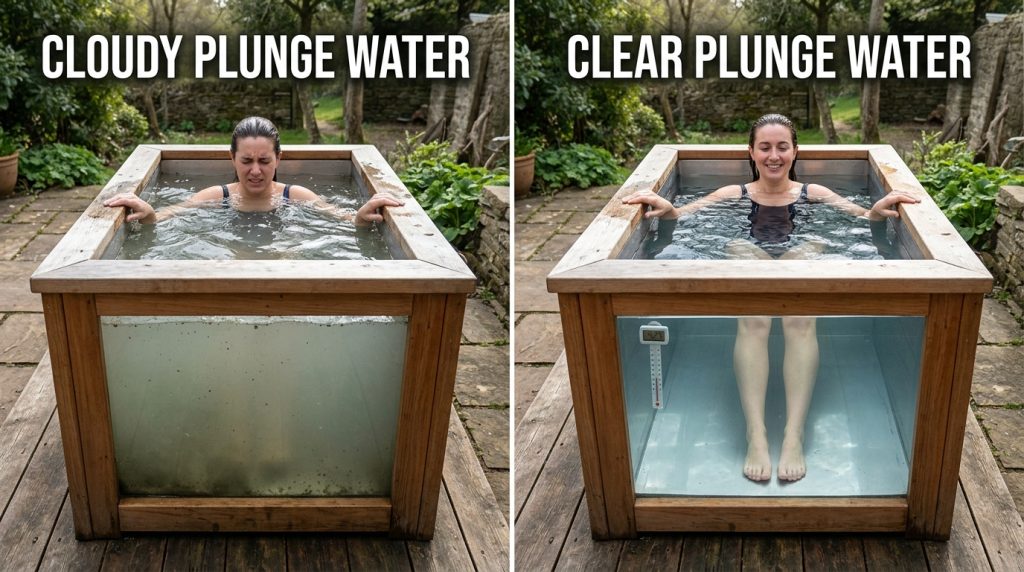
Cloudy Water
This usually means organic buildup or insufficient filtration.
Slippery Tub Surfaces
Biofilm can form along tub walls if sanitation is inconsistent.
Frequent Water Changes
Without treatment, many people end up draining and refilling every few days.
That can become expensive and wasteful quickly.
A better approach is maintaining the water properly so it lasts longer.
How to Keep Cold Plunge Water Clean Without Harsh Chemicals
Many people want to avoid heavy chlorine or spa chemicals. Fortunately, there are several simple ways to keep plunge water clean naturally.
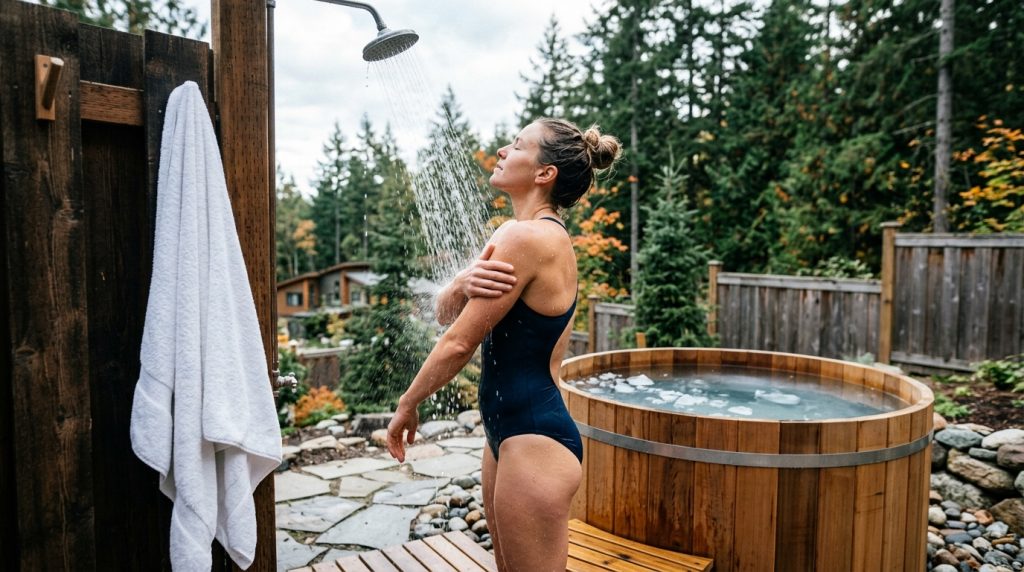
Rinse Before Entering
A quick rinse removes sweat, lotions, and oils before entering the plunge.
Use a Cover
Keeping the tub covered prevents debris from entering the water.
Add Basic Filtration
Even a small pump filter dramatically improves water clarity.
Use Gentle Water Treatments
Natural clarifiers and enzyme-based cleaners help break down organic buildup.
These treatments keep water stable without strong chemical smells or skin irritation.
Natural Water Treatments That Actually Work
Some cold plunge owners prefer minimal chemical exposure. Fortunately, newer water treatment formulas are designed specifically for small plunge systems.
Many use:
• enzyme cleaners
• natural clarifiers
• water stabilizers
• non-chlorine sanitation methods
These treatments help break down oils and organic material while keeping the water clear.
One option many plunge owners use is a multi-function cold plunge water treatment that combines stabilizer, clarifier, and sanitizer support in one formula.
Used consistently, treatments like this can dramatically extend how long plunge water stays fresh.
Always follow manufacturer instructions for any water treatment product and avoid mixing multiple treatment systems unless they are designed to work together.
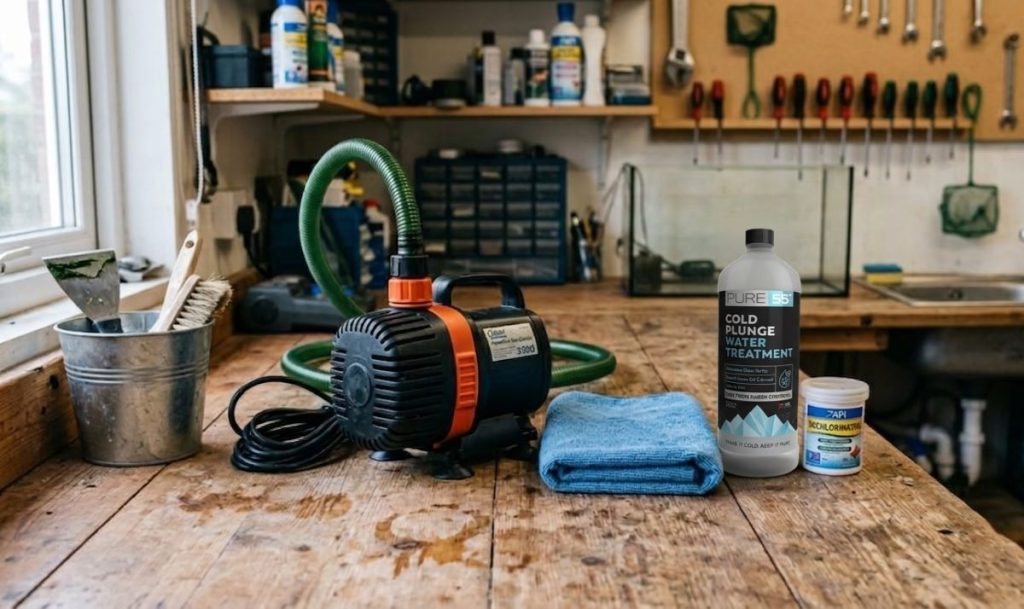
Filtration Options for Cold Plunge Tubs
Filtration plays a major role in water clarity.
Small Pump Filters
These are the most common option for home plunge setups.
They continuously circulate water through a filter cartridge.
External Plunge Chillers
Some cold plunge chillers include built-in filtration systems.
These systems keep water moving while trapping debris.
Manual Filters
Simple skimmers or filter bags can also help remove debris.
Even basic filtration can extend water life significantly.
Step-by-Step: How to Maintain Cold Plunge Water Naturally
Step 1: Start With Clean Water
Fill the plunge with fresh water and wipe the tub interior before the first use. Starting clean prevents early buildup of oils and debris.
Step 2: Add a Water Stabilizer or Clarifier
Use a gentle water treatment designed for cold plunge systems to help prevent organic buildup and keep the water balanced.
Step 3: Circulate or Filter the Water
Run your filter pump or circulation system regularly to keep water moving and remove small particles.
Step 4: Keep the Tub Covered
A simple insulated cover prevents leaves, pollen, insects, and dust from entering the water.
Step 5: Maintain Weekly Water Care
Add your maintenance treatment, wipe down the tub interior, and check the filter.
Step 6: Replace Water When Needed
Even well-maintained plunge water eventually needs refreshing. Most home setups replace water every few weeks, depending on usage.
Simple Cold Plunge Maintenance Routine
Most cold plunge owners find that a basic routine keeps everything running smoothly.
Daily
• Cover plunge when not in use
• Skim debris if needed
Weekly
• Add water treatment solution
• Check filter cleanliness
• Wipe tub interior
Monthly
• Replace or clean filter cartridges
• Evaluate water clarity and smell
With this simple routine, many owners can keep plunge water usable for several weeks.
| Maintenance Task | Frequency |
|---|---|
| Cover plunge when not in use | Daily |
| Skim debris | As needed |
| Add water treatment | Weekly |
| Check filtration system | Weekly |
| Wipe interior surfaces | Weekly |
| Replace or clean filter | Monthly |
| Full water replacement | Every 3 – 6 weeks |
Signs Your Cold Plunge Water Needs Attention
Even well-maintained plunges occasionally need adjustments.
Watch for:
• cloudy water
• unusual odor
• slippery tub walls
• floating particles
• skin irritation after plunging
These usually indicate that filtration or sanitation needs attention.
When You Should Completely Replace the Water
Even with good maintenance, plunge water eventually needs replacement.
Most home setups replace water every:
3 to 6 weeks
However, heavy use may shorten that timeline.
Draining, rinsing the tub, and refilling gives the system a fresh start.
Regular maintenance usually costs far less than constantly draining and refilling hundreds of gallons of water.
Common Cold Plunge Water Maintenance Mistakes
Using Too Many Chemicals
Heavy chemical loads can irritate skin and damage small plunge systems.
Ignoring Filtration
Without circulation, water quality drops quickly.
Leaving the Tub Uncovered
Debris and insects can contaminate water quickly.
Waiting Too Long Between Treatments
Regular maintenance works far better than occasional large fixes.
Recommended Cold Plunge Water Treatment Option
For people who want a simple, low-maintenance approach, many cold plunge owners use a multi-purpose treatment formula designed specifically for plunge tubs.
Some cold plunge owners choose multi-function treatments such as Pure 55 Cold Plunge Water Treatment, which combine stabilizer, cleaner, and clarifier support in one formula.
Used weekly alongside filtration and basic cleaning, these treatments can help extend water life while keeping plunge sessions clean and refreshing.
Natural Maintenance vs Chemical Spa Maintenance
| Method | Pros | Cons |
|---|---|---|
| Natural treatments | Gentle on skin, simple routine | May require regular monitoring |
| Chlorine spa chemicals | Strong sanitation | Can irritate skin, stronger smell |
Frequently Asked Questions (FAQs)
Most home cold plunges require a full water change every 3 to 6 weeks, depending on frequency of use, number of users, filtration quality, and whether any sanitizers are added.
Yes. Many plunge owners successfully maintain clean water using enzyme-based cleaners, water clarifiers, strong filtration (often 1–2 micron), ozone/UV systems, regular skimming, and natural sanitation methods like hydrogen peroxide or mineral systems.
Cold temperatures (especially below 15°C / 59°F) significantly slow bacterial and microbial growth, but they do not eliminate it completely. Without proper maintenance, bacteria, algae, and biofilm can still develop over time.
While not strictly mandatory for short-term use, a good filtration system (pump + fine filter) dramatically improves water clarity, extends time between water changes, reduces cloudiness, and helps control contaminants — most users consider it essential for regular home use.
Cloudiness is usually caused by body oils, sweat, dead skin cells, soap/cosmetic residues, insufficient filtration, inadequate water circulation, high organic load from frequent use, or bacterial biofilm buildup. Adding a clarifier or enzyme treatment and checking/replacing the filter often resolves it quickly.
The Bottom Line
Cold plunging should feel refreshing, not like maintaining a swimming pool.
Fortunately, keeping plunge water clean does not require complicated systems or harsh chemicals. A combination of simple habits, light filtration, and gentle water treatments can keep your plunge clear, safe, and ready whenever you need it.
Once a routine is in place, cold plunge maintenance becomes quick and predictable, letting you focus on what matters most: the invigorating shock of cold water and the benefits that come with it.