

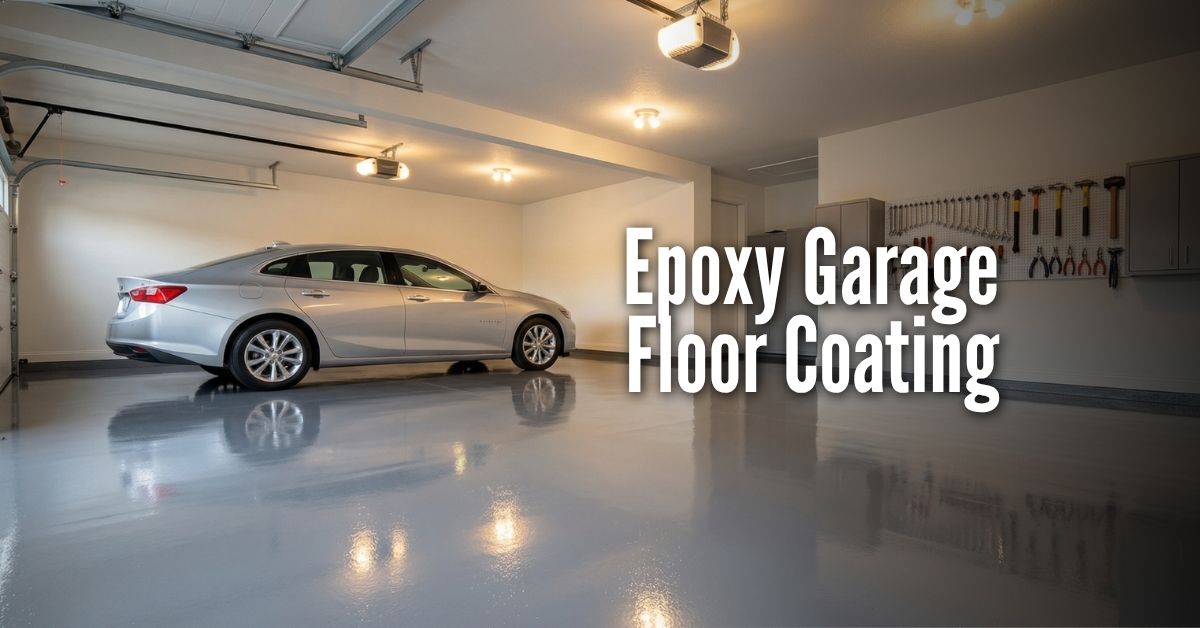
Thinking about coating your garage floor? This DIY guide explains how to apply epoxy garage floor coating step by step, plus alternatives like concrete stains and sealers for garage floors.
Why Garage Floor Coatings Are So Popular
Garage floors deal with constant abuse.
Oil drips, road salt, water, and heavy vehicle traffic can quickly turn bare concrete into a stained, worn surface.
That’s why many homeowners install garage floor coatings.
A good floor coating can:
• protect concrete from stains
• reduce dust and moisture penetration
• improve durability
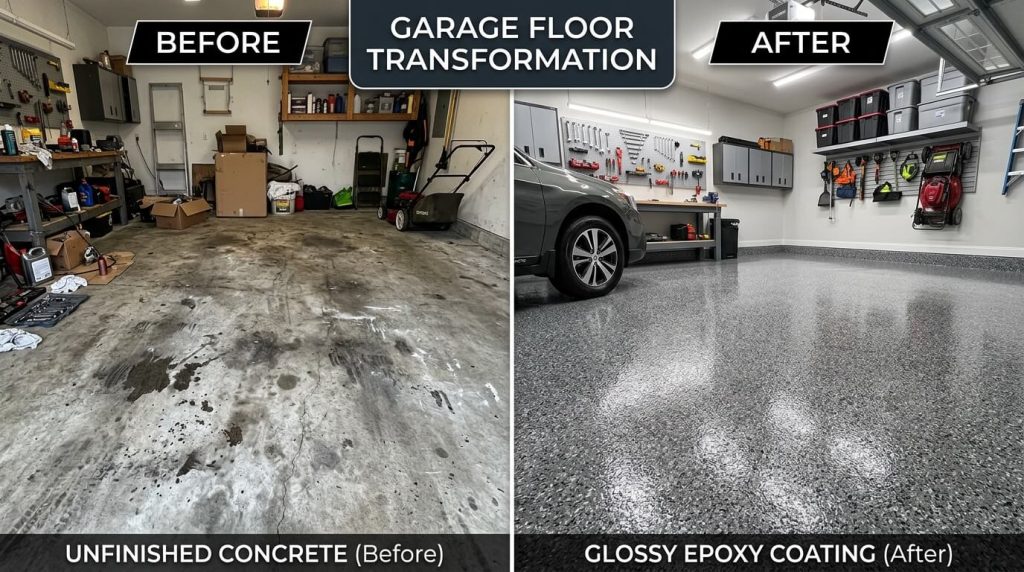
• dramatically improve the appearance of the garage
Epoxy coatings are commonly used because they form a protective barrier that resists chemicals, moisture, and abrasion.
Epoxy coatings are one of the most popular options, but they aren’t the only solution.
Many homeowners also considerconcrete stains and sealers depending on the look and durability they want.
What Epoxy Garage Floor Coating Actually Is
Epoxy is a two-part coating system made from resin and hardener.
When the components are mixed together, they chemically cure into a hard, durable surface bonded to the concrete. The curing process creates a dense polymer layer that is far more durable than paint, which is why epoxy coatings are widely used in garages, workshops, and industrial floors. You can learn more about how epoxy resins work in this overview from the U.S. Department of Energy and materials science resources.
Compared with paint, epoxy:
• bonds more strongly to concrete
• creates a thicker protective layer
• resists chemicals and abrasion
This makes epoxy one of the most durable garage floor coating options available for DIY homeowners.
Is a DIY Epoxy Garage Floor Worth It?
Many homeowners wonder whether applying epoxy themselves is realistic.
In many cases, the answer is yes.
A DIY epoxy floor project works well if:
• the concrete is in good condition
• the surface is properly cleaned and etched
• the coating is applied evenly
The biggest factor in success is preparation.
Most epoxy failures happen because the concrete surface wasn’t cleaned or etched properly.
Tools and Materials You’ll Need
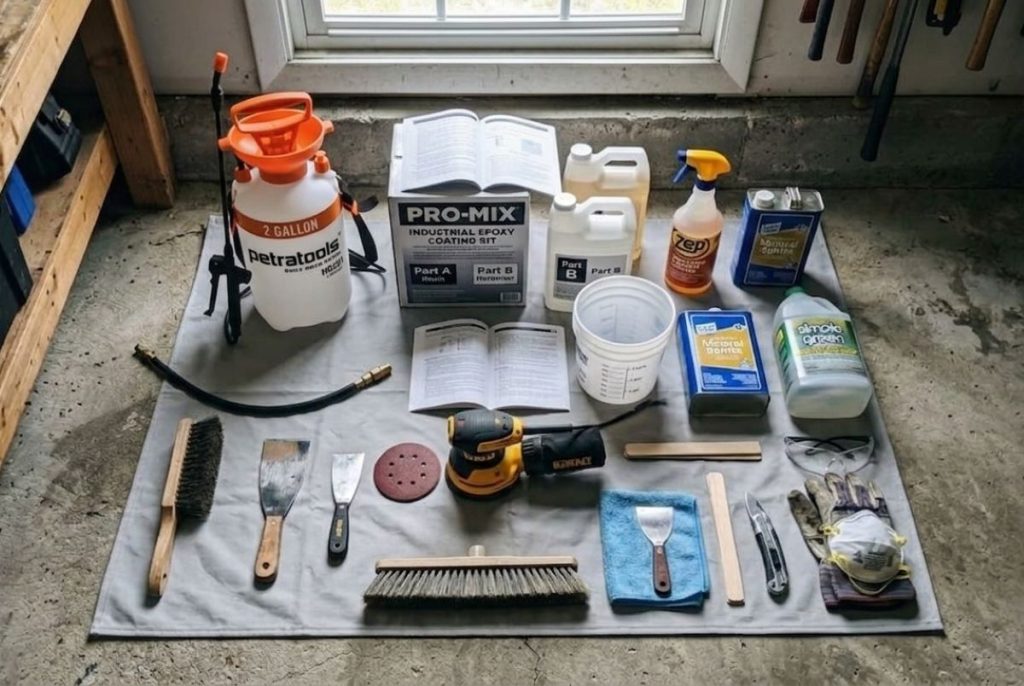
Before starting your epoxy project, gather the basic tools.
Common supplies include:
• concrete cleaner or degreaser
• concrete etching solution
• mixing bucket
• roller and extension pole
• protective gloves and goggles
• epoxy coating kit
Many homeowners also use sprayers to apply cleaners evenly across the concrete surface.

PetraTools HD2000-S Backpack Sprayer
Best for: Lawn care, weed control, fertilizing, pest management, homeowners & landscapers
Key features: No manual pumping, 2 Gallon, long battery life (recharges in 4–6 hrs), padded shoulder strap, lightweight & portable, 2 professional nozzles included
Availability: In stock — from $199.99
Buy ProductTools like the PetraTools HD101 Pump Sprayer or the PetraTools HD2000‑S Sling Sprayer can make it easier to distribute degreasers and etching solutions across larger garage floors.
How to Apply Epoxy Coating to a Garage Floor (Step-by-Step)
Step 1: Empty and Clean the Garage
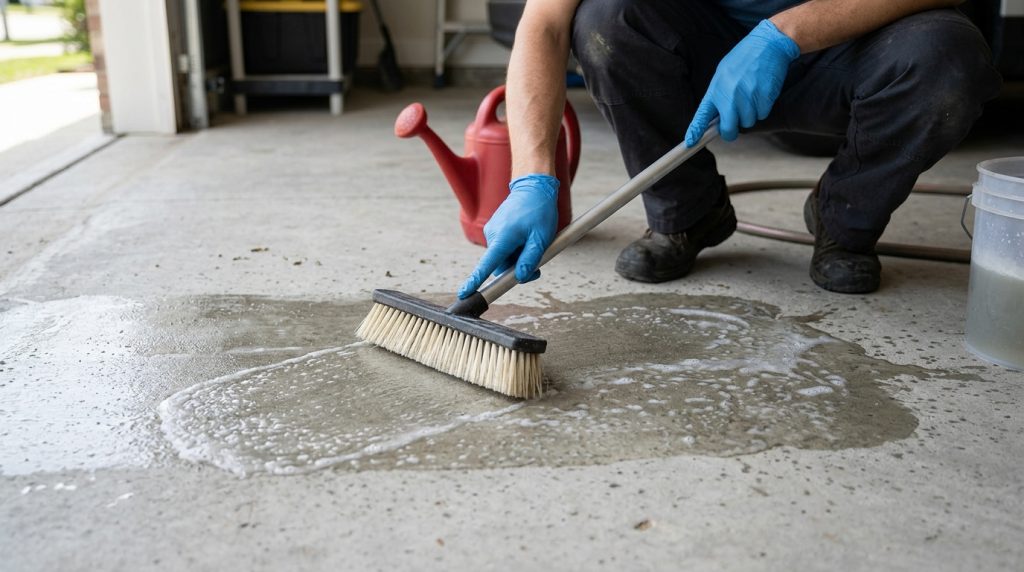
Remove everything from the garage and sweep thoroughly.
Next apply a concrete cleaner or degreaser to remove:
• oil stains
• tire residue
• dirt buildup
Proper cleaning ensures the epoxy bonds well to the concrete.
Step 2: Degrease Oil Stains
Garage floors often contain stubborn oil stains.
Use a degreaser and scrub heavily stained areas with a stiff brush.
Oil left behind can prevent epoxy from bonding properly.
Step 3: Etch the Concrete
Concrete must have a slightly rough texture for epoxy to adhere properly.
Apply an etching solution to open the pores of the concrete.
After etching:
• rinse the floor thoroughly
• allow the concrete to dry completely
The surface should feel slightly rough like fine sandpaper.
Step 4: Repair Cracks or Damage
Before coating the floor, repair any visible cracks.
Use a concrete patch compound to fill:
• cracks
• small pits
• surface imperfections
Allow repairs to cure fully before applying epoxy.
Step 5: Mix the Epoxy
Epoxy coatings typically come in two parts:
• resin
• hardener
Once mixed, the coating begins curing immediately, so follow the manufacturer’s mixing instructions carefully.
Step 6: Apply the Epoxy Coating
Use a roller attached to an extension pole and apply the coating in sections.
Work from the back of the garage toward the door so you don’t trap yourself inside.
Some systems also include decorative flakes for added texture and slip resistance.
Step 7: Allow Proper Cure Time
Most epoxy coatings require:
• light foot traffic after about 24 hours
• vehicle traffic after 48–72 hours
Always follow the manufacturer’s curing recommendations.
Epoxy vs Concrete Stain vs Sealers
While epoxy is popular, it isn’t the only way to upgrade a garage floor.
Some homeowners prefer concrete stains or sealers depending on their goals.
Epoxy Coating
Best for durability and a glossy finished look.
Concrete Acid Stain
Acid stains react chemically with concrete to create natural, variegated color patterns.
Products like BEEST Concrete Acid Stain are often used by homeowners who want a decorative finish while still protecting the concrete surface.
Unlike epoxy, acid stains penetrate the concrete instead of forming a thick coating.
Concrete Sealers
After staining or cleaning concrete, many homeowners apply a concrete sealer to protect the surface from moisture, stains, and wear.
Sealers help lock in color and make the floor easier to clean.
In some garages, homeowners combine stain and sealer systems to achieve both decorative color and long-term protection.
Choosing the Best Garage Floor Finish
When deciding between epoxy, stains, and sealers, consider your priorities.
Epoxy is usually best if you want:
• maximum durability
• chemical resistance
• a polished garage appearance
Concrete stains may be ideal if you want:
• a decorative concrete look
• natural color variation
• a thinner penetrating finish
Concrete sealers work well for:
• protecting existing concrete
• reducing dust
• improving stain resistance.
Common DIY Garage Floor Coating Mistakes
Skipping Surface Prep
Concrete must be cleaned and etched properly.
Applying Coating to Damp Concrete
Moisture can prevent coatings from bonding correctly.
Mixing Too Much Epoxy at Once
Epoxy cures quickly once mixed.
Working Too Slowly
Plan your application before starting.
How Long Garage Floor Coatings Last
A properly installed epoxy floor can last 10 years or more in residential garages.
Longevity depends on:
• concrete preparation
• coating quality
• garage traffic and use
Concrete stains and sealers can also last several years but may require periodic reapplication.
Frequently Asked Questions
Yes, as long as the concrete is structurally sound and properly cleaned.
Generally yes. Epoxy bonds chemically to the concrete and creates a thicker protective layer.
Yes. Acid stains provide decorative color and are often sealed afterward to protect the floor.
It depends on your goals. Epoxy provides maximum durability, while stains and sealers offer decorative finishes with easier application.
The Bottom Line
Applying a garage floor coating is one of the most noticeable upgrades you can make to a garage.
Epoxy remains one of the most durable options for homeowners who want a strong protective surface.
However, alternatives like acid stains and concrete sealers can also create attractive and protective garage floors depending on the look and maintenance level you prefer.
With proper preparation and the right product choice, upgrading your garage floor can transform a worn concrete slab into a clean, durable surface that lasts for years.