

Why Homeowners Compare Foam Board and Spray Foam
When homeowners start researching insulation upgrades, two materials come up repeatedly: foam board insulation and spray foam insulation.
Both are designed to improve energy efficiency by slowing heat transfer through walls, attics, and crawl spaces.
But they work in very different ways.
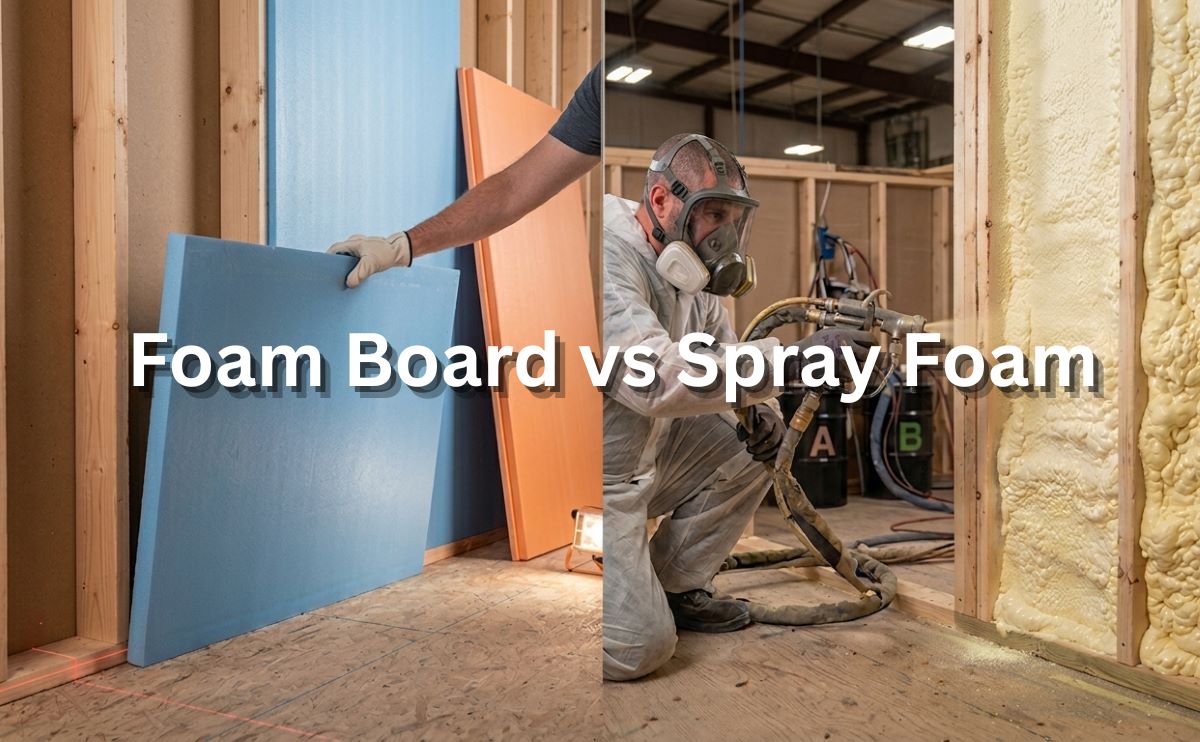
Foam board insulation uses rigid panels that are cut and installed into framing cavities. Spray foam expands after application, sealing gaps and filling irregular spaces.
Choosing the right insulation often comes down to three factors:
• insulation performance
• installation complexity
• overall project cost
Understanding how each material works makes it much easier to decide which approach fits your project.
What Foam Board Insulation Is
Foam board insulation, often called rigid foam insulation, comes in large panels that are cut and installed between framing members or applied over walls.
Because the boards are rigid, they are often installed during construction or major renovation projects where framing cavities are easily accessible.
Common types include:
• expanded polystyrene (EPS)
• extruded polystyrene (XPS)
• polyisocyanurate (polyiso)
Foam board panels provide consistent insulation thickness and are commonly used in:
• basement walls
• exterior wall sheathing
• garage walls
• foundation insulation
Because the panels are rigid, they’re relatively straightforward to install in simple framing spaces.
However, they do not automatically seal small gaps around wiring, framing joints, or irregular surfaces.
What Spray Foam Insulation Is
Spray foam insulation works differently.
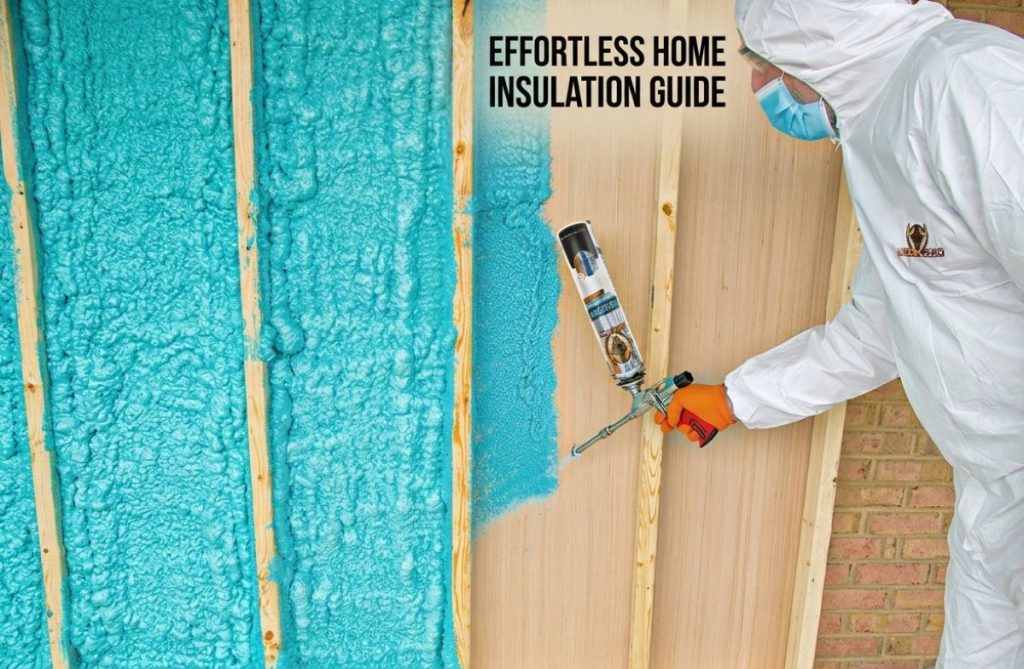
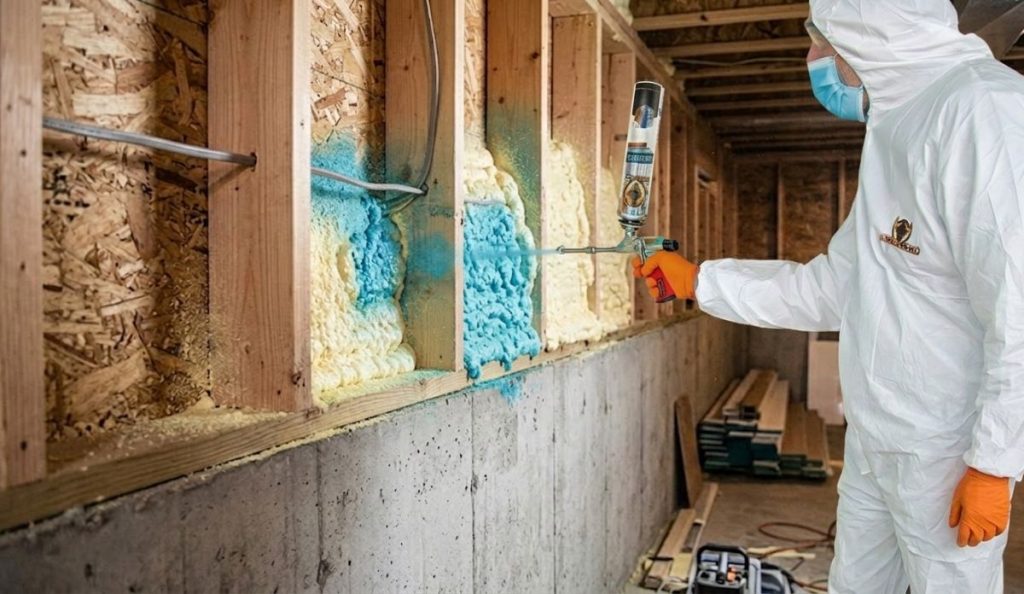
Instead of installing rigid panels, liquid foam is sprayed into cavities where it expands and hardens.
As the foam expands, it fills:
• small cracks
• gaps around pipes
• irregular framing spaces
• air leakage points
This ability to seal air leaks is one reason spray foam is often considered one of the most effective insulation types available.
Many homeowners use spray foam kits like the BEEST Spray Foam Insulation Kit for targeted DIY projects such as:
• sealing rim joists
• insulating crawl space edges
• sealing attic penetrations
• filling irregular cavities
Because the foam expands during application, it creates both insulation and air sealing at the same time.
Foam Board vs Spray Foam: Key Differences
Typical material cost ranges look roughly like this:
| Feature | Foam Board | Spray Foam |
| Installation | Cut and fit panels | Spray and expand |
| Air sealing | Limited | Excellent |
| Gap coverage | Poor in irregular spaces | Fills cracks and gaps |
| Installation difficulty | Moderate DIY | DIY kits or professional |
| Cost | Lower upfront cost | Higher upfront |
Insulation Performance: R-Value Comparison
One way insulation is measured is through R-value, which represents resistance to heat flow.
Typical ranges include:
• Foam board: R-4 to R-6.5 per inch
• Spray foam: R-6 to R-7 per inch (closed-cell)
According to the U.S. Department of Energy, insulation performance depends not only on R-value but also on how well air leakage is controlled. Building science research shows that uncontrolled air movement can significantly reduce insulation effectiveness because warm and cold air move through gaps in the building envelope.
This overview from Building Science Corporation explains how air leakage affects insulation performance: https://buildingscience.com/documents/insights/bsi-014-air-flow-control-in-buildings
Spray foam often performs better in real-world conditions because it seals air leaks while insulating.
Cost Comparison: Foam Board vs Spray Foam
Cost is one of the biggest differences between these insulation methods.
Typical material costs:
| Insulation Type | Typical Cost Range |
| Foam board | $0.25 – $0.75 per sq ft |
| Spray foam | $1.00 – $3.00 per sq ft |
Spray foam is usually more expensive because:
• it creates both insulation and air sealing
• installation requires specialized equipment or kits
• material costs are higher
However, the improved air sealing may reduce long-term heating and cooling costs.
Best Uses for Foam Board Insulation
Foam board works well when:
• surfaces are flat and predictable
• framing cavities are uniform
• budget is a major factor
Common foam board applications include:
• basement walls
• foundation insulation
• exterior sheathing
• garage wall insulation
Because panels must be cut precisely, foam board works best in areas where the structure is relatively simple.
Best Uses for Spray Foam Insulation
Spray foam excels when insulation must adapt to irregular spaces.
It works particularly well for:
• rim joists
• crawl space sealing
• attic penetrations
• sealing small gaps and cracks
• insulating complex framing areas
DIY kits like the BEEST Spray Foam Insulation Kit are commonly used for targeted sealing projects where traditional insulation leaves air gaps.
For garages or workshop spaces, products like BEEST Garage Insul8 are sometimes used to help improve temperature control and energy efficiency in areas that are difficult to insulate with rigid materials alone.
Is Spray Foam Insulation Worth the Extra Cost Compared to Foam Board?
Many homeowners ask whether spray foam insulation justifies the higher price.
In many cases, the answer depends on where the insulation is installed.
Spray foam may be worth the investment when:
• air leakage is a major concern
• framing cavities are irregular
• moisture control is important
• energy efficiency is a long-term priority
Foam board may be the better option when:
• budget is limited
• installation areas are simple
• air sealing is not a major concern
In some homes, the most effective approach is combining insulation types.
Foam board can handle larger surfaces, while spray foam seals gaps and difficult areas.
Common Insulation Installation Mistakes
Leaving Air Gaps
Even small air leaks can reduce insulation effectiveness.
Ignoring Rim Joists
These areas are major sources of energy loss in many homes.
Compressing Insulation
Compressed insulation loses effectiveness.
Using One Material Everywhere
Different parts of a home often benefit from different insulation approaches.
Frequently Asked Questions
Spray foam provides better air sealing and can achieve higher performance in irregular spaces, but foam board can be more affordable for large flat surfaces.
Yes. Foam board is commonly used on crawl space walls or foundations when moisture conditions are controlled.
Some spray foam projects can be DIY-friendly using spray foam kits, especially for smaller sealing projects.
Closed-cell spray foam generally provides the highest R-value per inch among commonly used insulation materials.
The Bottom Line
Both foam board and spray foam insulation can significantly improve a home’s energy efficiency.
Foam board provides a cost-effective option for insulating flat surfaces and simple framing spaces.
Spray foam offers superior air sealing and better performance in irregular areas where rigid materials struggle.
In many homes, the best insulation strategy combines both approaches.
By matching the insulation type to the specific project area, homeowners can improve comfort, reduce energy loss, and make smarter long-term insulation decisions.