


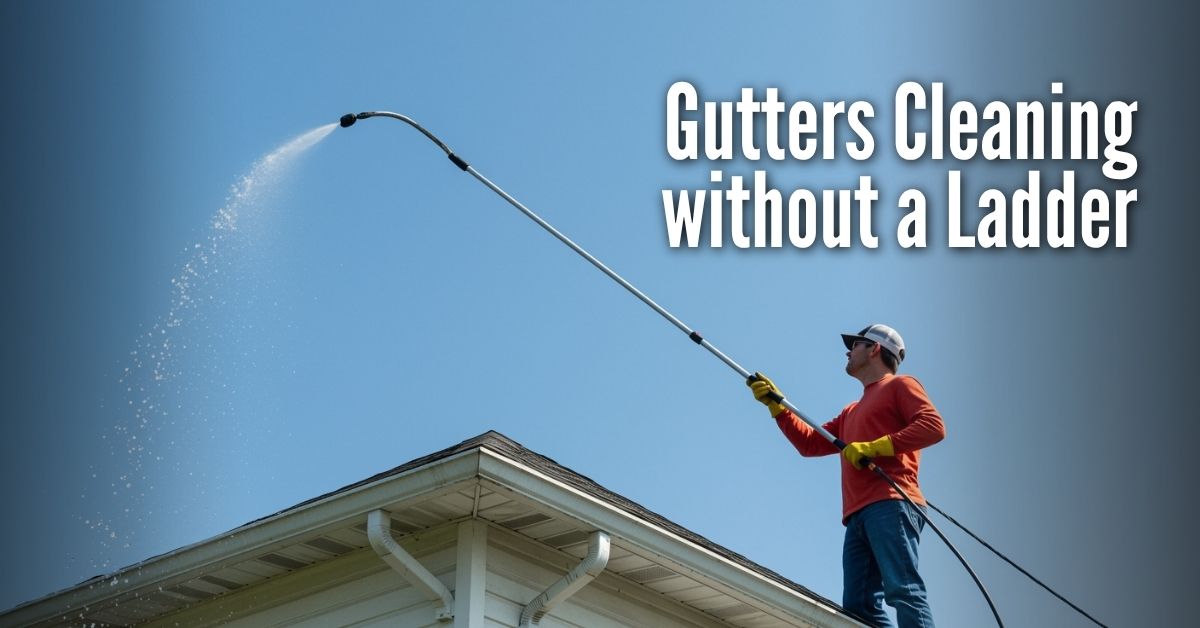
Why Keeping Gutters Clean Matters
Gutters play an important role in protecting your home from water damage.
When they become clogged with leaves, debris, and sediment, rainwater cannot flow properly through the downspouts.
Over time this can lead to:
• roof edge damage
• water pooling near the foundation
• landscape erosion
• fascia and siding deterioration
Routine gutter cleaning helps prevent these issues and protects your home’s drainage system, which is why many homeowners look for ways to clean gutters without climbing a ladder safely.
According to the U.S. Consumer Product Safety Commission, thousands of ladder-related injuries occur each year, which is why many homeowners prefer ground-based gutter cleaning methods.
Can You Really Clean Gutters Without a Ladder?
Many homeowners assume that cleaning gutters always requires climbing onto a ladder.
In reality, several tools allow you to clean gutters safely from the ground.
These methods use:
• extension wands
• water pressure
• suction systems
• blower attachments
These tools allow you to remove debris while keeping both feet safely on the ground, which can significantly reduce the risk of ladder-related accidents.
For single-story homes and many two-story homes, these ground-based cleaning methods are often sufficient.
Before You Start: Quick Safety Check
Before cleaning gutters from the ground, take a moment to check a few basic safety conditions.
Make sure:
• the ground around the house is stable and dry
• overhead power lines are not near the gutter line
• tools have enough extension length to reach comfortably
• protective eyewear is available when using blowers or pressure washers
A quick safety check helps prevent accidents and ensures the cleaning process goes smoothly.
Method 1: Gutter Cleaning Wand with Garden Hose

A gutter cleaning wand connects to a standard garden hose and includes a curved nozzle designed to spray water into the gutter channel.
How it works
- Attach the wand to your garden hose.
- Extend the pole to reach the gutter line.
- Spray water along the gutter to loosen debris.
- Allow water to flush leaves toward the downspout.
This method works best for light debris, dust, and sediment buildup. It also works well for rinsing gutters after leaves have been manually removed earlier in the season.
It is often used as a seasonal rinse after leaves have already been removed.
Method 2: Leaf Blower Gutter Attachment
A leaf blower gutter kit includes curved tubes that redirect airflow into the gutter channel.
How it works
- Attach the extension tubes to the blower.
- Aim airflow into the gutter.
- Blow leaves and debris out of the channel.
This method works well for dry leaves and loose debris.
However, it may not be as effective for:
• wet leaves
• compacted debris
• muddy buildup
Because of the debris being expelled from the gutter, it’s best to use eye protection during this process.
Method 3: Wet/Dry Vacuum Gutter Cleaning Kit
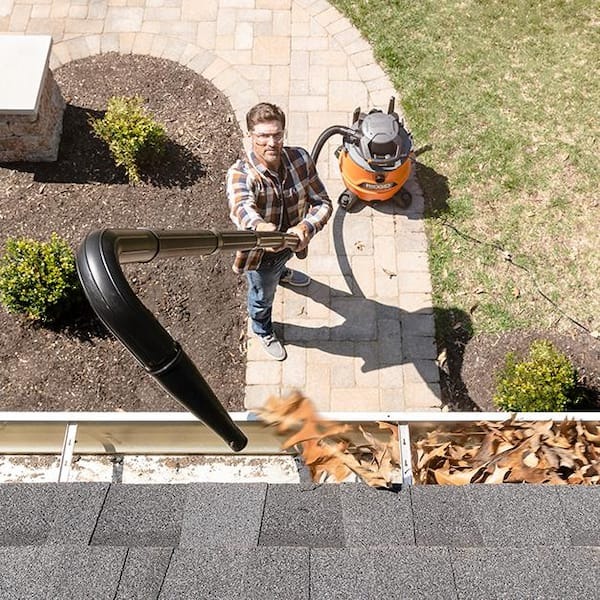
Wet/dry shop vacuums can be equipped with extension kits designed for gutter cleaning.
How it works
- Connect extension tubes to the shop vacuum.
- Extend the tube to the gutter line.
- Vacuum debris from inside the gutter channel.
This approach works well for:
• leaves
• twigs
• heavy debris
Some systems include curved tubes designed to reach inside the gutter more easily.
Method 4: Pressure Washer with Extension Wand
A pressure washer with a telescoping extension wand can also be used to flush out gutters.
How it works
- Attach an extension wand to the pressure washer.
- Aim the spray into the gutter channel.
- Move along the gutter to push debris toward the downspout.
Pressure washing is effective for removing:
• packed dirt
• small debris
• organic buildup
However, it should be used carefully to avoid damaging shingles or forcing water behind fascia boards.
Start with lower pressure settings and increase gradually to avoid damaging gutter seams or forcing water under roofing materials.
Method 5: Telescoping Gutter Cleaning Tools
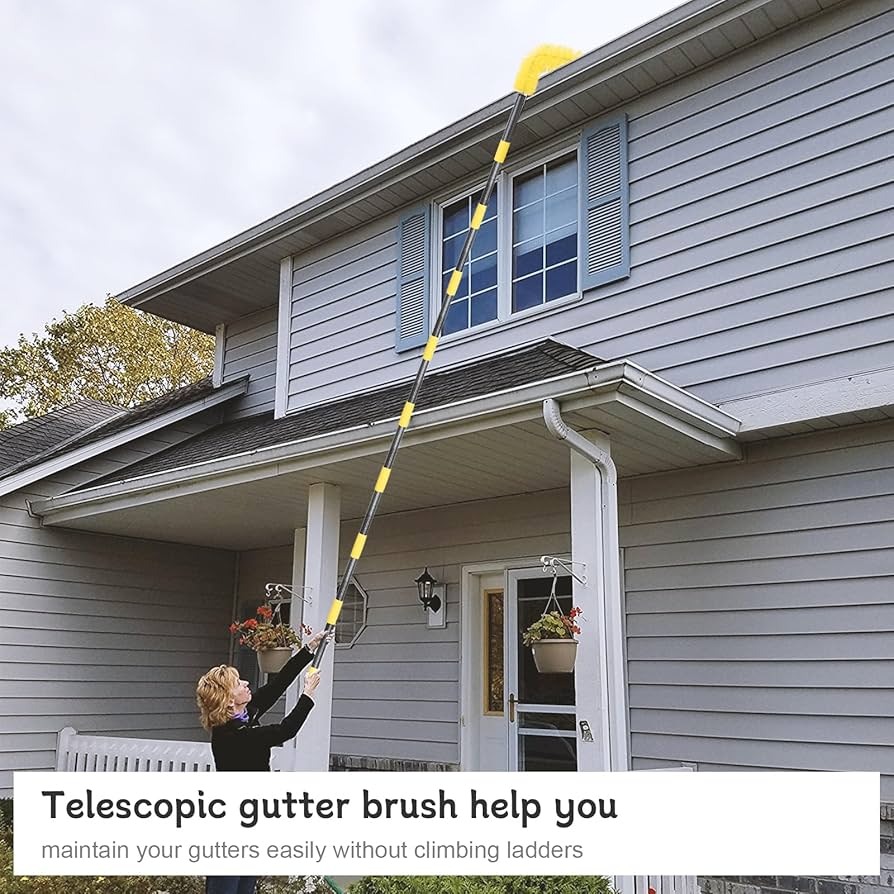
Some gutter cleaning tools use a scoop or claw attached to a telescoping pole.
How it works
- Extend the pole to reach the gutter.
- Insert the scoop into the channel.
- Pull debris toward the edge of the gutter.
This method provides more control than water or air-based tools but may require multiple passes.
When Ground Cleaning Methods Work Best
Cleaning gutters from the ground works best when:
• the home is one or two stories tall
• debris buildup is moderate
• gutters are easily visible from the ground
• tools have sufficient reach
Severely clogged gutters or difficult roof angles may still require professional service.
Helpful Tools That Make the Job Easier
Some homeowners also use backpack sprayers to rinse gutters and downspouts after removing debris.
Sprayers can help flush out remaining sediment or organic buildup inside the gutter channel.
Battery-powered sprayers such as the PetraTools HD4000 backpack sprayer allow homeowners to apply water or cleaning solutions evenly along gutters and downspouts without constant pumping.
For tougher organic buildup or mildew around gutter edges, exterior cleaning solutions designed for outdoor surfaces may help loosen residue before rinsing.
These tools are typically used as part of a broader home maintenance routine that includes cleaning siding, patios, and other exterior surfaces.

PetraTools HD4000 Backpack Sprayer
Best for: Lawn care, pest control, property maintenance
Key features: 4-gallon tank, adjustable pressure, rechargeable battery
Availability: In stock for $199.99
Buy ProductCommon Mistakes When Cleaning Gutters
Waiting Too Long Between Cleanings
Heavy debris buildup makes cleaning significantly harder.
Ignoring Downspouts
Downspouts often clog before gutters do.
Using Too Much Water Pressure
Excessive pressure can damage roofing materials or force water behind siding.
Gutter Maintenance Tips to Prevent Buildup
Routine maintenance reduces the need for heavy cleanings.
Helpful habits include:
- cleaning gutters twice per year
- installing gutter guards
- trimming nearby tree branches
- flushing downspouts occasionally
- checking gutters after major storms or heavy leaf fall
Preventative maintenance helps gutters continue to direct water safely away from your home.
Frequently Asked Questions (FAQs)
Yes, when using extension tools designed for ground-based gutter cleaning.
A gutter cleaning wand or blower attachment is often the simplest method for removing loose debris.
Yes, but they should be used carefully to avoid damaging roofing materials.
Most homes benefit from cleaning gutters at least twice per year, typically in spring and fall.
The Bottom Line
Cleaning gutters does not always require climbing onto a ladder.
With the right tools, homeowners can remove debris, flush out sediment, and maintain proper water flow while staying safely on the ground.
Whether using water wands, blower attachments, vacuum systems, or telescoping tools, regular gutter maintenance helps protect your roof, siding, and foundation from costly water damage.
Consistent upkeep keeps gutters working the way they were designed: directing water safely away from your home.