

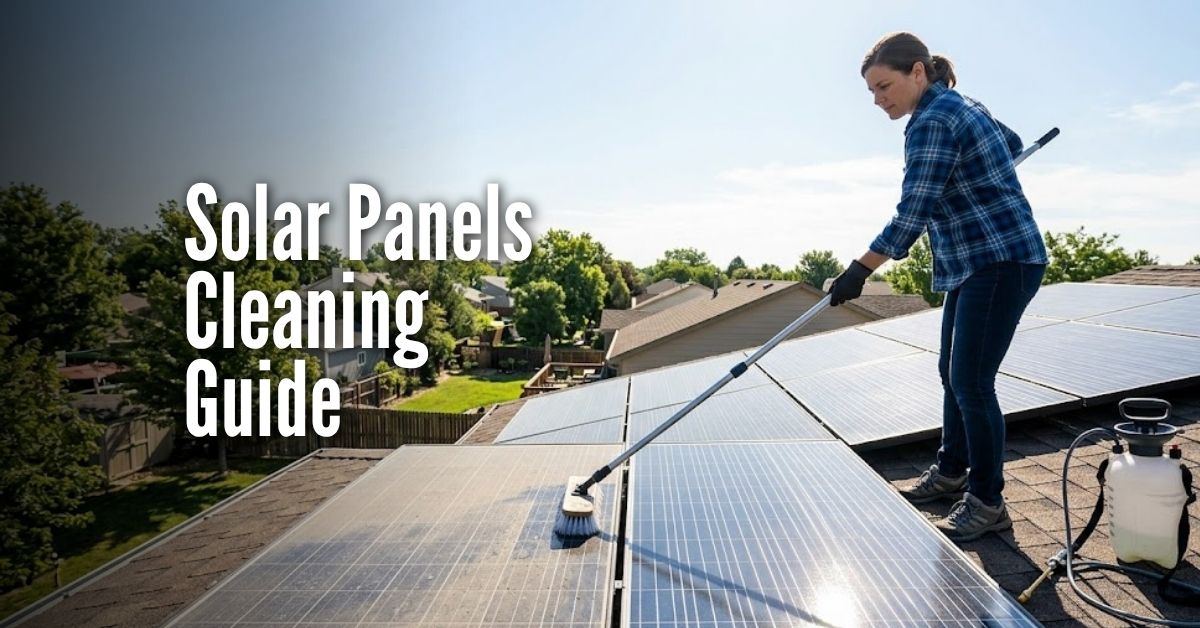
You probably installed solar panels in your home, because you wanted to save money, lower your energy bills, and increase the value of your home. Once panels are installed, it’s important to remember that they are not completely maintenance free.
Solar panels need direct sunlight to work efficiently. Dust, pollen, bird droppings, pollution, and general outdoor grime slowly build up over time. You may not notice it right away, but even a thin layer of residue can reduce how much sunlight reaches the panels. Less sunlight means less energy, and less energy means lower efficiency from a system you paid good money for.
The good news is that cleaning solar panels isn’t complicated, and it doesn’t have to be risky or expensive. You just need to know when cleaning actually matters, how to do it safely, and what tools and products won’t cause damage.
This solar panel cleaning guide walks through everything step by step, so you’ll have a better understanding of how to keep your panels clean and working to maximum capacity.
Disclaimer: This guide references Solar Sheen, a solar panel cleaner formulated for residential systems. Recommendations are based on testing and reviews as well as general best practices for maintaining panel efficiency and protecting panel surfaces when used as directed.
Buy ProductQuick Recommendation
Cleaning Solar Panels Safely and Efficiently
For most homeowners, gentle, residue-free cleaning is the safest and most effective way to maintain solar panel efficiency. Dirt buildup reduces output over time, but aggressive tools or harsh chemicals can damage panel surfaces.
- Best method: Low-pressure rinse and solar-safe cleaner
- Best tool: A sprayer for even, controlled application
- Cleaner to use: A dedicated product like Solar Sheen
- What to avoid: Pressure washers, abrasives, household detergents
This guide walks through when cleaning matters, how to do it safely, and which tools help without risking damage.
Solar Sheen Success Stories
Residential System in Arizona
After several months of dust buildup, my south-facing solar array in Phoenix was losing noticeable output. I used Solar Sheen and eventually noticed a 12% increase in daily energy production compared to before cleaning.
— Maria , Phoenix, AZ
Coastal Home in Southern California
Salt residue and ocean spray were dulling my rooftop panels near San Diego. An application of Solar Sheen helped dissolve salt deposits and remove light grime. My panels looked visibly brighter, and my energy readings over the next month showed consistent improvement.
— Jim, San Diego, CA
Buy ProductWhy Cleaning Solar Panels Matters for Efficiency
Solar panels rely on direct exposure to sunlight. Anything that blocks that light, even partially, reduces output.
Over time, panels can collect:
- Dust and dirt from the air
- Pollen during spring and summer
- Bird droppings
- Pollution residue in urban areas
- Salt buildup in coastal regions
Rain helps keep panels clean to some extent, but it doesn’t solve the problem completely. Light rain often just moves dirt around, leaving behind streaks or mineral residue. In dry climates, rain may barely touch buildup at all.
Studies and real-world testing both show that dirty solar panels can lose 5–20% efficiency, depending on environment and neglect.
Cleaning panels restores light exposure and helps panels work as they should – saving you energy. It’s one of the simplest forms of solar panel maintenance with measurable benefits.
When Should You Clean Solar Panels?
Signs Your Solar Panels Need Cleaning
You don’t need specialized tools to tell when cleaning might be overdue. A few common signs include:
- Visible dirt, dust, or debris on the surface
- Bird droppings that haven’t washed away
- Energy production dropping without another clear explanation
- Panels looking streaked or hazy instead of clear
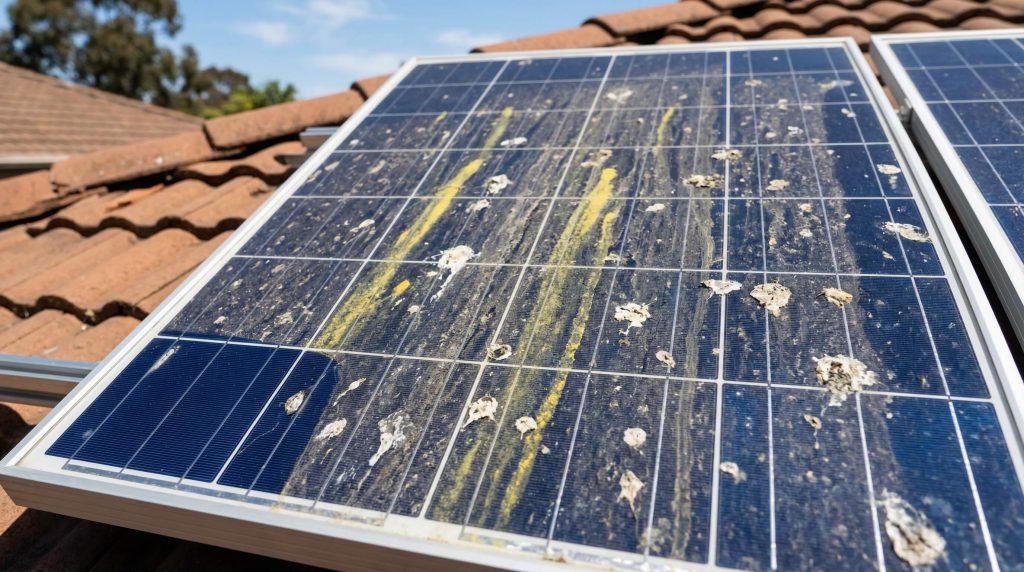
If output has dipped and nothing else has changed, cleaning is often the first thing to check.
How Often to Clean Solar Panels
While there is no specific schedule, most residential panel systems benefit from cleaning one to two times per year.
How often you clean your panels may depend on your location:
- Dry, dusty regions may need cleaning every 3–6 months
- Urban areas with pollution buildup may need more frequent attention
- Coastal homes may see salt residue
- Heavily treed areas may collect pollen or organic debris
Ground-mounted systems are easier to clean and often maintained more regularly. Roof-mounted panels usually go longer between cleanings, because they are harder to reach, but that doesn’t mean they don’t need to be cleaned.
Is It Safe to Clean Solar Panels Yourself?
DIY Solar Panel Cleaning: What to Know
In many cases, yes, you can clean solar panels yourself, especially if:
- The panels are easily accessible
- The roof has a safe slope
- You’re comfortable working at height
- You have a sturdy ladder and someone to assist you
DIY cleaning makes sense for smaller systems and homeowners who are careful and educated about the process. Panels are durable, but the surface can be scratched or damaged if handled improperly, so it is important to choose products designed specifically for solar panels rather than just a general cleaner.
Safety Risks to Avoid
The biggest risks come from:
- Slips or falls on roofs
- Cleaning panels while they’re hot
- Using abrasive tools or harsh chemicals
It is best to clean solar panels in the morning or later in the evening, when they’re cooler. Spraying cold water on hot glass can cause thermal stress, which may damage the panel surface. The surface could also be dangerous to the touch. If you’re unsure about roof safety or access, it’s better to hire a professional than risk injury, but there are DIY cleaners out there that will help you clean your panels without the cost involved in hiring a contractor.
How to Clean Solar Panels Step by Step
Tools and Equipment You’ll Need
You don’t need anything fancy, but you do need the right basics:
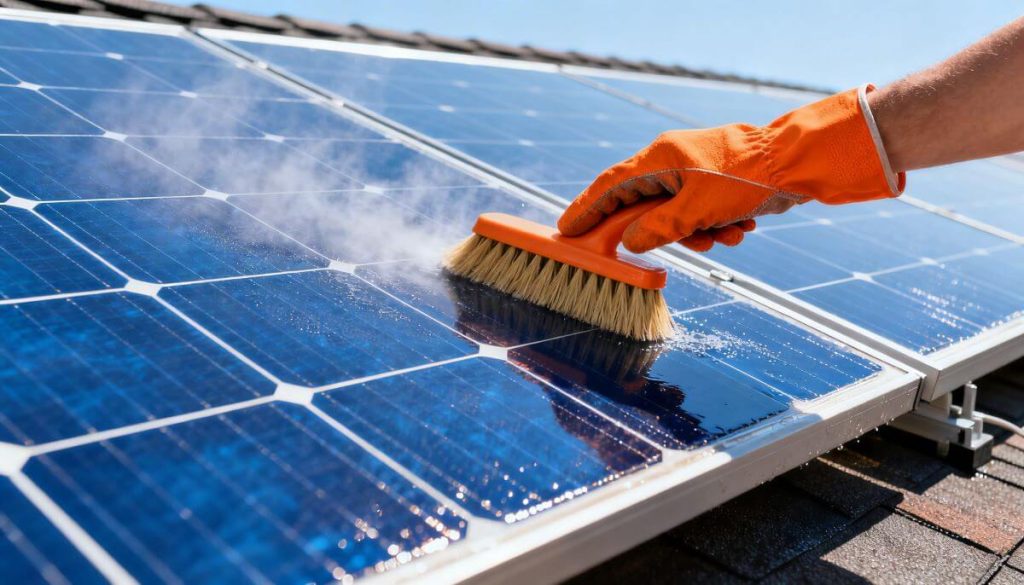
- Soft brush or non-abrasive pad
- Cleaning brush mounted on an extendable handle
- Clean water source
- A sprayer to distribute the cleaning product
Sprayers are tools especially useful for panel cleaning, because they help evenly distribute cleaner to the entire panel surface. A battery-powered sprayer, such as those commonly used for lawn or property maintenance, allows you to apply cleaning solution evenly without blasting the surface. Many homeowners already own a PetraTools sprayer for outdoor use, and it works well here when set to low pressure or higher pressure when needing to reach panels at a distance.
Choosing the Right Solar Panel Cleaner
Household detergents, glass cleaners, and degreasers often leave residue behind. That residue can attract more dirt or reduce panel efficiency after cleaning.
A dedicated solar panel cleaner, like Solar Sheen, is formulated to:
- Break down dirt and organic buildup
- Rinse clean without streaking
- Leave no residue behind
Using a product designed specifically for solar panels helps protect the surface and maintain performance.
Step-by-Step Solar Panel Cleaning Process
- Rinse first
Use clean water to remove loose dirt and dust. - Apply cleaner gently
Apply a solar cleaning product like Solar Sheen using a low-pressure sprayer for even coverage. Avoid soaking electrical components. - Light agitation if needed
Use a soft brush or pad only where buildup remains. A long handled brush is especially useful when cleaning panels on roofs. - Final rinse
Rinse thoroughly to remove all cleaner residue. - Let air dry
Panels should dry naturally without wiping.
Cleaning panels can be as simple as that, but it is important to keep them properly maintained for maximum output and energy efficiency.
Best Tools for Cleaning Solar Panels Efficiently
Using Sprayers for Even, Controlled Application
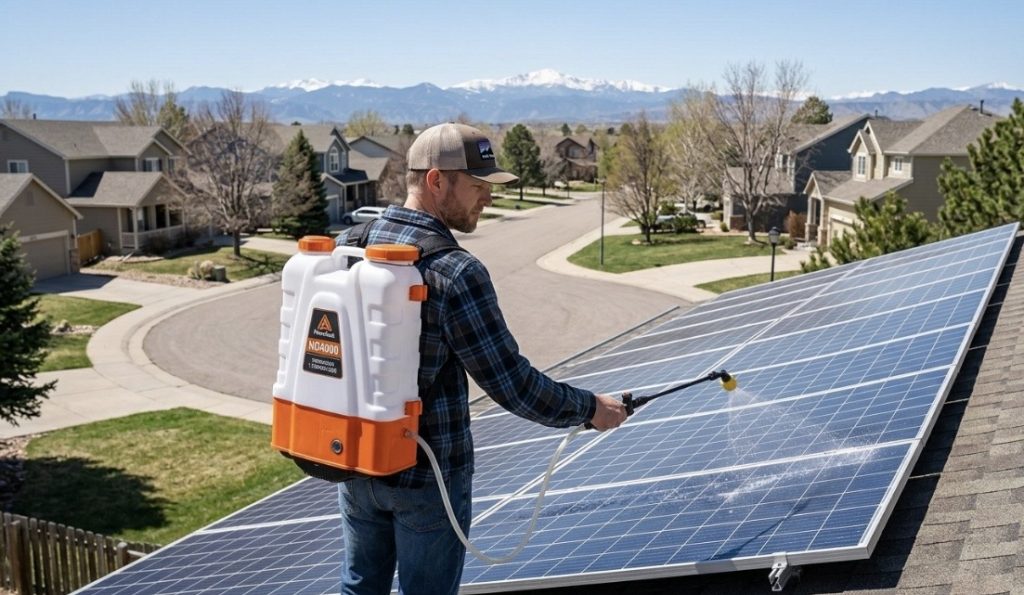
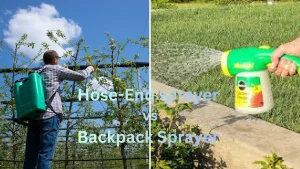
Sprayers make cleaning solar panels easier and more consistent. A backpack or handheld sprayer allows you to:
- Apply cleaner evenly
- Control pressure
- Avoid overspray
If you need to pick up a sprayer before tackling your solar panels, PetraTools sprayers are commonly used for lawn and property care, and they transition naturally to panel cleaning when used at lower pressure. The goal is coverage, not force.
If you are cleaning panels on a roof, you may want a battery powered backpack sprayer so you can maintain a hands free experience. This will allow you to easily interchange between a long handled brush and the sprayer handle.

PetraTools HD4000 Backpack Sprayer
Best for: Lawn care, pest control, property maintenance
Key features: 4-gallon tank, adjustable pressure, rechargeable battery
Availability: In stock for $199.99
Buy ProductWhat to Avoid When Cleaning Solar Panels
Some tools cause more harm than good:
- Pressure washers
- Abrasive scrubbers
- Hard bristle brushes
- Strong detergents
These can scratch glass, damage coatings, or leave residue that reduces efficiency.
DIY vs Professional Solar Panel Cleaning
When DIY Cleaning Makes Sense
DIY cleaning is a good option if:
- Panels are easy to reach
- Roof access is safe
- You’re cleaning a small residential system
Many homeowners can clean their panels once or twice a year with good results.
When to Hire a Professional
Professional cleaning may be better if:
- Panels are on steep or high roofs
- The system is large
- You’re not comfortable working at height
Professionals use specialized tools and safety equipment, and may include inspection as part of the service.
Common Mistakes That Reduce Solar Panel Performance
Using the Wrong Cleaning Products
Harsh chemicals can:
- Damage panel coatings
- Leave residue
- Attract dirt faster after cleaning
Solar panel cleaners are designed to avoid these problems.
Cleaning at the Wrong Time of Day
Cleaning panels during peak sun hours increases the risk of:
- Streaking
- Thermal stress
- Ineffective cleaning
- Personal Injury
Early morning or evening is always best.
Does Cleaning Solar Panels Really Increase Efficiency?
Expected Performance Gains
Most homeowners see noticeable improvements after cleaning, especially if panels haven’t been maintained in a while.
Typical gains can range from:
- 5–10% in mild conditions
- 15% or more in dusty or polluted environments
Cleaning won’t magically exceed system design limits, but it helps panels perform the way they’re supposed to.
Frequently Asked Questions About Cleaning Solar Panels
Yes. While rain helps remove loose debris like pollen or light dust, it doesn’t eliminate stubborn buildup such as bird droppings, tree sap, hard water stains, or thick dust layers. Over time, this reduces sunlight exposure and can lower system efficiency by 5–20% or more, depending on location and buildup severity. Regular cleaning maintains optimal performance and energy output.
Water alone can remove loose dirt and dust, but it often leaves behind streaks, mineral deposits, or oily residues that reduce efficiency. A solar-safe, non-abrasive cleaner (pH-neutral, ammonia-free) helps break down tough buildup and rinses clean without damaging the anti-reflective coatings or glass. For best results, use de-ionized or soft water to avoid hard water spots.
No. Pressure washers can damage panel coatings, crack glass, loosen seals, or force water into junction boxes and wiring, leading to electrical issues or voided warranties. Always use low-pressure rinsing (garden hose with gentle nozzle) or soft brushes for residential systems. Professional cleaning services often use deionized water and soft tools for safety.
In most cases, no — as long as cleaning is done gently and according to manufacturer guidelines (e.g., no abrasive tools, no harsh chemicals, low pressure). Using high-pressure washers, scrapers, or aggressive cleaners may create issues or void coverage for related damage. Always check your panel warranty and use recommended methods (soft brush + hose or professional service) to stay safe.
Early morning or late evening (or cloudy days) is best. Panels are cooler, reducing the risk of thermal shock (hot glass + cold water can crack panels), and cleaning is safer/more comfortable. Avoid midday when panels are hot — water evaporates quickly, leaving streaks, and hot surfaces increase injury risk. Never clean in direct hot sun.
Most residential systems (10–20 panels) can be cleaned in under an hour, depending on accessibility (roof height, tilt), level of buildup, and method (hose vs professional soft wash). Simple dusting takes 20–40 minutes; heavy dirt or bird droppings may take 60–90 minutes. Professional services often complete it in 30–60 minutes with specialized equipment.
Final Tips for Maintaining Clean, Efficient Solar Panels
- Inspect panels visually a few times per year
- Clean before heavy pollen or dust seasons if possible
- Use gentle tools and residue-free cleaners designed specifically for solar panels
- Avoid pressure washing
- Focus on consistency, not perfection
Solar panels don’t need constant attention, but they do need occasional care. A simple cleaning routine helps protect your investment, maintain efficiency, and avoid performance loss that can result from dirty panels.
When done correctly, solar panel cleaning is one of the easiest ways to get more value out of the system you already own.