

Introduction: Faded Mulch Isn’t Dead. It’s Just Sun-Bleached.
Every spring, homeowners look at faded mulch in their landscape beds and assume the same thing:
“Looks like I need all new mulch.”
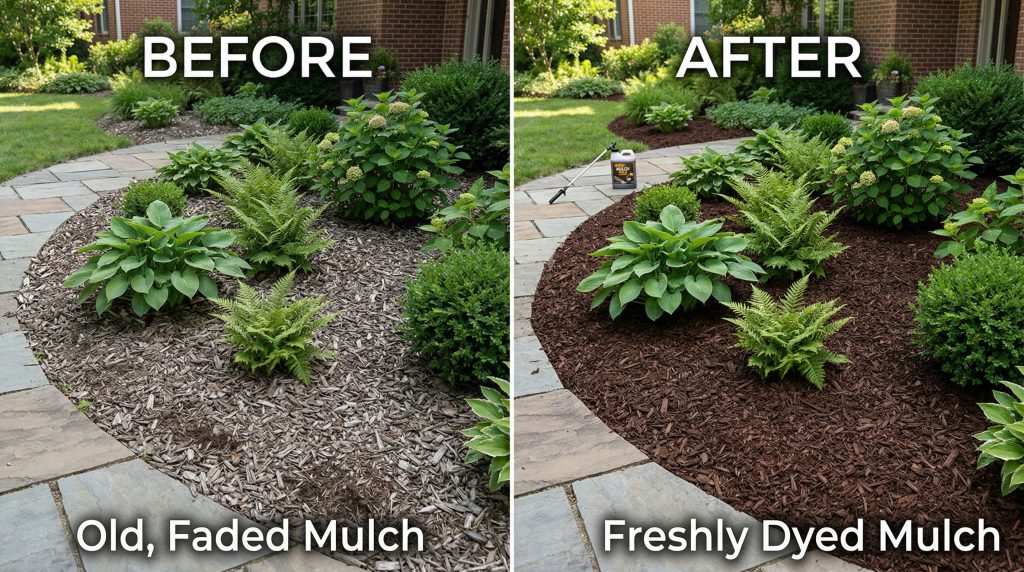
But in most cases, the mulch hasn’t failed structurally. It’s simply lost its color from UV exposure, rain, and oxidation. The material is still doing its job retaining moisture, suppressing weeds, and protecting soil.
The material is still doing its job retaining moisture, suppressing weeds, and protecting soil. Organic mulch also helps regulate soil temperature and conserve moisture, which is why maintaining existing mulch can be more beneficial than replacing it prematurely.
Replacing it is often unnecessary labor and undue expense when the existing mulch is still performing its function.
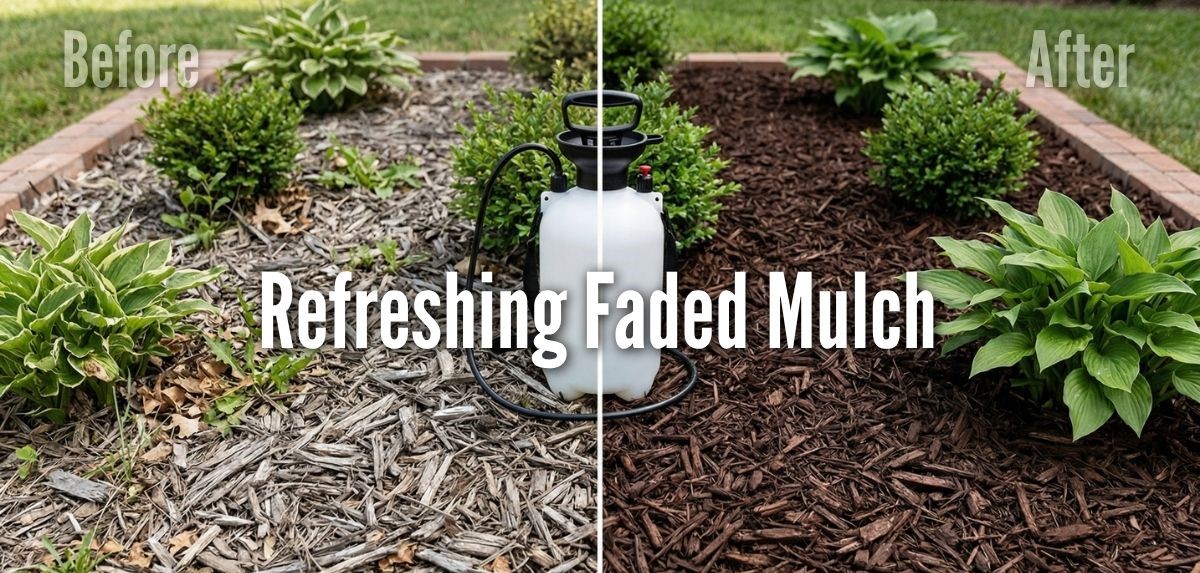
Refreshing it with mulch dye restores the appearance while keeping all the functional benefits of mulch already in place. Think of it as repainting instead of rebuilding.
Why Mulch Fades – And Why That Doesn’t Mean You Need New Mulch
Sunlight Breaks Down Natural Pigments
Wood mulch naturally grays as UV rays degrade lignin, the compound responsible for rich brown and black tones.
Rain and Irrigation Wash Out Surface Color
Water exposure slowly leaches the original tint, especially in high-drainage beds or areas with frequent watering.
The Mulch Is Still Structurally Sound
If the mulch still:
- Covers soil evenly
- Hasn’t decomposed into dust
- Isn’t compacted into a hard layer
…it’s still working. It just looks tired.
That makes it an ideal candidate for color restoration instead of replacement.

PetraMax Black Mulch Dye
Best for: Garden beds, landscape borders, walkways, decorative mulch areas, property refresh
Key features: Lasts up to 7 months, 30% more concentrated than standard dyes, UV & rain resistant, works on all mulch types, covers up to 14,400 sq. ft. per gallon, pet & plant safe once dry
Availability: From $67.99 (1 gallon)
Buy ProductMulch Dye vs. Mulch Replacement – Cost & Effort Comparison
| Factor | Replacing Mulch | Using Mulch Dye |
|---|---|---|
| Material Cost | High (new mulch delivery) | Low (color concentrate) |
| Labor | Remove + haul + spread | Spray and refresh |
| Time Required | Half-day to full weekend | 1–2 hours typical |
| Disruption to Beds | High | Minimal |
| Seasonal Repeat | Often yearly | Can extend mulch life 1–2 seasons |
For many homeowners, dyeing mulch costs a fraction of replacement while achieving the same visual reset.
Quick Test: Should You Refresh or Replace?
Your mulch is a good candidate for dye if:
- It still has visible wood structure
- Depth is at least 2 inches
- It hasn’t turned into soil
- There is no sour or moldy odor
- Beds are intact but color has faded
If most boxes are checked, restoration is typically the smarter option.
When Mulch Dye Is the Right Solution
Mulch dye works best when:
✔ Mulch depth is still 2–3 inches
✔ Material is not moldy or decomposed
✔ Beds are properly edged and defined
✔ You want aesthetic improvement without major labor
✔ The goal is curb appeal, not soil amendment
If mulch has fully decomposed into soil, replacement makes sense. But that’s usually a multi-year process, not an annual one.
Choosing the Right Color for Your Landscape
Black Mulch Dye
Creates a sharp, high-contrast look that:
- Makes plants visually “pop”
- Matches modern or clean landscape designs
- Holds its color longer due to deeper pigmentation
Featured Solution:
PetraMax Black Mulch Dye
Brown Mulch Dye
Offers a natural, just-installed appearance:
- Blends into traditional landscapes
- Mimics fresh hardwood mulch
- Ideal for subtle refreshes
Featured Solution:
PetraMax Brown Mulch Dye
Color choice is aesthetic, not functional. Both perform similarly when applied correctly.
What Homeowners Say:
Andy, Hershey, PA
“The color went on evenly and was surprisingly easy to apply with a sprayer. It made our beds look freshly mulched again without hauling in new material.”
Rod, Nashville, TN
“After a couple rains the color still held, and the yard looked dramatically better. It saved us from buying and spreading new mulch this season.”
How to Apply Mulch Dye (Step-by-Step)
Step 1 — Clear Debris
Remove leaves, sticks, or loose organic material so dye contacts the mulch evenly.
Step 2 — Lightly Moisten the Mulch
A slightly damp surface helps distribute color more uniformly. Avoid soaking.
Step 3 — Mix Dye According to Coverage Needs
Dilution rates control intensity:
- Stronger mix = deeper color
- Lighter mix = more natural weathered tone
Coverage will vary by mulch texture and depth, but most applications treat several hundred square feet when applied evenly.
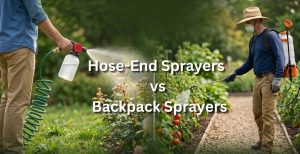
Step 4 — Spray Evenly Using a Pump or Backpack Sprayer
Apply in smooth, overlapping passes. Avoid flooding the material.
Step 5 — Allow to Dry
Most applications dry within a few hours depending on weather conditions.
Once dry, the color bonds to the mulch fibers and resists normal rainfall.
Avoid overspray onto concrete, siding, or stone, and rinse immediately if contact occurs.

PetraMax Brown Mulch Dye
Best for: Garden beds, landscape borders, walkways, front & backyard mulch refresh
Key features: Lasts up to 7 months, 30% more concentrated than standard dyes, UV & rain resistant, works on all mulch types, covers up to 14,400 sq. ft. per gallon, pet & plant safe once dry
Availability: In stock — from $67.99 (1 gallon / covers 14,400 sq. ft.)
Buy ProductHow Long Does Mulch Dye Last?
Typical longevity ranges from 6 to 12 months, depending on:
- Sun exposure
- Rain frequency
- Irrigation habits
- Foot traffic
- Mulch type (hardwood holds color longest)
In shaded beds, color can last well into the following season.
High-traffic areas or beds with heavy irrigation may require a light refresh sooner.
Tips for Getting Professional-Looking Results
Apply in Mild Weather
Avoid:
- Midday heat
- Rain forecasts within 4–6 hours
- Windy conditions
Maintain Proper Mulch Depth
Dye enhances appearance but cannot fix thin coverage.
Use Consistent Spray Patterns
Uneven application is the biggest cause of blotchy results.
Refresh Annually Instead of Replacing
Routine color maintenance extends mulch lifespan significantly.
Environmental & Practical Benefits of Refreshing Instead of Replacing
Refreshing existing mulch:
- Reduces landfill waste
- Avoids unnecessary harvesting/processing of new material
- Saves fuel and transport costs
- Preserves beneficial microbial activity already established in beds
It’s a maintenance strategy rather than a reset.
FAQ: Mulch Dye
When applied as directed, professional mulch colorants are designed to bond to wood fibers, not leach into soil.
After drying, the pigment adheres to the mulch and withstands typical weather.
Yes. In fact, faded mulch accepts dye very well because the surface is more porous.
Primarily yes. But improving visual contrast also helps define beds and highlight plant health.
Applying dye restores appearance without increasing mulch depth, which helps avoid over-mulching that can stress plants and trap excess moisture.
The Bottom Line — Replace Less. Refresh Smarter.
Mulch doesn’t need to be replaced nearly as often as many homeowners assume.
In many landscapes, color loss is cosmetic, not functional.
Refreshing with mulch dye:
- Saves money
- Saves time
- Extends mulch life
- Restores clean, maintained curb appeal
It’s one of the simplest upgrades you can make to a landscape without lifting a shovel.
If your beds are structurally sound but visually faded, refreshing them can be one of the fastest landscape improvements you make all season.