

Why Mold Appears on Exterior Surfaces
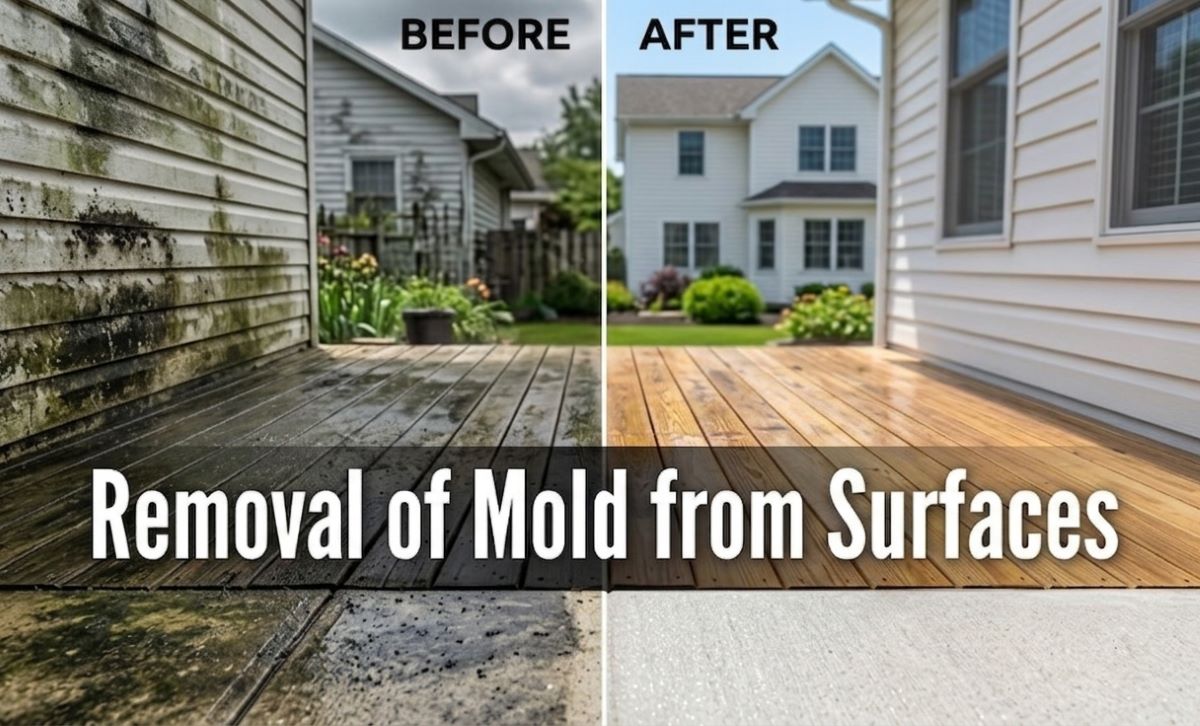
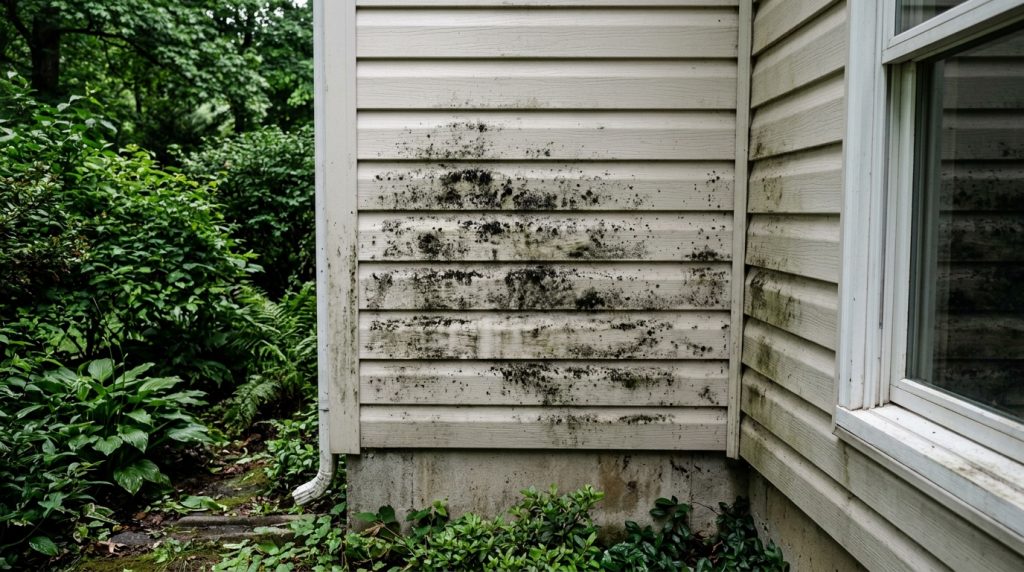
If you’ve noticed dark patches creeping across your siding, deck boards, or concrete patio, you’re not alone.
Exterior mold thrives in environments that are:
• damp
• shaded
• poorly ventilated
It commonly develops on surfaces like:
• vinyl siding
• wood decks
• fences
• driveways
• concrete patios
• outdoor stairs
Mold spores are naturally present outdoors. When moisture and organic debris build up, mold finds the perfect place to grow.
That’s why exterior mold removal is about more than just cleaning the surface. The goal is also preventing it from returning.
Quick Answer: How to Remove Mold from Exterior Surfaces
Most exterior mold can be removed by spraying a cleaning solution such as oxygen bleach onto the affected area, allowing it to sit for 10–15 minutes, lightly scrubbing if needed, and rinsing with a garden hose. Using a sprayer helps distribute the cleaning solution evenly across siding, decks, and concrete without relying on high-pressure washing.
Is Exterior Mold Dangerous?
In most cases, mold on outdoor surfaces is more of a maintenance problem than a serious health risk.
The U.S. Environmental Protection Agency notes that outdoor mold is common and typically managed through routine cleaning and moisture control.
However, mold can:
• stain exterior materials
• damage wood surfaces
• cause slippery walkways
• spread to larger areas if ignored
Cleaning mold early helps protect the appearance and lifespan of outdoor surfaces.
Tools and Supplies You’ll Need
Most exterior mold removal projects require only a few basic tools.
Common supplies include:
• mold cleaner or oxygen bleach solution
• soft-bristle brush or deck brush
• garden hose for rinsing
• protective gloves
• sprayer for applying cleaning solution
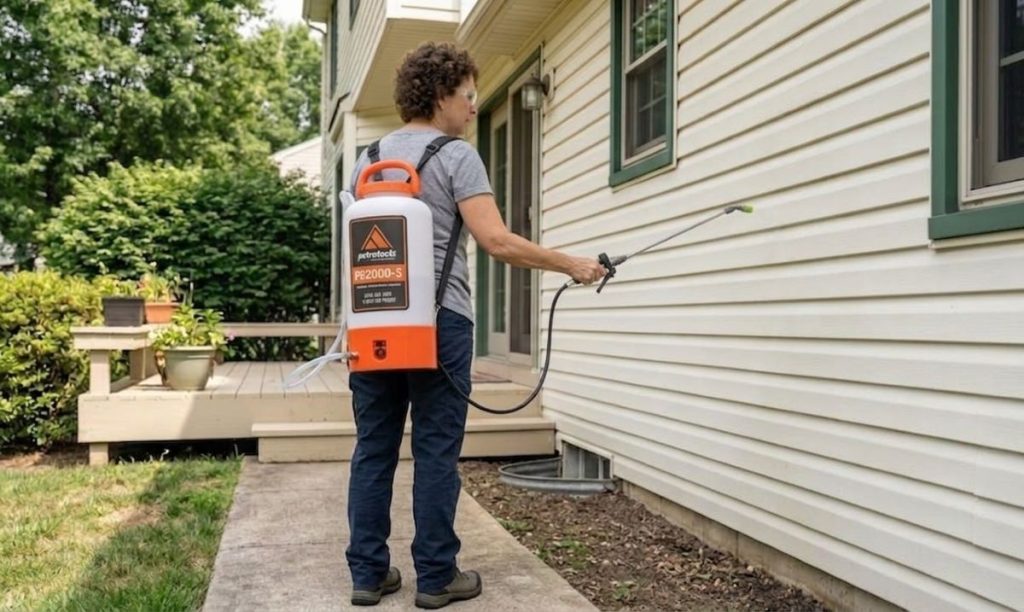
For evenly applying cleaning solutions, many homeowners use sprayers like the PetraTools HD2000-S Sling Sprayer or the PetraTools HD4000 Battery Backpack Sprayer.
Using a sprayer allows you to coat large exterior areas evenly without relying on a pressure washer.
How to Remove Mold from Siding Without a Pressure Washer
Pressure washers are often used to clean siding, but they aren’t always necessary and can sometimes cause damage.
Many homeowners specifically look for ways to remove mold from vinyl siding without using a pressure washer, since excessive pressure can damage siding or force water behind panels.
High pressure can:
• force water behind siding
• damage vinyl panels
• strip paint
A gentler cleaning method is usually safer.
Step 1: Mix a Mold Cleaning Solution
Common DIY cleaning solutions include:
• oxygen bleach and water
• diluted household cleaner
• commercial mold removal products
Avoid mixing cleaners that contain ammonia and bleach.
Step 2: Apply the Cleaner
Apply the cleaning solution generously across the affected siding.
Using a sprayer like the PetraTools HD1000-S Pump Sprayer helps distribute the solution evenly and reach higher siding sections without splashing.

PetraTools HD1000-S Backpack Sprayer
Best for: Weed control, fertilizing, pest management, foliar feeding, small gardens & containers
Key features: No manual pumping, 1 Gallon, long battery life (recharges in 4–6 hrs), padded shoulder strap, lightweight & compact, 2 professional nozzles included
Availability: In stock — $119.99
Buy ProductAllow the solution to sit for about 10–15 minutes so it can break down mold growth.
Step 3: Lightly Scrub Stubborn Areas
If mold remains in certain areas, gently scrub with a soft brush.
Focus on:
• seams between siding panels
• textured siding surfaces
• shaded areas where mold tends to return.
Step 4: Rinse the Surface
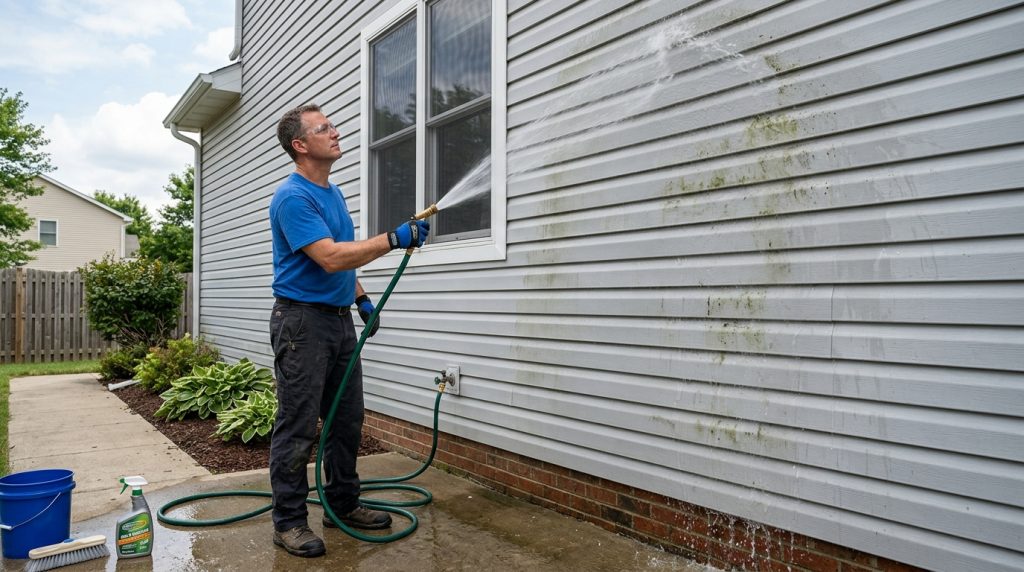
Rinse the siding thoroughly with a garden hose.
This removes the mold residue and cleaning solution.
How to Clean Mold Off a Deck
Many homeowners specifically look for ways to remove mold from vinyl siding without using a pressure washer, since excessive pressure can damage siding or force water behind panels.
Leaves, dirt, and shade create ideal conditions for mold growth.
Step 1: Sweep the Deck
Remove loose debris and organic material before applying cleaner.
Mold often feeds on decomposing leaves and dirt.
Step 2: Apply Deck Cleaner
Spray the cleaning solution across the deck boards.
A sprayer helps apply the solution evenly between boards where mold often hides.

PetraTools HD2000-S Backpack Sprayer
Best for: Lawn care, weed control, fertilizing, pest management, homeowners & landscapers
Key features: No manual pumping, 2 Gallon, long battery life (recharges in 4–6 hrs), padded shoulder strap, lightweight & portable, 2 professional nozzles included
Availability: In stock — from $199.99
Buy ProductStep 3: Scrub the Surface
Use a deck brush to gently scrub along the wood grain.
Avoid aggressive scrubbing that could damage the wood surface.
Step 4: Rinse Thoroughly
Rinse the deck thoroughly and allow it to dry completely.
Once dry, some homeowners choose to apply a deck sealer to help reduce future moisture buildup.
How to Remove Mold from Concrete Surfaces
Concrete may look solid, but it’s actually porous.
Moisture trapped in those pores allows mold and algae to grow over time.
Common areas include:
• patios
• driveways
• walkways
• basement steps
• retaining walls
Step 1: Pre-Wet the Concrete
Lightly wet the concrete surface before applying cleaner.
This prevents the solution from soaking in too quickly.
Step 2: Apply Mold Removal Solution
Apply the cleaner across the surface using a sprayer.
Even coverage helps ensure mold spores are fully treated.
Step 3: Scrub the Area
Use a stiff brush to work the solution into textured concrete.
This helps remove embedded mold growth.
Step 4: Rinse Completely
Rinse thoroughly with a garden hose or light pressure washer.
Once cleaned, concrete may also benefit from a protective sealer to reduce moisture absorption.
How to Prevent Mold from Returning
Cleaning removes the mold you can see, but prevention is what keeps it from coming back.
Several simple maintenance habits can help.
Reduce Moisture
Trim back vegetation that traps moisture against siding or decks.
Improve Sunlight Exposure
Sunlight naturally discourages mold growth.
Keep Surfaces Clean
Regularly remove leaves, dirt, and debris.
Apply Protective Coatings
Deck sealers and concrete sealers help reduce moisture absorption that allows mold to grow.
Common Exterior Mold Removal Mistakes
Using Too Much Pressure
Pressure washers can damage siding, wood, and older concrete.
Skipping Dwell Time
Cleaning solutions need time to break down mold before rinsing.
Ignoring the Root Cause
If moisture remains, mold will return.
Cleaning Only the Visible Areas
Mold spores often spread beyond the obvious stain.
Frequently Asked Questions (FAQs)
Yes. Many homeowners successfully remove mold using cleaning solutions applied with sprayers and rinsed with a garden hose.
Oxygen bleach solutions, commercial mold cleaners, and specialized exterior cleaning products are commonly used.
Exterior mold is usually a maintenance issue rather than a health hazard, but it should still be cleaned to protect surfaces and appearance.
It can if moisture and shade conditions remain. Preventative maintenance helps reduce regrowth.
The Bottom Line
Exterior mold is a common problem for homeowners, especially in shaded or damp environments.
Fortunately, removing mold from siding, decks, and concrete is usually a straightforward DIY project.
Using the right cleaning solution, allowing it time to work, and applying it evenly with tools like PetraTools sprayers can make the process much easier.
With regular maintenance and moisture control, most exterior surfaces can stay cleaner and mold-free for much longer.