


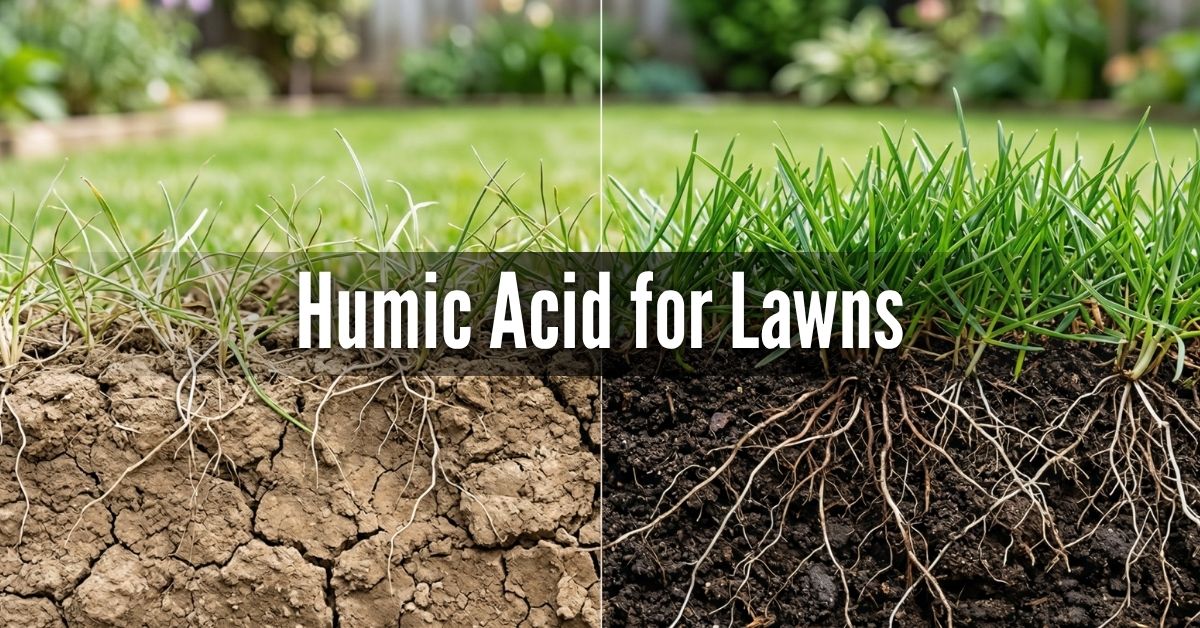
Why Lawn Soil Health Matters More Than Fertilizer
Many homeowners try to fix lawn problems by adding more fertilizer. But fertilizer only feeds the grass plant. It does not fix the soil underneath it.
If soil structure is poor, nutrients wash away quickly, roots struggle to grow, and lawns become dependent on repeated fertilizer applications.
This is where soil amendments come in.
One of the most effective—and most overlooked—soil amendments for lawns is humic acid.
What Is Humic Acid?
Humic acid is a naturally occurring organic compound formed from the decomposition of plant material over long periods of time.
Humic substances have been studied extensively in soil science and are commonly used in agriculture and turf management to improve soil health.
It is commonly derived from:
• Leonardite deposits
• Compost
• Peat
• Organic soil layers
Humic acid does not act like fertilizer. Instead, it improves the soil environment so grass roots can access nutrients, water, and oxygen more effectively.
Think of it as improving the soil’s ability to support healthy grass.
Why Humic Acid Is So Valuable for Lawns
Many turf professionals use humic substances because they help improve the efficiency of other lawn treatments.
Humic acid works by:
- Increasing nutrient availability
- Improving soil microbial activity
- Enhancing water retention
- Supporting deeper root development
Rather than forcing rapid growth, humic acid focuses on long-term soil improvement.
How Humic Acid Improves Soil Structure
Soil scientists often describe humic substances as catalysts for soil health because they help unlock nutrients already present in the soil.

Healthy soil contains a balance of:
- organic matter
- microorganisms
- air pockets
- water retention
In compacted or depleted soils, this balance breaks down.
Humic acid helps restore it by:
- loosening compacted soil
- increasing organic carbon content
- improving moisture-holding capacity
- encouraging beneficial microbial activity
These changes create a healthier environment for root systems.
Key Benefits of Humic Acid for Grass
Homeowners often notice several improvements when humic acid is used consistently.
Improved Nutrient Uptake
Humic acid helps plants absorb nutrients already present in the soil or applied through fertilizer.
Stronger Root Systems
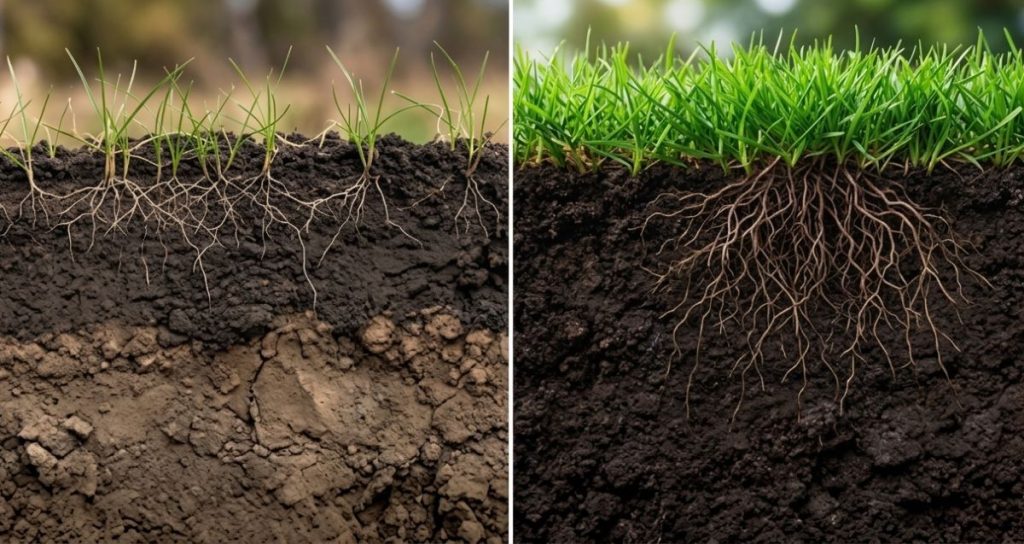
Improved soil structure allows roots to grow deeper and access more moisture.
Better Water Retention
Humic acid improves the soil’s ability to hold water, which can reduce drought stress.
Improved Soil Microbiology
Beneficial microorganisms thrive in soils with higher organic content.
Because of these effects, humic acid is often used as a soil amendment for grass in both residential lawns and professional turf management programs.
When to Apply Humic Acid to Your Lawn
Lawn Soil Health Tip
Humic acid is often most effective when used as part of a seasonal lawn care program rather than a one-time treatment. Many homeowners apply humic acid alongside spring and fall fertilization so soil structure improves while the lawn receives nutrients.
Humic acid can be applied multiple times throughout the growing season.
Typical application windows include:
Spring
- Supports early root development
- Improves fertilizer efficiency
Summer
- Helps lawns tolerate heat stress
- Supports soil moisture retention
Fall
- Strengthens root systems before winter
Because humic acid focuses on soil health rather than rapid growth, it can be applied more flexibly than many fertilizers.
How to Apply Humic Acid (Step-by-Step)
Applying humic acid is straightforward and works well with common lawn equipment.
Step 1: Choose Liquid or Granular Form
Liquid humic acid is commonly applied using a sprayer, while granular products are spread using a broadcast spreader.
Step 2: Apply Evenly Across the Lawn
Uniform coverage ensures consistent soil improvement. Liquid humic acid products are often applied using a backpack sprayer so the material spreads evenly across the lawn surface.

PetraTools HD4000 Backpack Sprayer
Best for: Lawn care, pest control, property maintenance
Key features: 4-gallon tank, adjustable pressure, rechargeable battery
Availability: In stock for $199.99
Buy ProductBattery-powered sprayers such as the PetraTools HD4000 Backpack Sprayer or the PetraTools HD3000 Backpack Sprayer make this easier because they maintain steady pressure while walking the lawn, helping homeowners apply soil amendments consistently without constantly stopping to pump.
Step 3: Water It In
Water helps move humic acid into the soil where it can interact with root systems and soil microbes.

Liquid vs Granular Humic Acid
| Type | Advantages | Best Use |
|---|---|---|
| Liquid Humic Acid | Faster absorption, easy spraying | Spot treatment or targeted applications |
| Granular Humic Acid | Longer lasting soil amendment | Large lawn applications |
Both forms can be effective depending on your lawn maintenance routine.
How Humic Acid Works with Fertilizers
Humic acid is often applied alongside fertilizers because it improves nutrient efficiency.
This means nutrients are:
- retained longer in soil
- absorbed more effectively by roots
- less likely to wash away during rain
Many lawn care programs combine humic acid with seasonal fertilizer applications to improve long-term soil health.
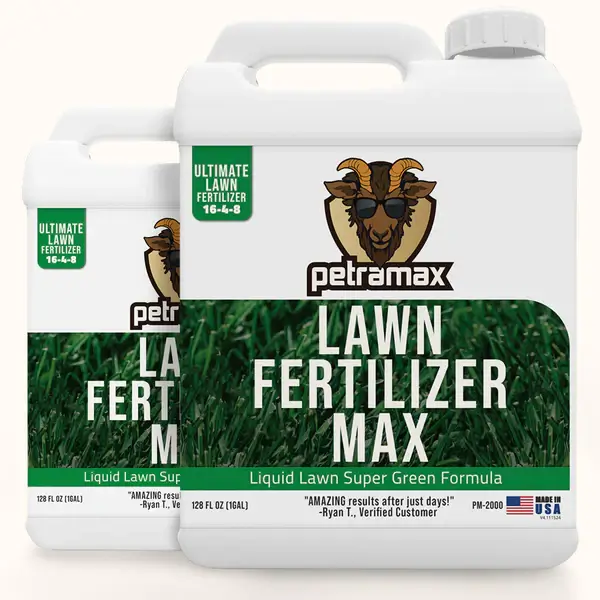
PetraMax Liquid Fertilizer Max
Best for: Lawn greening, root development, all grass types, spring & summer feeding, disease resistance
Key features: 16-4-8 NPK, quick & slow-release nitrogen, chelated iron, pet-friendly, treats up to 12,800 sq. ft.
Availability: In stock, starting from $78.99
Buy ProductFor example, many homeowners apply humic acid alongside seasonal lawn fertilizers to improve nutrient efficiency in the soil. Products such as PetraMax Lawn Fertilizer Max or Neighbor’s Envy Lawn Fertilizer can work well in this type of program because the improved soil environment helps grass absorb nutrients more effectively rather than losing them through runoff.
Common Mistakes When Using Humic Acid
Expecting Immediate Results
Humic acid improves soil over time rather than delivering instant visible changes.
Overapplying
More is not always better. Follow product guidelines.
Ignoring Other Lawn Practices
Humic acid works best alongside proper watering, mowing, and fertilization.
Frequently Asked Questions
No. It improves soil conditions but does not provide significant nutrients itself.
Many lawn programs apply it 2–4 times per year depending on soil conditions.
Most humic acid products are naturally derived, but always follow label instructions.
It can help improve structure over time, but severe compaction may still require aeration.
The Bottom Line
Healthy lawns start with healthy soil.
Humic acid improves the soil environment by supporting microbial activity, improving moisture retention, and increasing nutrient availability. While it is not a quick fix, consistent use can help develop stronger root systems and more resilient turf over time.
When combined with proper lawn care practices—such as watering correctly, maintaining proper mowing height, and applying seasonal fertilizers—humic acid becomes a powerful tool for improving long-term lawn soil health.