

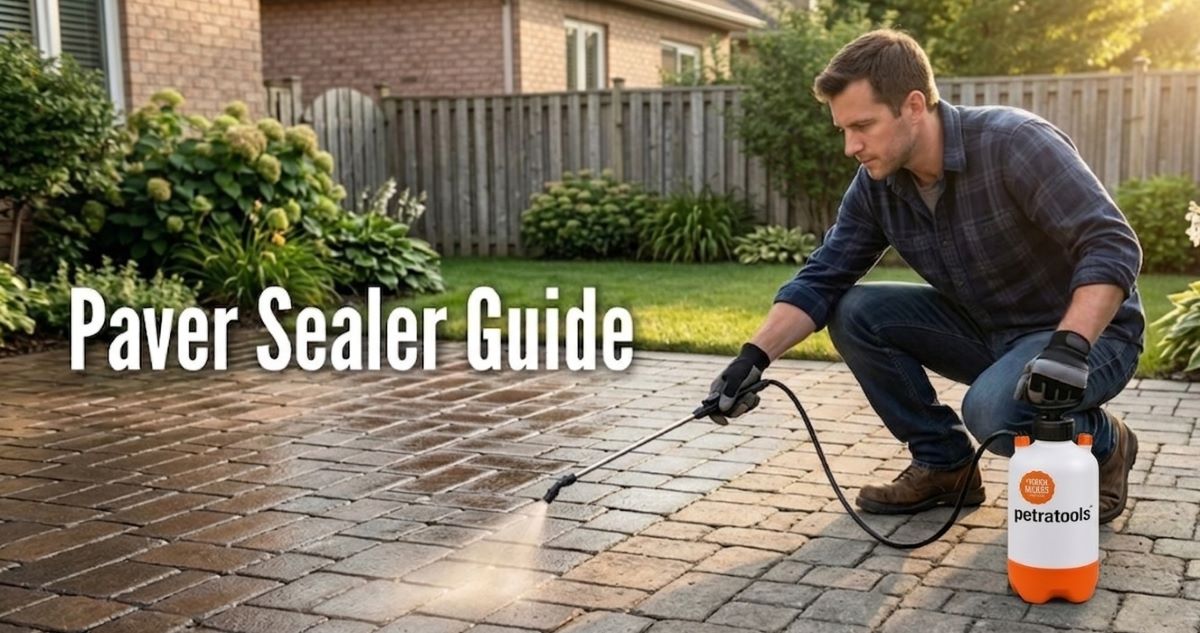
Introduction: Pavers Are Tough. But They’re Not Invincible.
Concrete pavers are built to handle weather, traffic, and time. What they are not built to handle alone is slow erosion, color fade, joint sand loss, and staining that creeps in season after season.
Sealing is not about making pavers shiny. It is about locking in stability, preserving color, and preventing the small forms of damage that eventually become expensive repairs.
Done correctly, sealing is both a cosmetic upgrade and a protective system for your hardscape.
Sealing is typically far less expensive than replacing faded or damaged pavers, which is why many homeowners treat it as preventative maintenance rather than a repair.
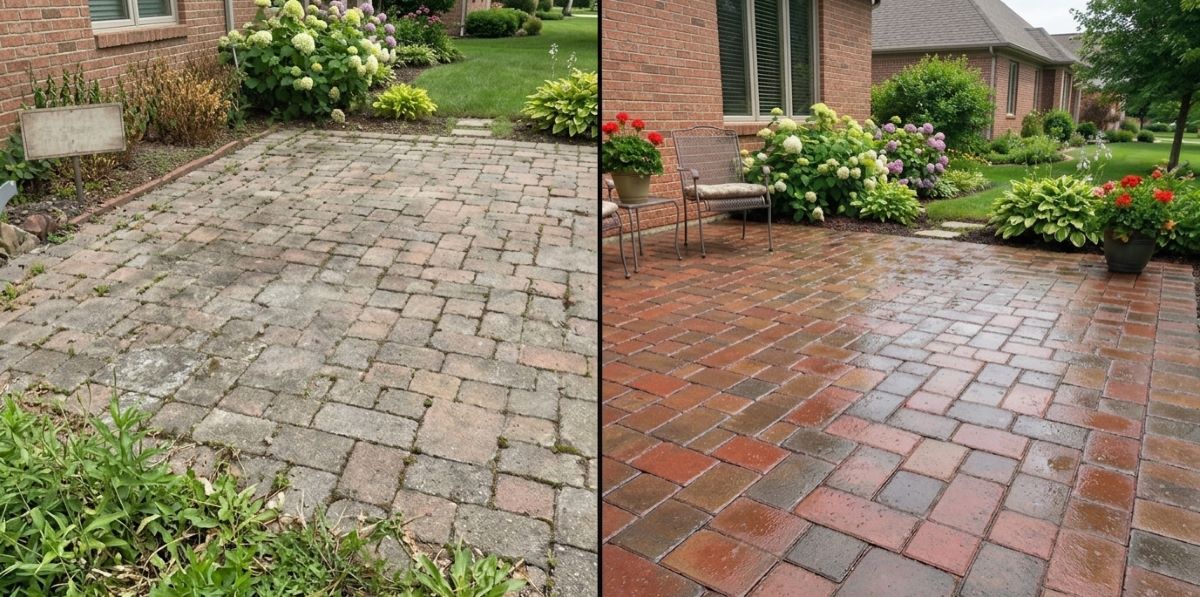
What Paver Sealing Actually Does and Why It Matters
A quality sealer forms a breathable barrier that protects without trapping moisture. This barrier helps:
- Reduce water penetration that leads to shifting or settling
- Stabilize joint sand and resist washout
- Prevent oil, rust, and organic stains from embedding
- Slow UV fading and color loss
- Make routine cleaning significantly easier
- Reduce weed and moss intrusion between joints
Think of it as sunscreen, stain guard, and structural insurance working together.
Most modern sealers are vapor-permeable, meaning they block liquid water while still allowing trapped moisture to escape, which helps prevent hazing or surface failure.
When Should You Seal Pavers?
Timing matters more than most homeowners realize.
In regions with heavy freeze-thaw cycles or intense sun exposure, shorter maintenance intervals are normal because environmental stress accelerates wear.
New Pavers
Wait until:
- Installation is complete
- Efflorescence (natural white haze) has surfaced and been cleaned
- Joint sand has fully settled (typically 30–60 days)
Sealing too early traps salts and moisture.
Existing Pavers
Seal when you notice:
- Color looks washed out
- Sand is eroding from joints
- Surface absorbs water instead of beading it
- Stains are harder to remove
- Surface feels rough or chalky
Most installations benefit from resealing every 3 to 5 years, depending on exposure.
Choosing the Right Sealer: Natural Look vs Wet-Look
This is where most decisions happen.
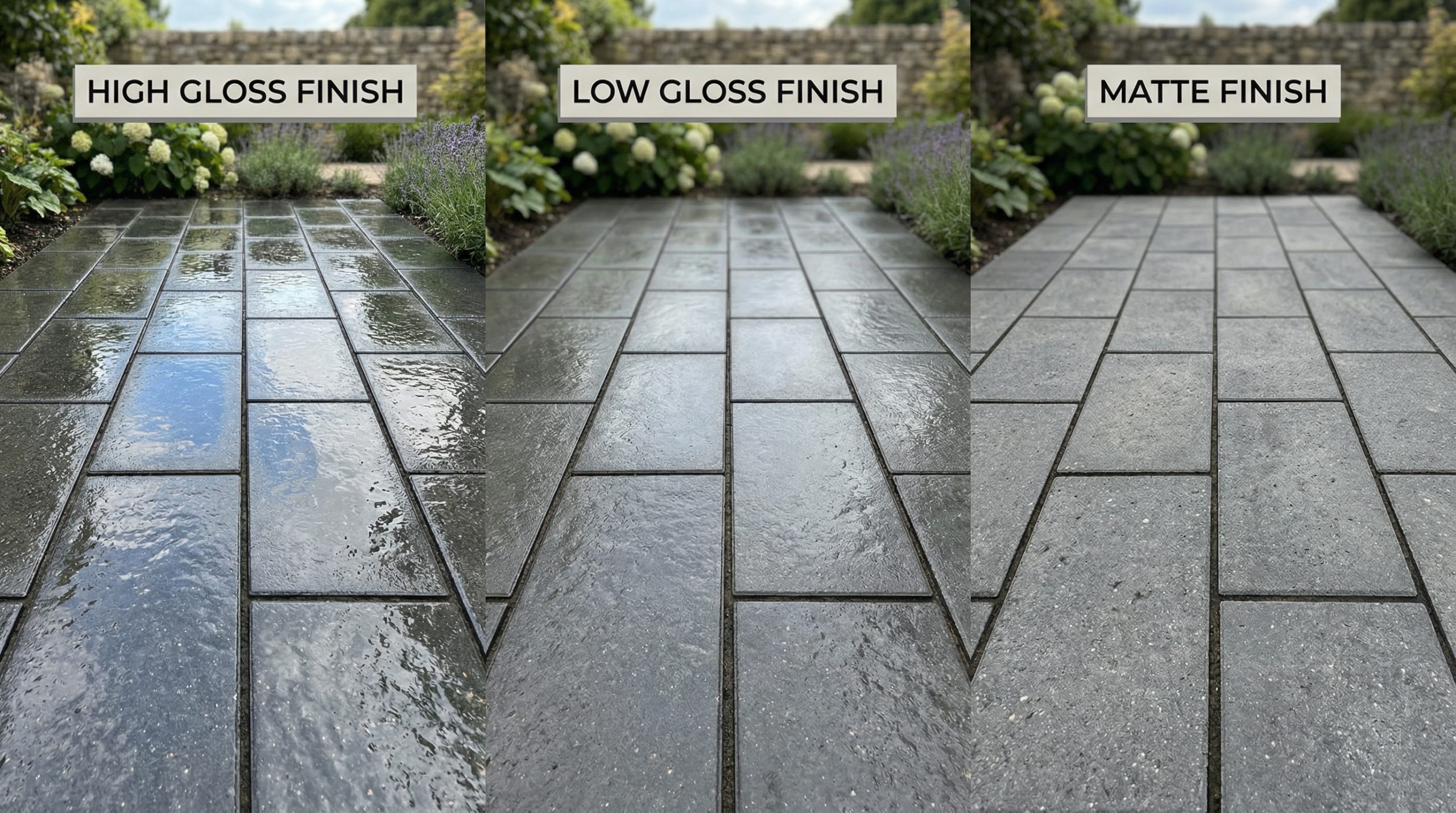
Natural Look Sealers
Best for homeowners who want protection without altering appearance.
Characteristics:
- Matte or low-sheen finish
- Maintains original color profile
- Subtle, invisible protection
- Popular for modern or textured pavers
Ideal For: Walkways, pool decks, contemporary hardscapes.
If You Want Protection Without Changing the Appearance
For homeowners who want the pavers to look the same, just last longer, a penetrating sealer is typically the right fit.
This is where product selection starts to matter, because not all sealers behave the same once they hit the surface.
Buy ProductProducts like
BEEST CS‑9500 Concrete Paver & Stone Sealer
and the pre-diluted
CS‑9500 Ready‑to‑Use Version
are designed to soak into the surface rather than form a visible coating. These breathable, non-film-forming sealers help repel moisture, stains, and deicing salts while maintaining the original look of the material.
Because they penetrate instead of sitting on top, they create a hydrophobic barrier that resists water intrusion and weather damage without altering color or texture.
Use this type when:
- You want invisible protection
- Your pavers already look good
- You’re sealing driveways, walkways, or high-traffic zones
Wet Look Sealers
Enhance color depth and create a richer appearance.
Characteristics:
- Darkens tones to appear freshly washed
- Adds satin to semi-gloss sheen
- Highlights texture and variation
- Often preferred on decorative patios
Ideal For: Entertaining spaces, decorative installations, faded older pavers needing visual revival.
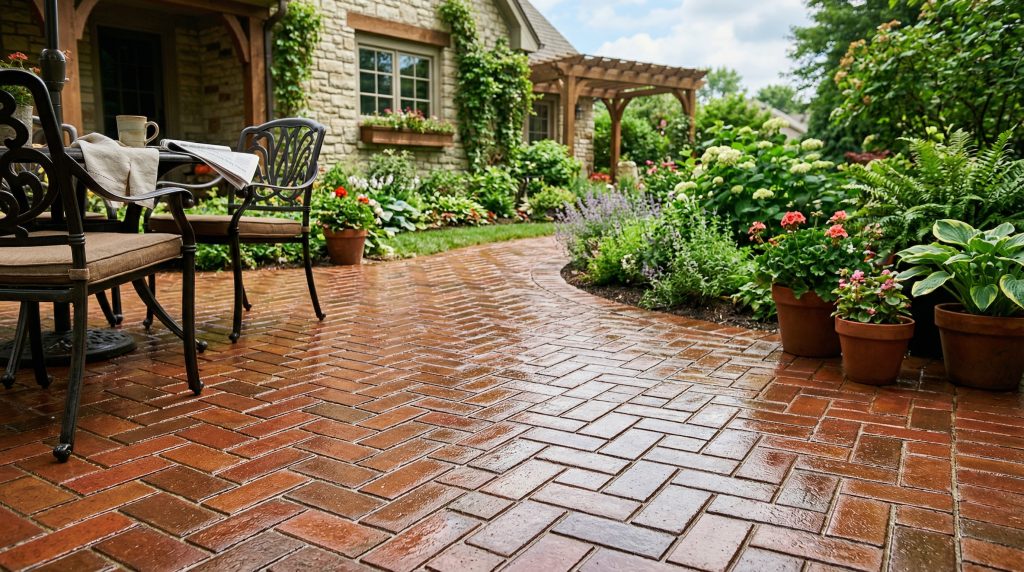
When to Choose a Wet Look Sealers
If the goal is to revive faded pavers or deepen color contrast, an acrylic sealer is typically used instead of a penetrating one.
If your goal leans more toward visual restoration than invisible protection, a film-forming sealer becomes the better tool.
Buy ProductOptions such as
BEEST PS‑8700 Concrete Paver & Stone Sealer
or
BEEST PS‑8600 Concrete Paver & Stone Sealer
create a satin or gloss “wet look” that enhances surface color while adding a protective film layer.
These coatings are commonly chosen when aesthetics matter as much as durability, since they visually enrich the surface while sealing it from wear and contaminants.
Use this type when:
- Pavers look faded or chalky
- You want a richer decorative finish
- The patio is a visual centerpiece
Before You Seal: Proper Preparation Is Everything
Skipping prep is the number one reason sealing jobs fail.
Step 1: Deep Cleaning
Remove:
- Dirt and organic buildup
- Old residue or failed coatings
- Algae, mildew, and stains
A dedicated surface cleaner ensures the sealer bonds instead of sitting on contamination.
Step 2: Allow Full Drying
Pavers must dry 24 to 48 hours minimum.
Moisture trapped beneath sealer can cause whitening or adhesion failure.
A simple test is to tape a small square of plastic to the surface for a few hours. If condensation forms underneath, the pavers are not ready to seal.
Step 3: Re-Sand Joints (If Needed)
Add polymeric or joint sand where erosion occurred.
Sealing helps lock this sand into place.
Proper cleaning and full drying allow penetrating sealers like CS-9500 to reach deep into the surface, which is what gives them their long-term moisture resistance instead of forming a surface film.
How to Apply Paver Sealer Correctly
Application is controlled, not rushed.
Tools Typically Used
- Pump sprayer or low-pressure sprayer for even distribution
- Roller for back-rolling and leveling
- Protective gear and masking for surrounding areas
Always apply sealer when surface and air temperatures fall within the manufacturer’s recommended range to ensure proper curing and adhesion.
Application Process
- Apply thin, even coat. Do not flood the surface.
- Back-roll to eliminate puddles and ensure penetration.
- Allow proper flash time.
- Apply a second coat if required by product type.
- Protect surface from traffic during cure window.
Thin coats outperform heavy coats every time.
Coverage rates vary by surface density, but most pavers require more material on the first coat than homeowners expect because the surface absorbs unevenly.
Common Mistakes to Avoid
Even good materials fail with poor technique.
Avoid:
- Sealing damp surfaces
- Applying too thickly
- Ignoring temperature ranges
- Using glossy sealers on highly textured pavers
- Skipping cleaning before application
- Not testing a small area first
Sealing is chemistry plus timing. Both matter.
Maintenance After Sealing
Once sealed, upkeep becomes simpler.
Ongoing Care
- Rinse periodically to prevent buildup
- Clean spills quickly before they penetrate
- Avoid harsh degreasers that degrade coating
- Reapply maintenance coat before full failure
A light refresh coat extends life dramatically versus waiting for total wear.
How Long Does Paver Sealer Last?
Performance depends on:
- Sun exposure
- Traffic levels
- Freeze-thaw cycles
- Surface preparation quality
- Type of sealer used
Typical lifespan:
- Patios: 4 to 5 years
- Driveways: 3 to 4 years
- High exposure climates: closer to 3 years
Longevity is influenced far more by preparation and application thickness than by brand alone, which is why careful installation matters more than simply choosing the highest-priced product.
Resealing is preservation, not repetition.
Penetrating silane/siloxane sealers are engineered for extended durability, with high-active formulas designed to last significantly longer than traditional treatments when properly applied.
Signs It’s Time to Reseal
Watch for:
- Loss of water beading
- Noticeable color fade
- Sand loosening again
- Surface looking dry or porous
- Stains absorbing faster
These are early indicators. Acting early avoids restoration work later.
Decision Guide: Should You Seal Your Pavers?
Seal if you want to:
- Preserve installation investment
- Reduce long-term maintenance
- Maintain color consistency
- Prevent structural joint erosion
- Simplify seasonal cleaning
You may skip sealing if:
- You prefer a fully weathered, natural aging look
- Surface is temporary or budget-driven
- You accept higher maintenance over time
Most homeowners choose sealing once they understand it is protection first, appearance second.
Quick Product Selection Guide
| If Your Goal Is . . . | Sealer Type | Recommended Product |
|---|---|---|
| Invisible protection | Penetrating | CS-9500 |
| Fast DIY application | Penetrating RTU | CS-9500 Ready-to-Use |
| Color enhancement | Acrylic wet look | PS-8700 |
| Richer gloss finish | Acrylic film-forming | PS-8600 |
FAQ: Paver Sealing Questions Homeowners Ask Most
Modern breathable sealers are designed to maintain traction when applied correctly. Overapplication causes slickness, not the sealer itself.
Yes, but only after deep cleaning and confirming compatibility. Failed coatings must be removed first.
Not required, but strongly recommended to protect color and joint stability from the start.
Generally between 50°F and 85°F with no rain expected for 24 hours.
Yes, if surface prep is done carefully and application is controlled. Most issues come from rushing.
Light foot traffic is typically safe after 24 hours, but vehicles and furniture should stay off for 48 to 72 hours to allow the coating to fully cure.
Final Thought: Sealing Is Less About Shine and More About Staying Power
Pavers are an investment in how a space functions and feels. Sealing is what keeps that investment from slowly unraveling under weather, use, and time.
Done properly, it is one of the highest value maintenance steps you can take for any hardscape surface.
Whether you prefer a natural, invisible barrier or a color-enhancing finish, selecting the right sealer and applying it correctly is what determines whether your hardscape lasts five years or fifteen.
The right sealer, applied at the right time, turns a one-time installation into a surface that performs and looks better for years.