

Why People Try to Insulate Windows in the First Place
If your house feels drafty even while the heat is running, the problem is often not insulation in the walls. It’s probably an air leak coming from a window.
Windows are one of the weakest thermal barriers in most homes. Older double-pane units, metal frames, and garage windows lose heat quickly, especially at night when exterior temperatures drop.
Many homeowners look for a fast fix that does not involve replacing windows. That is where window insulation film enters the conversation.
The promise sounds simple. Apply a clear barrier, trap a pocket of still air, and slow the escape of indoor warmth.
But does it actually make a measurable difference?
What Is Window Insulation Film and How Does It Work?
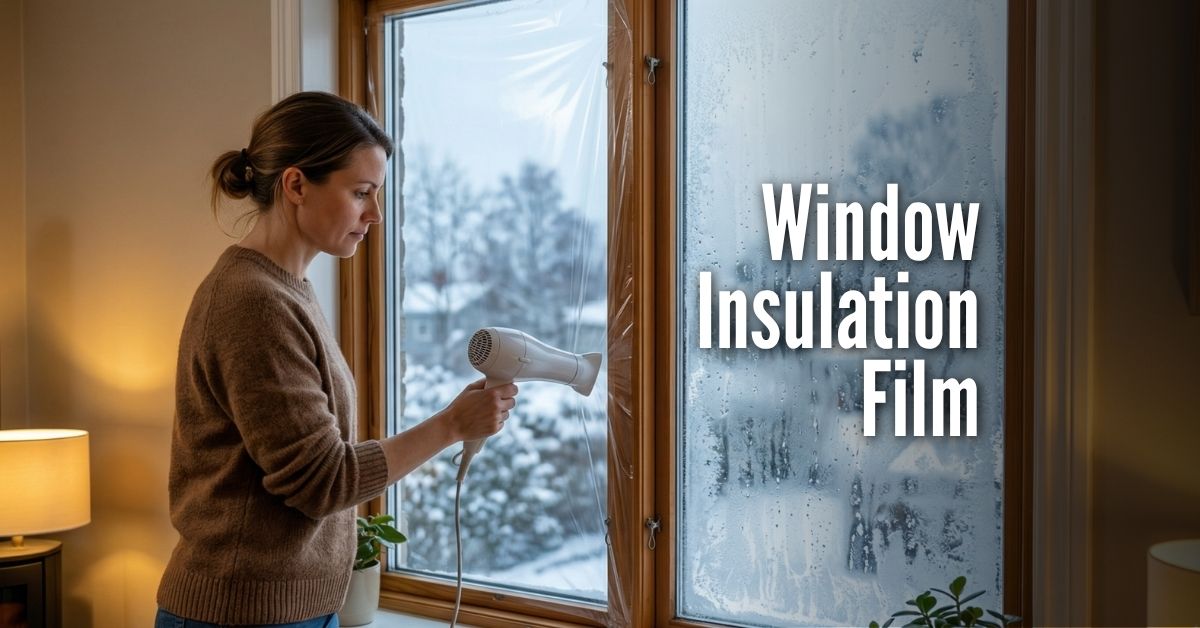
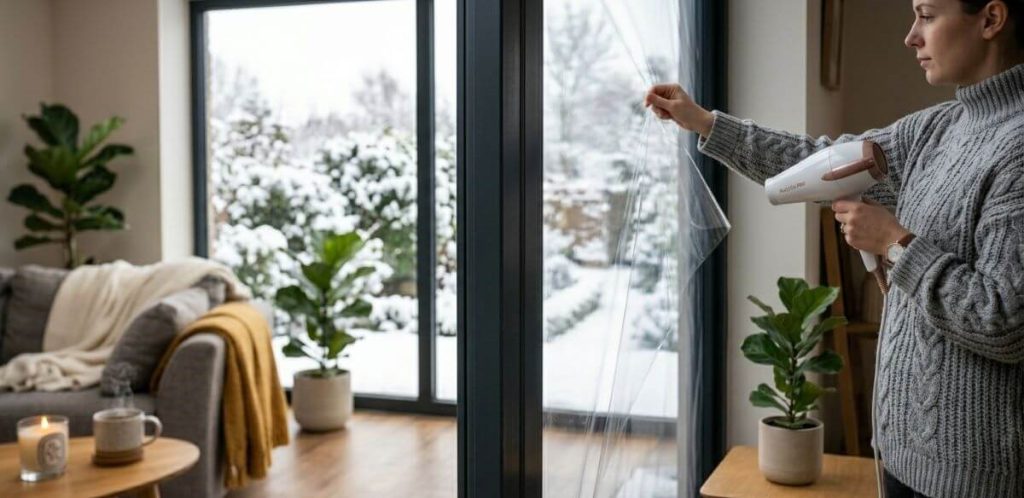
Window insulation film is a thin, transparent sheet installed over the interior side of a window frame using adhesive tape and heat from a hair dryer. Once tightened, the film creates a sealed air space between the film and the glass.
That sealed air layer slows heat transfer in two ways:
- It reduces convective airflow from drafts.
- It adds a small insulating buffer similar to an additional pane of glass.
In other words, it does not insulate like foam or fiberglass. It improves performance by stopping moving air, which is often the real culprit.
What We Tested
To evaluate effectiveness, we compared three conditions in a typical residential environment:
- Uncovered window
- Window with insulation film installed
- Insulated wall nearby as a performance reference
We tracked:
- Interior surface temperature
- Draft detection
- Heating cycle frequency
- Installation time
- Material cost
This approach reflects how homeowners actually experience heat loss, not just laboratory R-values.
Measurements were taken during cold-weather conditions using surface temperature readings and draft detection to simulate typical homeowner experience rather than laboratory testing.
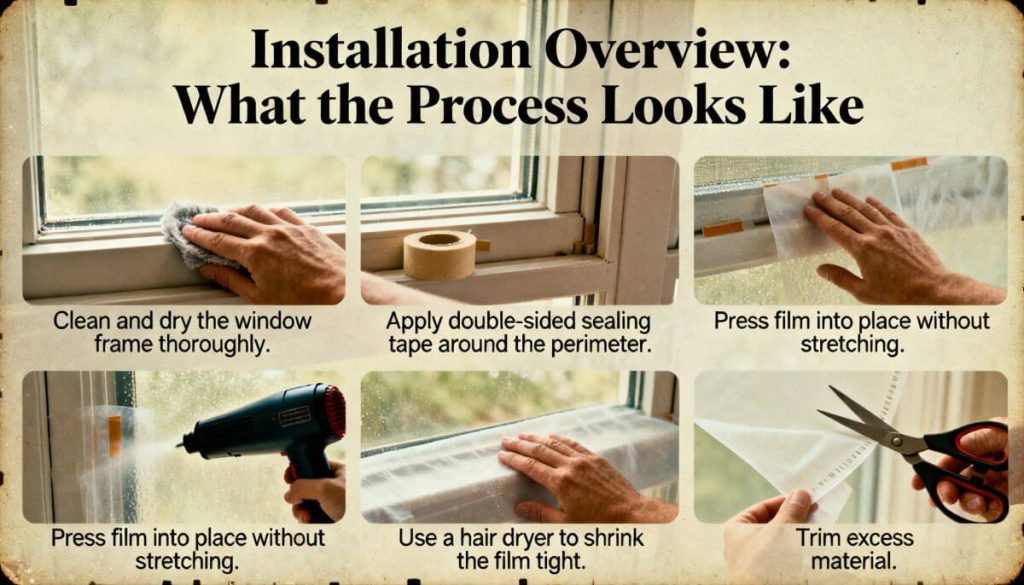
Installation Overview: What the Process Looks Like
Installing a window insulation kit is closer to weatherproofing than construction.
Basic Steps
- Clean and dry the window frame thoroughly.
- Apply double-sided sealing tape around the perimeter.
- Press film into place without stretching.
- Use a hair dryer to shrink the film tight.
- Trim excess material.
Most installs take 10 to 20 minutes per window once you understand the technique.
Test Results: Temperature and Draft Reduction
Surface Temperature Improvement:
We observed interior glass surface temperatures increase by 4°F to 7°F after installation during cold weather conditions.
That change matters because warmer surfaces reduce radiant heat loss and eliminate the “cold wall” feeling near windows.
Draft Elimination:
Air leakage was reduced dramatically. Before installation, detectable airflow occurred along frame edges. After installation, airflow was nearly eliminated.
This is where window film performs best. It is more of an air-sealing solution than an insulation upgrade.
Heating Cycle Impact:
Rooms with treated windows showed slightly longer intervals between furnace cycles, especially overnight.
The savings are modest but noticeable over time.
Even when energy savings are modest, eliminating cold drafts can make a room feel significantly more comfortable because your body is no longer exposed to moving cold air.
How Much Energy Can It Actually Save?
Window insulation film is not a miracle product. It does not turn old windows into high-performance units.
However, field studies and manufacturer data suggest reductions in heat loss of roughly 20 to 30 percent in draft-prone windows depending on:
- Window age
- Seal condition
- Exposure to wind
- Size of air leaks
Homes with older aluminum or single-pane windows see the biggest improvement.
Cost vs Benefit: Why Homeowners Consider It
Here’s how window film compares to full window replacement in practical terms:
| Factor | Window Film | Window Replacement |
|---|---|---|
| Upfront Cost | Low | Very High |
| Install Time | Minutes | Days |
| Skill Required | DIY Friendly | Professional |
| Energy Impact | Moderate | Significant |
| Best Use | Draft Reduction | Full Upgrade |
Window insulation kits succeed because they deliver meaningful improvement for very little investment.
They are a practical solution, not a permanent one.
Where Window Insulation Film Works Best
Ideal Applications
- Garages with uninsulated windows
- Older homes with drafty frames
- Seasonal rooms or workshops
- Temporary winterization
- Rental properties where replacement is not possible
Less Effective Situations
- Modern triple-pane windows
- Already airtight window assemblies
- Areas needing structural insulation upgrades
Homes that already have tight, modern windows may see little to no measurable benefit.
Example of a Film-Based Insulation Solution
Disclaimer; The example below illustrates how window film is often used as part of a broader air-sealing strategy rather than a standalone upgrade.
One example that incorporates window sealing as part of a broader thermal strategy is the BEEST FullStop Garage Insulation Kit, which includes window film alongside air-sealing and insulation materials designed for garage environments where heat loss is typically highest.
Why Integrated Kits Matter
Window loss rarely happens alone. Garages often leak heat through:
- Window glass
- Door seams
- Uninsulated framing
- Air gaps
Combining sealing methods produces better results than addressing only one surface.
Installation Tips That Make the Biggest Difference
Small mistakes reduce effectiveness more than most people realize.
Do This:
✔ Clean surfaces thoroughly before taping
✔ Seal the entire perimeter continuously
✔ Shrink film evenly to remove wrinkles
✔ Install during moderate indoor temperatures
Avoid This:
✘ Leaving gaps at corners
✘ Applying to dusty or cold surfaces
✘ Overstretching before shrinking
✘ Treating only one of several drafty windows
The seal is what delivers performance.
Realistic Expectations: What This Product Can and Cannot Do
Window insulation film can:
- Reduce drafts quickly
- Improve comfort near windows
- Lower small but persistent heat loss
- Extend usefulness of older windows
It cannot:
- Replace insulated glazing
- Add structural R-value comparable to walls
- Solve major air leakage elsewhere in the home
Think of it as weatherproofing, not remodeling.
How to Decide If It Is Worth Doing
Ask yourself three simple questions:
- Do you feel cold air near your windows in winter?
- Are replacement windows not currently planned?
- Do you want an inexpensive improvement this season?
If yes to those, window insulation film is a logical step.
If your goal is long-term efficiency transformation, window film is only a temporary measure.
FAQ: Window Insulation Film
Yes. Its biggest benefit is stopping air infiltration, which is often responsible for perceived heat loss.
When installed correctly, the film is nearly invisible and does not block light.
Most installations are seasonal and removed in spring, though some homeowners leave it longer.
No. It uses removable adhesive designed for interior use.
It is not better. It is simply far less expensive and faster when you need an interim solution.
Yes. Garages are one of the most common places it delivers noticeable results, especially on single-pane or drafty windows.
The Bottom Line
Window insulation film works best when you understand what problem it is solving. It is an air-sealing upgrade for windows.
Used in the right setting, it can noticeably improve comfort and reduce wasted heat for very little cost or effort.
Used in the wrong setting, the change may be barely noticeable.
Match it to draft problems, not insulation expectations, and it becomes one of the simplest seasonal efficiency upgrades available.
It’s ideal for garages, outbuildings, and old windows.
Match it to draft problems, not insulation expectations, and it becomes one of the simplest seasonal upgrades you can make.
Author Bio: Kimberly Schuyler has over 10 years of experience writing practical home and property maintenance guides based on real-world testing, industry best practices, and hands-on DIY experience.